

Commentary
Maksim Samorukov
{
  "authors": [
    "Maksim Samorukov"
  ],
  "type": "commentary",
  "centerAffiliationAll": "",
  "centers": [
    "Carnegie Endowment for International Peace",
    "Carnegie Russia Eurasia Center"
  ],
  "collections": [],
  "englishNewsletterAll": "",
  "nonEnglishNewsletterAll": "",
  "primaryCenter": "Carnegie Endowment for International Peace",
  "programAffiliation": "",
  "programs": [],
  "projects": [],
  "regions": [],
  "topics": [
    "Economy"
  ]
}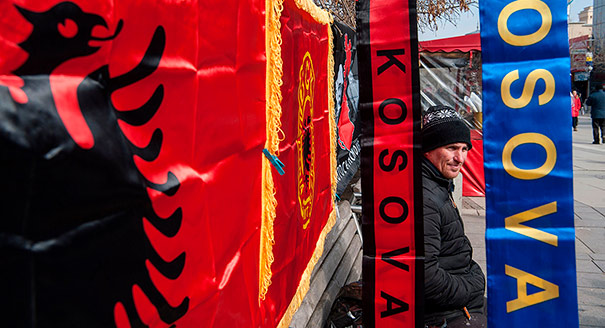
Source: Getty
The priority in conflict resolution in Eastern Europe should shift from helping the territories affected by the conflicts to helping the people affected by the conflicts. Population mobility in the conflict zones is increasing so rapidly and the population is shrinking so swiftly that in a generation or two there will be no one living there, regardless of the results of conflict resolution.
Times have changed in the way conflicts are viewed and resolved. It is almost impossible to imagine that any international mediator would propose that two warring countries undertake an exchange of populations, as they did in the 1920s or the 1940s. Even a democratic referendum on changing borders is not considered to be a humane way of resolving a conflict.
The individual and his rights, rather than vague conceptions of national community, now stand at the heart of conflict resolution efforts. The idea that people have a right to live and be integrated in the territory where they were born continues to have a disproportionate influence on negotiation processes.
Yet the reality of Eastern Europe is of a place where many borders have been altered and have become state frontiers quite arbitrarily. The notion that people always desire to live in the place where they were born is often illusory. The policy locks ethnic communities hostile to one another inside small depressed spaces and frequently runs against the real wishes of most of the inhabitants of these conflict zones. Quite often, these people would be more than ready to integrate into the normal life of another European state, far away from their adversaries. This reality should be a factor in conflict mediation and an instrument in the hands of the mediators.
Before wasting energy on determining the international status and legal regime of disputed territories such as Transdniestria and northern parts of Kosovo, we should think about who will live there in the long term. If there won’t be anyone to live there in just a generation or two because of mass emigration, perhaps that is for the best.
Recent demographic trends show that some regions of Eastern Europe are doomed to get more depressed, even without conflicts, simply because of their economic underdevelopment. It is even less reasonable to expect people to stop leaving areas where these problems are compounded by conflict.
According to UN data, the number of people who have emigrated from Moldova (including Transdniestria) came to 24 percent of the population as of 2017. They are not leaving because of the Transdniestria conflict. The proportion of those emigrating has grown steadily since the 1990s (from 14 percent in 2000 to 17 percent in 2005 and 20 percent in 2010), even though there has been no violence during this time. Moreover, the number of those who have emigrated from neighboring Romania is just as striking: 18 percent of the population as of 2017.
The mass exodus from eastern Ukraine’s Donbas region began long before conflict broke out there in 2014. Even based on flawed official statistics, the total population of the Donetsk and Luhansk regions had shrunk by 10 percent in just ten years (2003–2013). In Bosnia and Herzegovina, the Dayton Accords that ended the war there did nothing to stop mass emigration. In just over two decades of peace, the proportion of emigrants in the population rose from 36 percent in 1995 to a mind-boggling 47 percent in 2017.
In this context, we should start thinking of emigration to wealthier countries as a solution and not a problem. It is a reliable and inexpensive win-win solution that has already been used de facto throughout Eastern Europe, successfully reducing tension in regional conflicts.
Of course, when the government in Zagreb handed out Croatian passports to Bosnian Croats during the breakup of Yugoslavia, it was pursuing its own domestic political interests rather than seeking to ease ethnic tensions in neighboring Bosnia. But as a result, Bosnian Croats have Croatian EU passports, and they now work to make a life for themselves in Dalmatia, Austria, or Germany. A conflict zone is both getting rid of potential young radicals and earning remittances from labor migrants that can somewhat alleviate the problems of the Bosnian economy.
In the same way, the Romanian government has given citizenship to Moldovans, and the Russian government has done the same in Transdniestria itself. Bucharest and Moscow were guided by thoughts of additional voters, international influence, geopolitics, and the like. Yet by handing out passports, the two countries reduced the intensity of the conflict in Transdniestria by removing hundreds of thousands of young, active, but unemployed men from the region.
In similar fashion, Poland had radically simplified the issuing of work permits to Ukrainians long before the Ukraine crisis. Warsaw used this to compensate for the drain of Polish workers to Western Europe following its entry into the EU. It was a selfish measure, but after 2014 it turned out to have great stabilizing potential. In 2014–2017, the number of Ukrainians who moved to Poland to work grew severalfold to 1.5 million. Their remittances are comparable to IMF loans. If Ukraine had several hundred thousand disgruntled citizens instead of several billion dollars in remittances, it would have been incomparably more difficult to keep the situation under control.
If it is easier for people from Donbas to integrate into life in Russia or Poland, then it is in the interests of the international community to support that instead of continuing to try to force them to make peace with Ukraine.
Naturally, this kind of stabilization through emigration has its shortcomings. Older generations and other socially disadvantaged groups are not able to take advantage of the opportunity to move. The exodus of working-age people inevitably depresses local economic activity, which is unlikely to be compensated just by remittances from those who left. Instead of the risks of new conflict, the disputed regions will face the threat of slow economic disintegration.
Host countries can encounter problems as well. The mass influx of foreign migrants may cause a backlash from the local population. These challenges are real, but their scale should not be overestimated. The population of the most troubled territories in Eastern Europe (Transdniestria, the Serbs in North Kosovo, and the ethnic minorities in Bosnia) is only several hundred thousand: a relatively modest number compared to the annual migrant flow to the EU or even to Russia. The scale in the contested Donetsk and Luhansk regions is a little bigger, with a population of 3.5 million, but over the past three years of the conflict more than 2 million people have already left.
Those who remain in the conflict zones certainly need outside support, but not much is necessary. The priority is to create mechanisms for targeted assistance to the most vulnerable social groups, for example, by providing supplements to pensioners the way Russia does in Transdniestria.
All of this should be much more effective and productive than allocating billions of dollars to restore infrastructure in Donbas, most of which will have no one to use it in twenty or thirty years.
International mediators and donors need to understand that population mobility in the main conflict zones of Eastern Europe is increasing so rapidly while the population is shrinking so swiftly that in a generation or two there will be no one living there, regardless of the results of conflict resolution. So, the priority should be to transition from helping the territories affected by the conflicts to helping the people affected by the conflicts—most of whom don’t need any special assistance. All they need is equal opportunities with the native populations of the countries to which they are moving.

Fellow, Carnegie Russia Eurasia Center
Samorukov is a fellow at the Carnegie Russia Eurasia Center.
Recent Work
Maksim Samorukov
Maksim Samorukov
Carnegie does not take institutional positions on public policy issues; the views represented herein are those of the author(s) and do not necessarily reflect the views of Carnegie, its staff, or its trustees.

With its public finances in shambles, the far right polling at 35 percent ahead of the 2027 presidential election, and a growing protest movement, is France’s crisis a threat to the EU’s geopolitical awakening?

Rym Momtaz, ed.

The European Commissioner for Trade is headed to China. But after President Xi’s bridge-building visit to Washington, can a more isolated EU overcome Beijing’s stranglehold on critical raw materials? Who will blink first?
Rym Momtaz, ed.

The domestic impacts of how long it is taking to end the war in Ukraine have pushed the French electorate to the political extremes and compromised the country’s diplomatic capacity.
Rym Momtaz

A summer of escalation in the Black Sea has hurt Ukraine economically and is exacerbating world food security. A truce is needed—as is a broader reframing of Europe’s Ukraine strategy.

Thomas de Waal

As geopolitical rivalry weaponizes global supply chains, the EU’s true vulnerability lies in emerging-risk imports. For these goods, suppliers are growing more concentrated, substitution more difficult, and political risk is looming.

Sinan Ülgen