

Commentary
Are Germany’s economic, industrial, and political struggles becoming a liability for the EU’s ability to rise to the geopolitical moment?
Rym Momtaz, ed.
{
  "authors": [
    "Rhea Menon"
  ],
  "type": "legacyinthemedia",
  "centerAffiliationAll": "",
  "centers": [
    "Carnegie Endowment for International Peace",
    "Carnegie India"
  ],
  "collections": [],
  "englishNewsletterAll": "",
  "nonEnglishNewsletterAll": "",
  "primaryCenter": "Carnegie India",
  "programAffiliation": "",
  "programs": [],
  "projects": [],
  "regions": [
    "Southeast Asia",
    "China"
  ],
  "topics": [
    "Foreign Policy"
  ]
}
Source: Getty
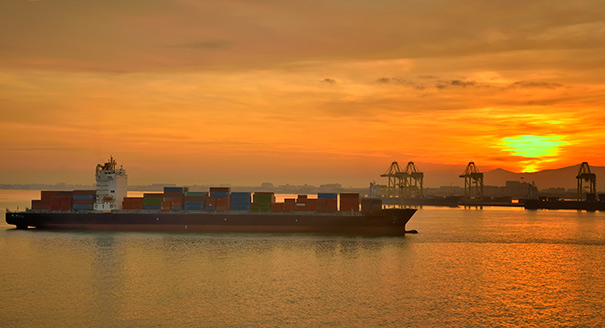
The establishment of a Kra Canal in Thailand may soon become a reality as part of China’s Belt and Road Initiative (BRI). The canal would permit ships to bypass the Malacca Strait, a crucial maritime chokepoint, amplifying the strategic significance of the project.
Source: Diplomat
The establishment of a Kra Canal in Thailand may soon become a reality as part of China’s Belt and Road Initiative (BRI). The canal would permit ships to bypass the Malacca Strait, a crucial maritime chokepoint, amplifying the strategic significance of the project.
Throughout history, there have been multiple attempts by the Thai monarchy and European colonists to capitalize on the commercial and strategic importance of the region by constructing a canal across the narrow isthmus that connects Thailand to the Malay peninsula. In recent times, China’s global vision of a new Maritime Silk Road has renewed the attention on the possibility of developing the Kra Canal. The modern Kra or Thai Canal project would be connected to the various Chinese infrastructure and connectivity projects in the region.
Rhea Menon
Rhea Menon is a research assistant at Carnegie India.
Carnegie does not take institutional positions on public policy issues; the views represented herein are those of the author(s) and do not necessarily reflect the views of Carnegie, its staff, or its trustees.

Are Germany’s economic, industrial, and political struggles becoming a liability for the EU’s ability to rise to the geopolitical moment?

Rym Momtaz, ed.

European Commission President Ursula von der Leyen is about to give her annual address on the state of the EU. Here’s what she won’t—but should—say.
Rym Momtaz

The aftermath of the Ceuta crisis shows Europe has drawn the wrong lessons. Rather than doubling down on failed migration policies, the EU needs to address the underlying roots of such episodes.

Richard Youngs

Canadian Prime Minister Mark Carney has twice inspired praise for standing up to U.S. President Donald Trump: at the 2026 World Economic Forum in Davos and on Canada-U.S. trade negotiations. Is Carney showing a third way better than the EU has in dealing with the Trump administration?
Rym Momtaz, ed.

The EU’s responses to two recent incidents expose the gulf between European perceptions and capabilities. Unless the union can bridge that gap, it will never become a real geostrategic power.
Rym Momtaz