

Paper
Christopher S. Chivvis, Rohan Mukherjee, Milan Vaishnav
{
  "authors": [
    "Milan Vaishnav"
  ],
  "type": "other",
  "centerAffiliationAll": "dc",
  "centers": [
    "Carnegie Endowment for International Peace"
  ],
  "collections": [],
  "englishNewsletterAll": "ctw",
  "nonEnglishNewsletterAll": "",
  "primaryCenter": "Carnegie Endowment for International Peace",
  "programAffiliation": "SAP",
  "programs": [
    "South Asia"
  ],
  "projects": [
    "India Elects 2019"
  ],
  "regions": [
    "South Asia",
    "India"
  ],
  "topics": [
    "Political Reform",
    "Democracy"
  ]
}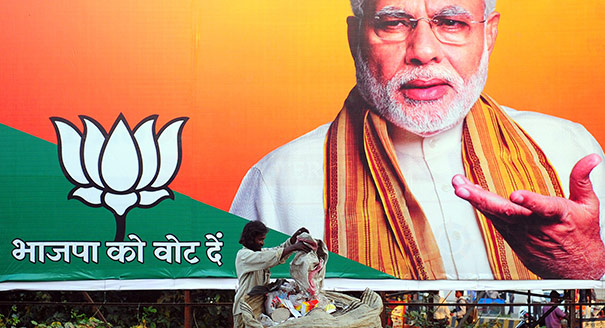
Source: Getty
While genuine political finance reform would be politically popular for the BJP, recent moves have done little to enhance transparency or dampen flow of black money.
Source: Times of India
First, we have seen the dramatic rise of self-financing candidates. It is virtually impossible to win elections today unless you have deep pockets or connections to lucrative networks. Second, although sources of finance may be undisclosed, much of the spending is on routine activities such as fees for attendance, salaries, and meals. Of course, significant funds are reserved for election eve handouts. But we find that these handouts are better described as ‘gift giving’ rather than ‘vote buying’; there is no quid pro quo between voters and politicians. Rather, politicians provide handouts either to signal their viability or fear of loss if they do not.
I have personally never met a politician who believes he or she can win by strictly adhering to the limits. The whole regime of expenditure limits is somewhat farcical. Netas complain the limits are too low, yet in their own expenditure statements MPs elected in 2014 claimed only to have spent half of the ceiling. In my view, it makes more sense to eliminate the limits but insist on 100% transparency for every political contribution and expenditure. If politicians violate this bargain, EC should be able to slap severe sanctions.
There is a lot of variation on expenditure. Simon Chauchard’s analysis of an urban Maharashtra assembly constituency finds huge differences between parties: whereas Shiv Sena candidate spent between Rs 1-2 crore, NCP candidate spent between Rs 9-16 crore. Anywhere between 20-65% of funds are reserved for gift giving, depending on party. This means, while ‘black money’ is an issue, a great deal of spending is so-called ‘work money’ – wages and remuneration for workers, supporters, and ‘influentials’. Sources of finance depend on level of politics. For instance, using survey data from Bihar, Jharkhand and UP, Jennifer Bussel finds that MPs and MLAs are substantially more likely to report receiving party funds compared to lower levels. Panchayat leaders are substantially more dependent on their own resources.
On contributions, the best way to ensure transparency is to insist that parties go digital. Every donor should be required to submit a PAN or Aadhaar number when making a donation. On spending, EC needs greater authority to penalise candidates who do not submit their statements on time or who obfuscate. This requires revamping the Representation of the People Act. As for parties, nobody trusts their accounts. In our view, party accounts should be subject to independent scrutiny by a respected third-party auditor. The disclosure of false accounts is not much better than no disclosure.
Recent moves will do very little to enhance transparency or dampen flow of black money. In UP elections following demonetisation, EC seized more than Rs 115 crore in cash, three times the cash recovered in 2012. As for electoral bonds, their upside is that corporations now have a legitimate channel to contribute funds to parties while protecting their anonymity. But the upside is also the downside: transparency, as far as public is concerned, is arguably the biggest victim. Then in the recent FCRA change where Congress and BJP joined hands to save their skin, they did so under the cover of darkness using fine print in the Finance Act, adding insult to injury. In sum, there is a certain ‘honour among thieves’. Arguably the most politically advantageous thing BJP could do is enact real political finance reform. It would be a political winner and, given BJP’s current strength, it would still out-fundraise its opponents. But government clearly has a different view.
Government has launched a war on cash but it has taken contradictory steps. Cash is opaque so it pushed for electoral bonds, which rely on digital transactions but are completely hidden from public view. The Finance Act instituted a new Rs 2,000 limit for cash donations. But why not take it down to zero and insist on digital transactions? Whenever an arbitrary limit is imposed, it is an incentive for those wanting to game the system.
This article was originally published in the Times of India.

Director and Senior Fellow, South Asia Program
Milan Vaishnav is a senior fellow and director of the South Asia Program and the host of the Grand Tamasha podcast at the Carnegie Endowment for International Peace. His primary research focus is the political economy of India, and he examines issues such as corruption and governance, state capacity, federalism, and electoral behavior. He also conducts research on the Indian diaspora.
Recent Work

Christopher S. Chivvis, Rohan Mukherjee, Milan Vaishnav


Sophia Besch, Eric Ciaramella, Steve Feldstein, …
Carnegie does not take institutional positions on public policy issues; the views represented herein are those of the author(s) and do not necessarily reflect the views of Carnegie, its staff, or its trustees.

In supporting Europe’s far-right, MAGA and Russia both want the same thing: a weaker EU. Europe must defend itself without abandoning the openness these forces exploit.

Armida van Rij

The hybrid warfare landscape is evolving rapidly, leaving policymakers without clear strategies. To better inform their work in addressing emerging challenges, governments must dig deeper into the underlying dynamics at play.


Raluca Csernatoni, Alicia Wanless

As the EU confronts profound challenges, several leaders have called for fundamental reform to the union’s model—but only modest, superficial changes have resulted. What if Europe really could be reimagined from zero today: What should such a redesigned European order look like?

Richard Youngs, ed.
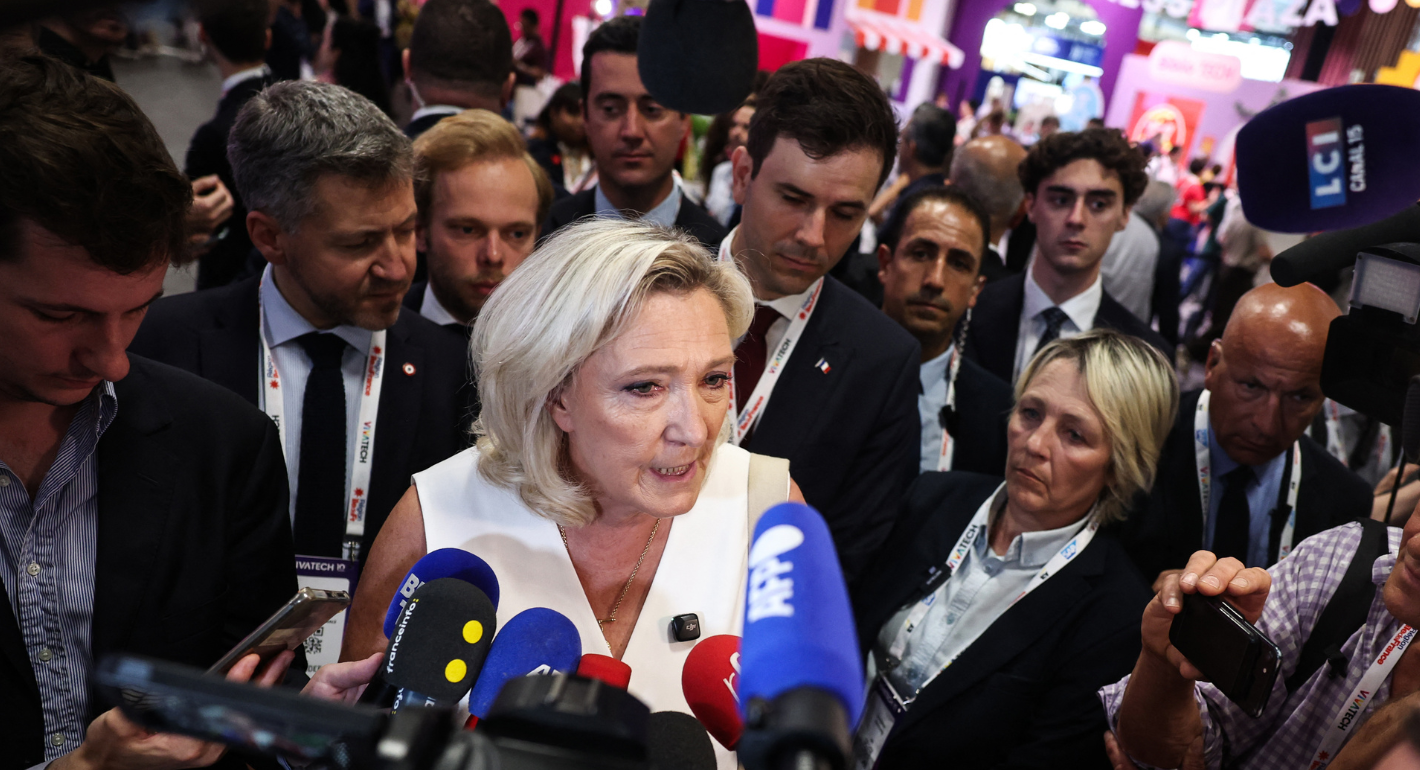
Far-right leader Marine Le Pen can—and will—run in France’s next presidential election. What does the outcome of her appeal against a 2025 embezzlement conviction mean for the country’s political future?

Catherine Fieschi
When Giorgia Meloni very publicly rebuked Donald Trump’s disparaging remarks about her, it surprised many who saw her as a European extension of Trumpism. Is the spat a sign of trouble in the radical right’s transatlantic axis?

Rym Momtaz, ed.