

Other
François Godement, Ashley J. Tellis
{
  "authors": [
    "François Godement"
  ],
  "type": "legacyinthemedia",
  "centerAffiliationAll": "dc",
  "centers": [
    "Carnegie Endowment for International Peace"
  ],
  "collections": [],
  "englishNewsletterAll": "asia",
  "nonEnglishNewsletterAll": "",
  "primaryCenter": "Carnegie Endowment for International Peace",
  "programAffiliation": "AP",
  "programs": [
    "Asia"
  ],
  "projects": [],
  "regions": [
    "East Asia",
    "China",
    "Western Europe"
  ],
  "topics": []
}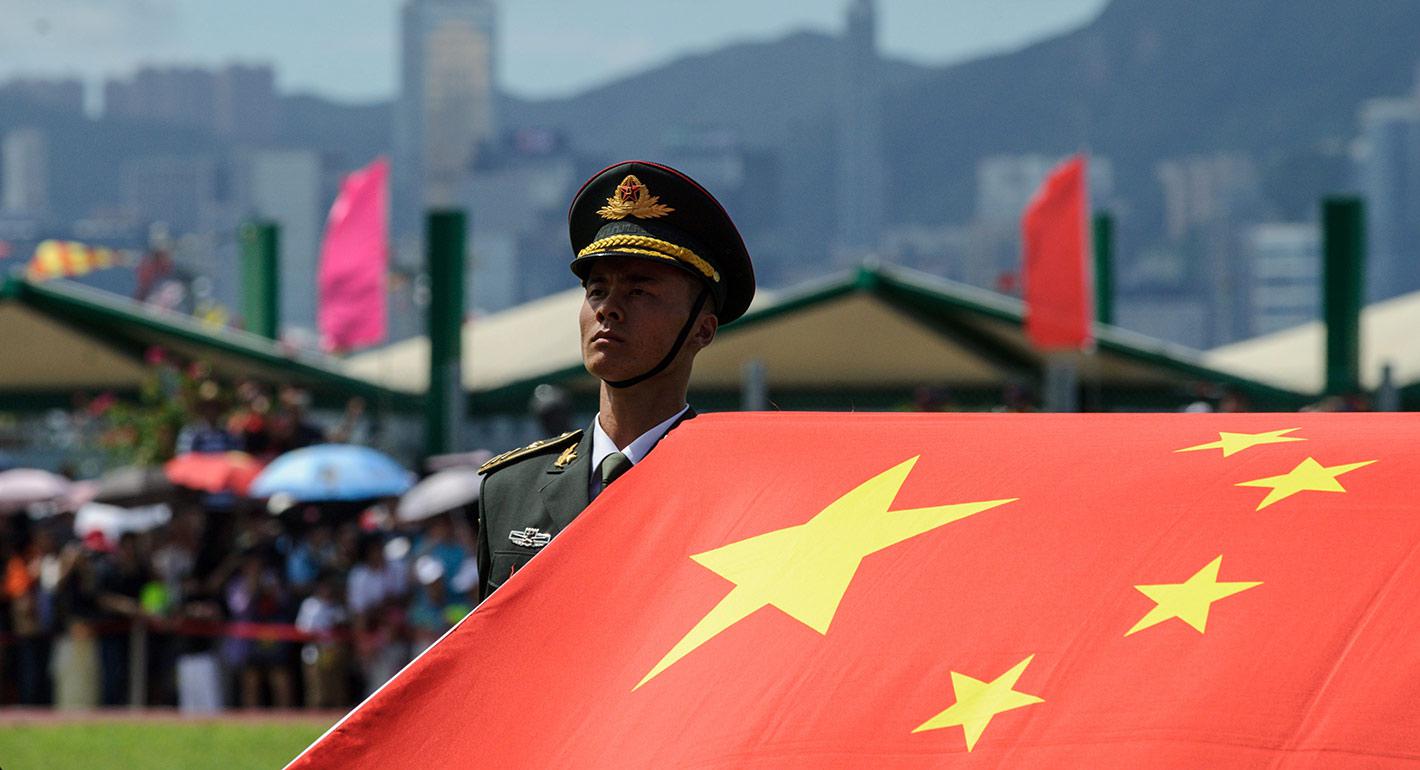
Source: Getty
Europe’s China policy is undergoing a tectonic shift.
Source: Institut Montaigne
Europe’s China policy is undergoing a tectonic shift. The attention was on Mr. Xi Jinping’s visits for influence to EU member states – Italy after Portugal and Spain a few months ago, and even tiny Monaco (population: 38,000). This is the time chosen by the EU to suddenly come forward with a short and crisp new China strategy that starts from realism : China is a "systemic rival", and the EU must build its own responses, starting from competition rules and industrial policy, leveraging issues in dealing with Beijing.
The Commission leaves few stones unturned, starting from China’s egregious human rights practices, noting drily that China’s large exports of coal-fired plants contradict its commitments on climate, and promoting coordination across the continent for the security of 5G networks.
To this shift, Emmanuel Macron is adding an innovation in European foreign policy: he is inviting Angela Merkel and Jean-Claude Juncker to a joint meeting with Xi Jinping during the latter’s state visit to France this week. He is also setting a high bar: besides climate, the reform of WTO and key issues in the EU-China economic relationship are on the menu. Mr. Macron is also just back from East Africa where he pointed out in Djibouti the risk of Chinese hegemony. He has also publicly endorsed in Brussels the new European strategy, commenting that the EU has to act like a superpower if it wants to be treated as one.
This article was originally published by Institut Montaigne.

Former Nonresident Senior Fellow, Asia Program
Godement, an expert on Chinese and East Asian strategic and international affairs, was a nonresident senior fellow in the Asia Program at the Carnegie Endowment for International Peace.
Recent Work
François Godement, Ashley J. Tellis
François Godement, Abigaël Vasselier
Carnegie does not take institutional positions on public policy issues; the views represented herein are those of the author(s) and do not necessarily reflect the views of Carnegie, its staff, or its trustees.

Are Germany’s economic, industrial, and political struggles becoming a liability for the EU’s ability to rise to the geopolitical moment?

Rym Momtaz, ed.

In supporting Europe’s far-right, MAGA and Russia both want the same thing: a weaker EU. Europe must defend itself without abandoning the openness these forces exploit.

Armida van Rij

As we close out another season of Strategic Europe, it is worth taking stock of the deep shifts underway.
Rym Momtaz

The hybrid warfare landscape is evolving rapidly, leaving policymakers without clear strategies. To better inform their work in addressing emerging challenges, governments must dig deeper into the underlying dynamics at play.


Raluca Csernatoni, Alicia Wanless

As the EU confronts profound challenges, several leaders have called for fundamental reform to the union’s model—but only modest, superficial changes have resulted. What if Europe really could be reimagined from zero today: What should such a redesigned European order look like?

Richard Youngs, ed.