

In The Media
Jessica Tuchman Mathews
{
  "authors": [
    "Jessica Tuchman Mathews"
  ],
  "type": "legacyinthemedia",
  "centerAffiliationAll": "",
  "centers": [
    "Carnegie Endowment for International Peace"
  ],
  "collections": [],
  "englishNewsletterAll": "",
  "nonEnglishNewsletterAll": "",
  "primaryCenter": "Carnegie Endowment for International Peace",
  "programAffiliation": "",
  "programs": [],
  "projects": [],
  "regions": [
    "North America",
    "United States"
  ],
  "topics": [
    "Political Reform",
    "Security",
    "Military"
  ]
}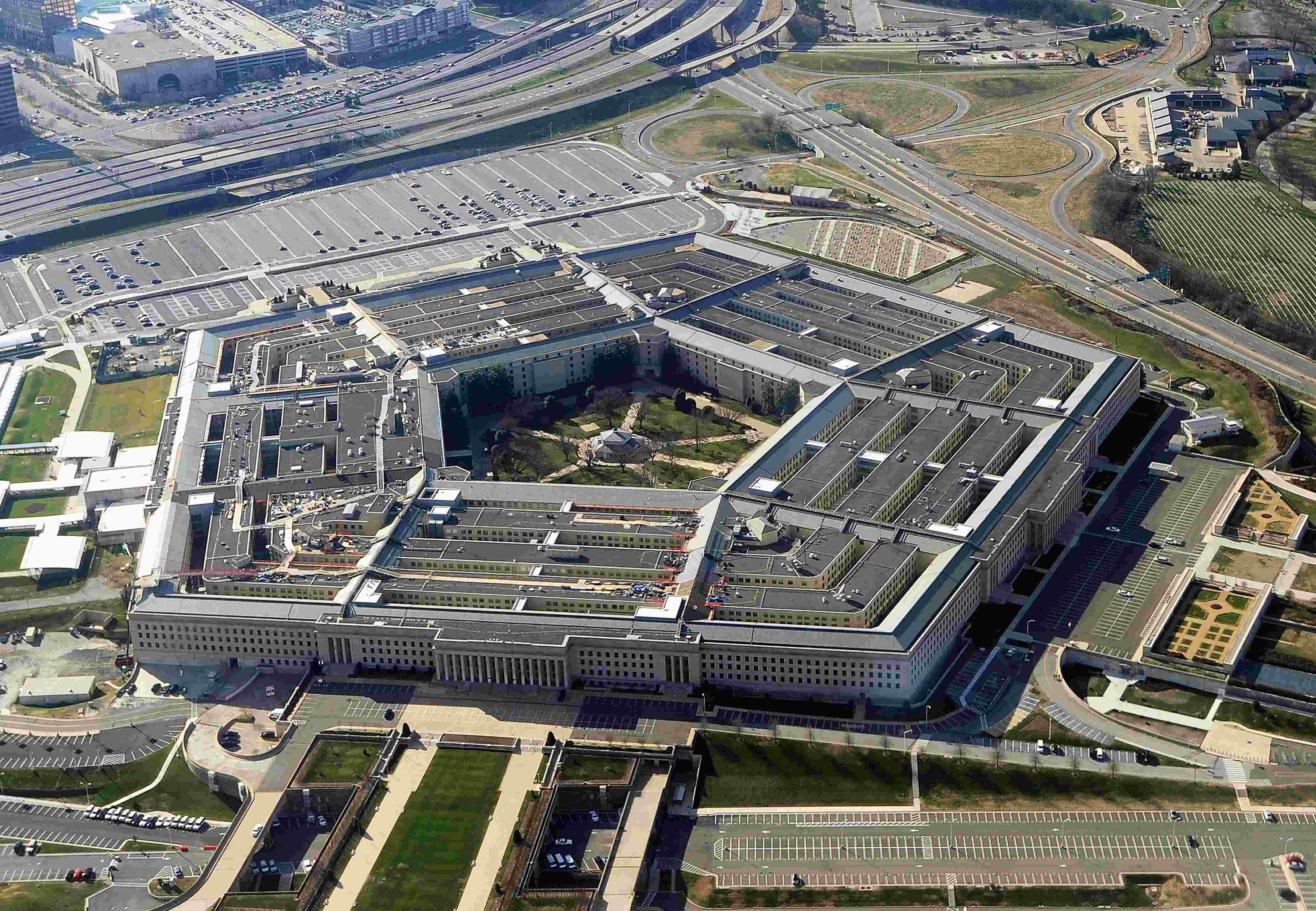
Source: Getty
Of all federal spending other than the mandatory allotments to entitlements and interest on the national debt, discretionary spending is everything else the government does.
Source: Washington Post
Robert J. Samuelson’s July 29 op-ed, “Are we shortchanging the military?,” seemed to have an underlying assumption that the issue is “the defense budget vs. the welfare state.” The reason we exist as a country — reasons succinctly proclaimed in the Constitution’s preamble and clearly stated as a major goal of the founders of this union — is to “provide for the common defense” and “promote the general Welfare.” It is not either-or, but both-and.
We debate and argue about the details, of course. But sometimes the pro-defense advocates ignore or denigrate a basic promise of our Constitution: to promote the general welfare.
Michael Stout, Washington
Robert J. Samuelson’s July 29 op-ed attacked my July 18 New York Review of Books article on defense spending, calling my arguments “false, deceptive or incomplete.”
He claimed I use a “misleading trick” that only “budget wonks” would spot. Nonsense. What I wrote was “the valid measure of affordability is defense spending’s share of the federal discretionary budget: that is, of all federal spending other than the mandatory allotments to entitlements and interest on the national debt. Discretionary spending is everything else the government does.” What could be clearer? And, just as I wrote, defense spending is close to 60 percent of this discretionary pot on which Congress can, each year, work its will.
I noted the United States spends more on defense than the next eight countries combined. Mr. Samuelson called this a “statistical fluke” because I failed to compare countries’ spending using “purchasing power parity” — estimates based on a theoretical basket of goods and services that reflect purchasing patterns in each country. Military spending differs. The price of conscripts is likely to be lower than such a typical basket; the price of advanced weapons systems much higher. Market exchange rates are therefore more accurate.
Mr. Samuelson called my piece a “tirade” that peddles an “anti-defense mythology” based on “mostly fictions.” I invite readers to judge the tone and reasoning of the piece for themselves. My facts, from official sources, are correct. My core arguments, which he ignored, are worthy of attention.

Distinguished Fellow
Mathews is a distinguished fellow at the Carnegie Endowment for International Peace. She served as Carnegie’s president for 18 years.
Recent Work
Jessica Tuchman Mathews
Jessica Tuchman Mathews
Carnegie does not take institutional positions on public policy issues; the views represented herein are those of the author(s) and do not necessarily reflect the views of Carnegie, its staff, or its trustees.

Russia is testing the waters of NATO’s mutual defense clause. What do strikes in Romanian territorial waters mean for the alliance’s posture toward Moscow?

Dimitar Bechev

With its public finances in shambles, the far right polling at 35 percent ahead of the 2027 presidential election, and a growing protest movement, is France’s crisis a threat to the EU’s geopolitical awakening?

Rym Momtaz, ed.

Ahead of a tough winter for Ukraine, Donald Trump’s swing back toward Russia bodes ill. But instead of panicking, Kyiv’s European allies are focusing on action.
Rym Momtaz

While the EU and European governments are embracing the much-lauded middle-power moment, this entails three difficult conundrums.

Richard Youngs

Europe is facing rising populism internally as well as external pressures from Russia, China, Turkey, and the United States.
Dimitar Bechev