

Other
François Godement, Ashley J. Tellis
{
  "authors": [
    "François Godement"
  ],
  "type": "legacyinthemedia",
  "centerAffiliationAll": "dc",
  "centers": [
    "Carnegie Endowment for International Peace"
  ],
  "collections": [],
  "englishNewsletterAll": "asia",
  "nonEnglishNewsletterAll": "",
  "primaryCenter": "Carnegie Endowment for International Peace",
  "programAffiliation": "AP",
  "programs": [
    "Asia"
  ],
  "projects": [],
  "regions": [
    "East Asia",
    "China"
  ],
  "topics": [
    "Economy"
  ]
}
Source: Getty
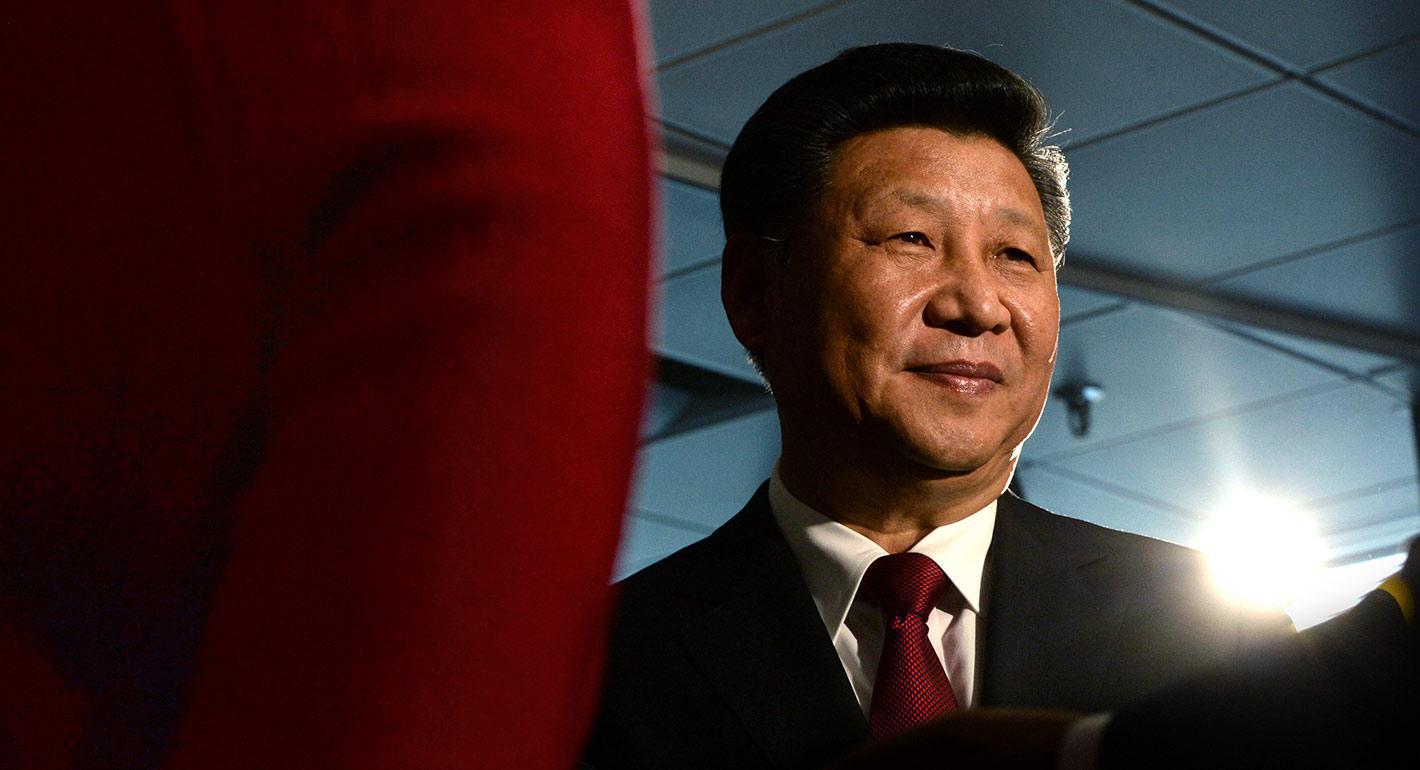
Xi Jinping bases his actions against the prophecy of CCP decline and what he saw as a drift to the West.
Source: Institut Montaigne
Two decades ago – it feels like a century – this writer heard a prediction by an observer of China: the Party would lose its grip because its communist DNA was fragmenting, while civil society exercised pressure from within China. We identified Communism with a society of scarcity and with very low productivity of capital. Since the West admitted China into WTO and made it a key component of the global value chain, it followed that Communism would melt inside the growing market economy. China’s central plans had never controlled the whole economy: they included only 150-200 products, when the Soviet Gosplan dealt with 1500 to 2000 products. Agrarian collectivization had lasted only 25 years in China – barely a generation, not enough to create a society of Socialist workers. The pull of Western ideas was always immense, from 19th-century reformers to the May 1919 modernizers, and to elites who went abroad under Deng Xiaoping. Occidendalists had to win the day against chauvinists.
Nothing could have been further from what has happened. It is indeed against the prophecy of CCP decline and what he saw as a drift to the West that Xi Jinping bases his action. True, he found some of his toolbox inside the surviving Party-state. Deng had refused the separation of the Party from the state. Zhu Rongji, who is still seen as a liberal reformer in the West, had in reality given back control of China’s budget to the state center. Even if the murderous mass campaigns of Mao’s era had disappeared, there were repressive movements launched throughout the Reform era.
But Xi Jinping has gone much further. After gaining power, he named Gorbachev as the arch-enemy. In his most recent known speech, he uses the word "struggle" 56 times, and also the expression "great struggle", which has been resurrected from the Cultural Revolution since 2012. His official CV never fails to mention his degree in Marxist studies – actually, a reportedly tepid dissertation on agrarian economics.
This article was originally published by Institut Montaigne.

Former Nonresident Senior Fellow, Asia Program
Godement, an expert on Chinese and East Asian strategic and international affairs, was a nonresident senior fellow in the Asia Program at the Carnegie Endowment for International Peace.
Recent Work
François Godement, Ashley J. Tellis
François Godement, Abigaël Vasselier

While the EU and European governments are embracing the much-lauded middle-power moment, this entails three difficult conundrums.

Richard Youngs

Europe is facing rising populism internally as well as external pressures from Russia, China, Turkey, and the United States.

Dimitar Bechev

The European Commissioner for Trade is headed to China. But after President Xi’s bridge-building visit to Washington, can a more isolated EU overcome Beijing’s stranglehold on critical raw materials? Who will blink first?

Rym Momtaz, ed.

The domestic impacts of how long it is taking to end the war in Ukraine have pushed the French electorate to the political extremes and compromised the country’s diplomatic capacity.
Rym Momtaz

A summer of escalation in the Black Sea has hurt Ukraine economically and is exacerbating world food security. A truce is needed—as is a broader reframing of Europe’s Ukraine strategy.

Thomas de Waal