

Commentary
The new U.S.–Denmark–Greenland agreement will help Washington exert political, economic, and financial dominance under the guise of security. Yet, it acknowledged Copenhagen’s and Nuuk’s sovereignty on the island.
Marc Pierini
{
  "authors": [
    "Toby Dalton",
    "Gaurav Kalwani"
  ],
  "type": "legacyinthemedia",
  "centerAffiliationAll": "dc",
  "centers": [
    "Carnegie Endowment for International Peace"
  ],
  "collections": [],
  "englishNewsletterAll": "ctw",
  "nonEnglishNewsletterAll": "",
  "primaryCenter": "Carnegie Endowment for International Peace",
  "programAffiliation": "NPP",
  "programs": [
    "Nuclear Policy"
  ],
  "projects": [],
  "regions": [
    "South Asia",
    "India",
    "Pakistan"
  ],
  "topics": [
    "Security"
  ]
}
Source: Getty
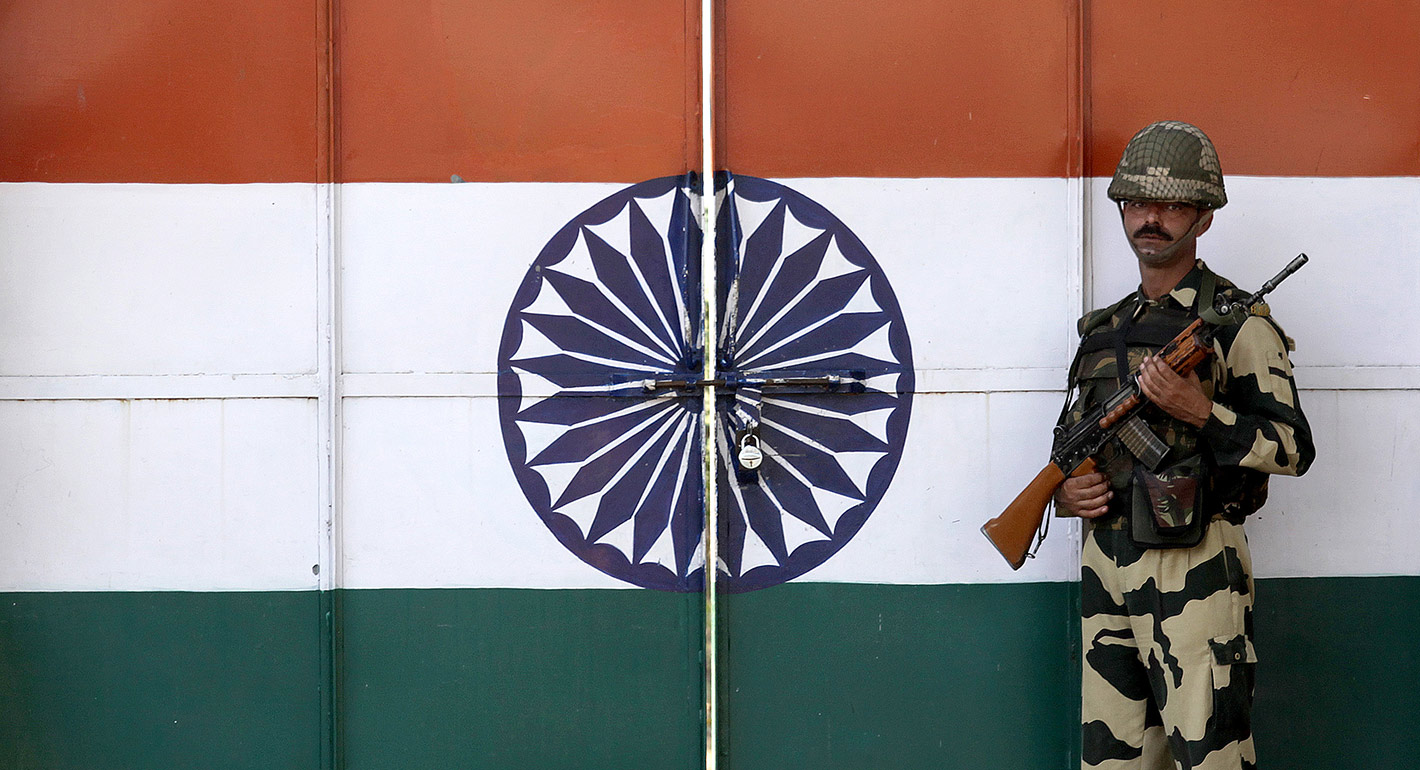
The next crisis between India and Pakistan might originate from an Indian offensive to seize territory in Kashmir. If so, the chances of the conflict escalating to war are more likely than currently predicted.
Source: War on the Rocks
What will trigger the next crisis in South Asia? Conventional wisdom holds that it will follow a script common to successive crises since the early 1990s. The pattern starts with a high-casualty terror attack in India, attributed to Pakistan-based militant groups with a long history of carrying out cross-border operations, which then puts the onus on India to calibrate escalation in its response. Just because nearly every crisis between India and Pakistan in the last three decades began with an act of cross-border terrorism, however, does not mean that other potential catalysts should be neglected.
One intriguing alternative deserves scrutiny: Instead of an attack in India that initiates crisis, what if one arose following a proactive Indian operation to seize territory over the Line of Control (LOC) in the portion of the disputed territory of Kashmir controlled by Pakistan? Indian leaders have contemplated such operations in the past, and the current government in India has demonstrated its willingness to take considerable risks, including in the February 2019 crisis. Moreover, New Delhi’s August 2019 decision to revoke the special constitutional status of Kashmir underscores its willingness to reconsider long-standing norms and practices. If the next crisis starts with an Indian operation, the odds are much greater that it will escalate quickly to war for reasons that the conventional South Asia crisis wisdom tends to discount.

Senior Fellow and Co-director, Nuclear Policy Program
Toby Dalton is a senior fellow and co-director of the Nuclear Policy Program at the Carnegie Endowment. An expert on nonproliferation and nuclear energy, his work addresses regional security challenges and the evolution of the global nuclear order.
Gaurav Kalwani
Former Research Assistant, Nuclear Policy Program
Gaurav Kalwani was a research assistant with the Nuclear Policy Program.
Carnegie does not take institutional positions on public policy issues; the views represented herein are those of the author(s) and do not necessarily reflect the views of Carnegie, its staff, or its trustees.

The new U.S.–Denmark–Greenland agreement will help Washington exert political, economic, and financial dominance under the guise of security. Yet, it acknowledged Copenhagen’s and Nuuk’s sovereignty on the island.

Marc Pierini

A summer of escalation in the Black Sea has hurt Ukraine economically and is exacerbating world food security. A truce is needed—as is a broader reframing of Europe’s Ukraine strategy.

Thomas de Waal

Are Germany’s economic, industrial, and political struggles becoming a liability for the EU’s ability to rise to the geopolitical moment?

Rym Momtaz, ed.

European states control several Overseas Countries and Territories around the world that carry strategic, economic, and environmental weight. As great powers challenge the rules-based order, defending them is a geopolitical imperative for Europe.
Marc Pierini

Mounting economic strain and battlefield losses will not necessarily make the Kremlin less dangerous. They could instead push Moscow toward a more aggressive hybrid campaign designed to test NATO’s Eastern flank, exploit allied hesitation, and fracture European resolve.


Maksym Beznosiuk, Robert Benson