

Other
François Godement, Ashley J. Tellis
{
  "authors": [
    "François Godement"
  ],
  "type": "legacyinthemedia",
  "centerAffiliationAll": "dc",
  "centers": [
    "Carnegie Endowment for International Peace"
  ],
  "collections": [],
  "englishNewsletterAll": "asia",
  "nonEnglishNewsletterAll": "",
  "primaryCenter": "Carnegie Endowment for International Peace",
  "programAffiliation": "AP",
  "programs": [
    "Asia"
  ],
  "projects": [],
  "regions": [
    "North America",
    "United States"
  ],
  "topics": [
    "Economy"
  ]
}
Source: Getty
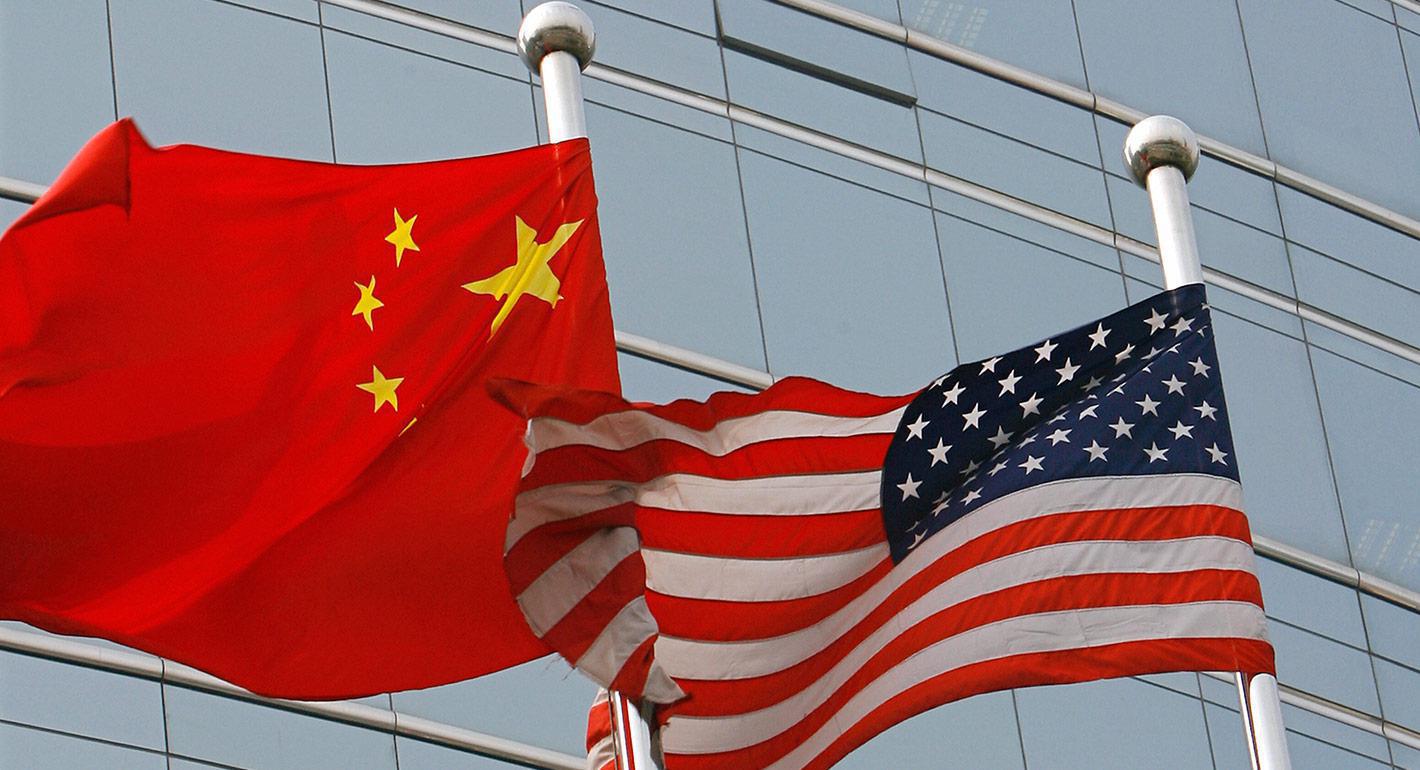
The coronavirus crisis has provided a live experiment of the consequences of a massive, if perhaps short-term, involuntary decoupling between China and the United States.
Source: Institut Montaigne
As fate would have it, the coronavirus crisis has provided a live experiment of the consequences of a massive, if perhaps short-term, involuntary decoupling. The interruption of global value chains leads to the sudden stoppage of factories far away from China – tourism and the travel industry, the auto industry, pharmaceuticals where China is a leading provider of ingredients, smartphone production, and a dive in prices for energy and raw materials. Financial consequences are less easy to ascertain as we write, simply because the direction of China’s foreign trade and the current account has become unpredictable over the next few weeks or months. It also has implications for future preventive measures against such an event: overdependence on any single supplier is obviously a hazard. Regardless of geopolitical trends, the virus crisis will lead many companies to further diversify their choices of location for production capacities and sourcing.
"Decoupling" has been the keyword lurking in the shadow of the US-China trade conflict since the election of Donald Trump. It is not recognized as a policy by his administration, even as it restricts some exports and exchanges with China in the name of national security. Yet, it is often cited by Chinese commentators and by partners alike, especially in East Asia. The measures taken – and to some degree contemplated or partially enacted by the European Union and Japan – are much more narrowly focused on a few key areas: a reinforcement of oversight over foreign direct investment, placement on an "entity list" of companies suspected with acquiring items related to national security and critical technologies, a reinforced law enforcement effort against technological espionage, including illegal tech transfers.
At its most extensive, the administration has owned up to the word decoupling by explaining that this had been China’s actual policy for years, through restrictions on foreign investment and public markets, a largely closed internet, the drive for self-reliance and domestic technologies. Requiring "reciprocity" from China may indeed lead to asymmetrical decoupling from the Chinese economy.
This article was originally published by Institut Montaigne.

Former Nonresident Senior Fellow, Asia Program
Godement, an expert on Chinese and East Asian strategic and international affairs, was a nonresident senior fellow in the Asia Program at the Carnegie Endowment for International Peace.
Recent Work
François Godement, Ashley J. Tellis

François Godement, Abigaël Vasselier
Carnegie does not take institutional positions on public policy issues; the views represented herein are those of the author(s) and do not necessarily reflect the views of Carnegie, its staff, or its trustees.

A summer of escalation in the Black Sea has hurt Ukraine economically and is exacerbating world food security. A truce is needed—as is a broader reframing of Europe’s Ukraine strategy.

Thomas de Waal

European Commission President Ursula von der Leyen is about to give her annual address on the state of the EU. Here’s what she won’t—but should—say.

Rym Momtaz

Radical-right parties are expected to do well in upcoming elections in four of the EU's biggest member states. If successful, they could prevent the union from addressing key challenges ahead.

Stefan Lehne

Canadian Prime Minister Mark Carney has twice inspired praise for standing up to U.S. President Donald Trump: at the 2026 World Economic Forum in Davos and on Canada-U.S. trade negotiations. Is Carney showing a third way better than the EU has in dealing with the Trump administration?
Rym Momtaz, ed.

European states control several Overseas Countries and Territories around the world that carry strategic, economic, and environmental weight. As great powers challenge the rules-based order, defending them is a geopolitical imperative for Europe.

Marc Pierini