

Book
Europe is facing rising populism internally as well as external pressures from Russia, China, Turkey, and the United States.
Dimitar Bechev
{
  "authors": [
    "François Godement",
    "Mathieu Duchâtel",
    "Viviana Zhu"
  ],
  "type": "other",
  "centerAffiliationAll": "dc",
  "centers": [
    "Carnegie Endowment for International Peace"
  ],
  "collections": [],
  "englishNewsletterAll": "asia",
  "nonEnglishNewsletterAll": "",
  "primaryCenter": "Carnegie Endowment for International Peace",
  "programAffiliation": "AP",
  "programs": [
    "Asia"
  ],
  "projects": [],
  "regions": [
    "East Asia",
    "Eastern Europe",
    "Western Europe"
  ],
  "topics": [
    "Political Reform",
    "Security"
  ]
}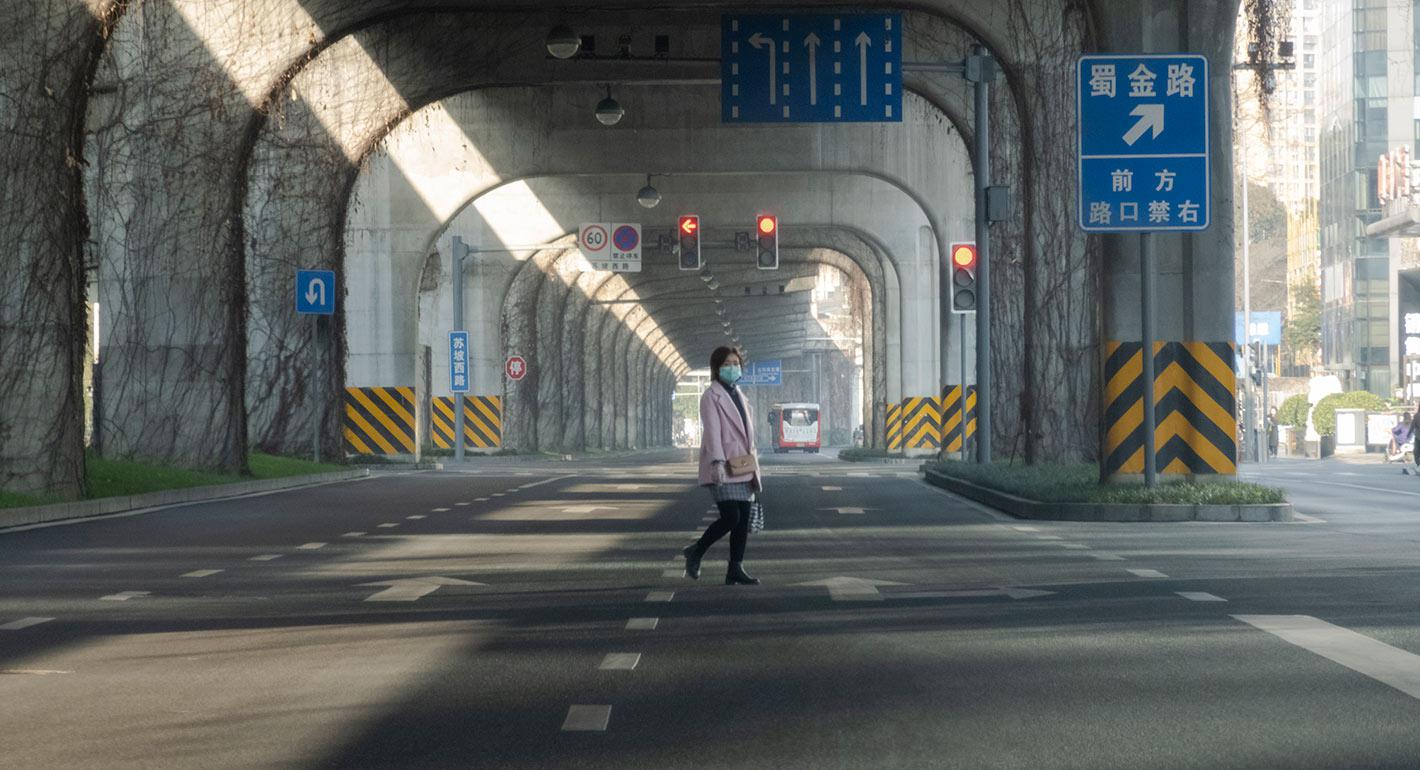
Source: Getty
What are the lessons from East Asian countries on their management of the coronavirus crisis and can the early methods that many of them deployed to avoid full lockdown be useful for Europe?
Source: Institut Montaigne
What are the lessons from East Asian countries on their management of the Covid-19 crisis? Can the early methods that many of them deployed to avoid full lockdown be useful for our post-confinement phase in Europe?
In the first three months of 2020, East Asian states used several policy tools to prevent an exponential increase of cases: masks of course, but also strict quarantine implementation, epidemiological investigations, massive use of digital tools, strong mobilization of the industrial sector for medical supplies.
The first lesson of this policy paper is about the importance of early warning and immediate action, through previously set up centers to communicate and coordinate public action. First signs of a severe pneumonia of unknown origin spreading in Wuhan were confirmed on December 31, 2019. Monitoring for symptoms in incoming passengers from Wuhan helped to contain local outbreaks of Covid-19. There, the lessons learned from SARS (Severe Acute Respiratory Syndrome) and MERS (Middle East Respiratory Syndrome) played a useful role.
China is of course a special case, where appropriate responses only started on January 20. In Hubei province, the contagion had reached such a level that the only option was a full lockdown. Nonetheless, if lockdown and quarantines have been more forcefully used in China than anywhere else, other policy tools bear some resemblance to the actions by the five other East Asian countries. The other unique feature that stands out is China’s ability to mobilize its industry quickly for medical supplies. With this policy paper, Institut Montaigne offers a comparative overview of the policy responses of China, South Korea, Hong Kong, Japan, Singapore and Taiwan to the pandemic. Each case study includes a detailed timeline of events and measures taken in anticipation or during the crisis, to contain the spread of the virus, adapt social behavior and the healthcare system to the pressures created by this new virus, and favor emergency support of public welfare and the economy.
This policy paper was originally published by the Institut Montaigne.

Former Nonresident Senior Fellow, Asia Program
Godement, an expert on Chinese and East Asian strategic and international affairs, was a nonresident senior fellow in the Asia Program at the Carnegie Endowment for International Peace.
Mathieu Duchâtel
Mathieu Duchâtel is Director of the Asia Program at Institut Montaigne since January 2019.
Viviana Zhu
Viviana Zhu is the Policy Officer for Institut Montaigne’s Asia Program since January 2019.
Carnegie does not take institutional positions on public policy issues; the views represented herein are those of the author(s) and do not necessarily reflect the views of Carnegie, its staff, or its trustees.

Europe is facing rising populism internally as well as external pressures from Russia, China, Turkey, and the United States.

Dimitar Bechev

A notable degree of participative democracy has firmly arrived in Europe. But to have more far-reaching impact, democratic deliberation needs to move into a radically new phase.

Richard Youngs

Before the next wave of EU enlargement takes place, the union needs to grapple with thorny questions of how power is distributed among its members.


Emil Sondaj Hansen, Ditte Brasso Sørensen

The new U.S.–Denmark–Greenland agreement will help Washington exert political, economic, and financial dominance under the guise of security. Yet, it acknowledged Copenhagen’s and Nuuk’s sovereignty on the island.

Marc Pierini

A summer of escalation in the Black Sea has hurt Ukraine economically and is exacerbating world food security. A truce is needed—as is a broader reframing of Europe’s Ukraine strategy.

Thomas de Waal