

Commentary
Evan A. Feigenbaum
{
  "authors": [
    "Evan A. Feigenbaum"
  ],
  "type": "commentary",
  "centerAffiliationAll": "dc",
  "centers": [
    "Carnegie Endowment for International Peace"
  ],
  "collections": [],
  "englishNewsletterAll": "asia",
  "nonEnglishNewsletterAll": "",
  "primaryCenter": "Carnegie Endowment for International Peace",
  "programAffiliation": "AP",
  "programs": [
    "Asia"
  ],
  "projects": [],
  "regions": [
    "North America",
    "United States",
    "East Asia",
    "China"
  ],
  "topics": [
    "Economy",
    "Trade",
    "Security",
    "Foreign Policy"
  ]
}
Source: Getty
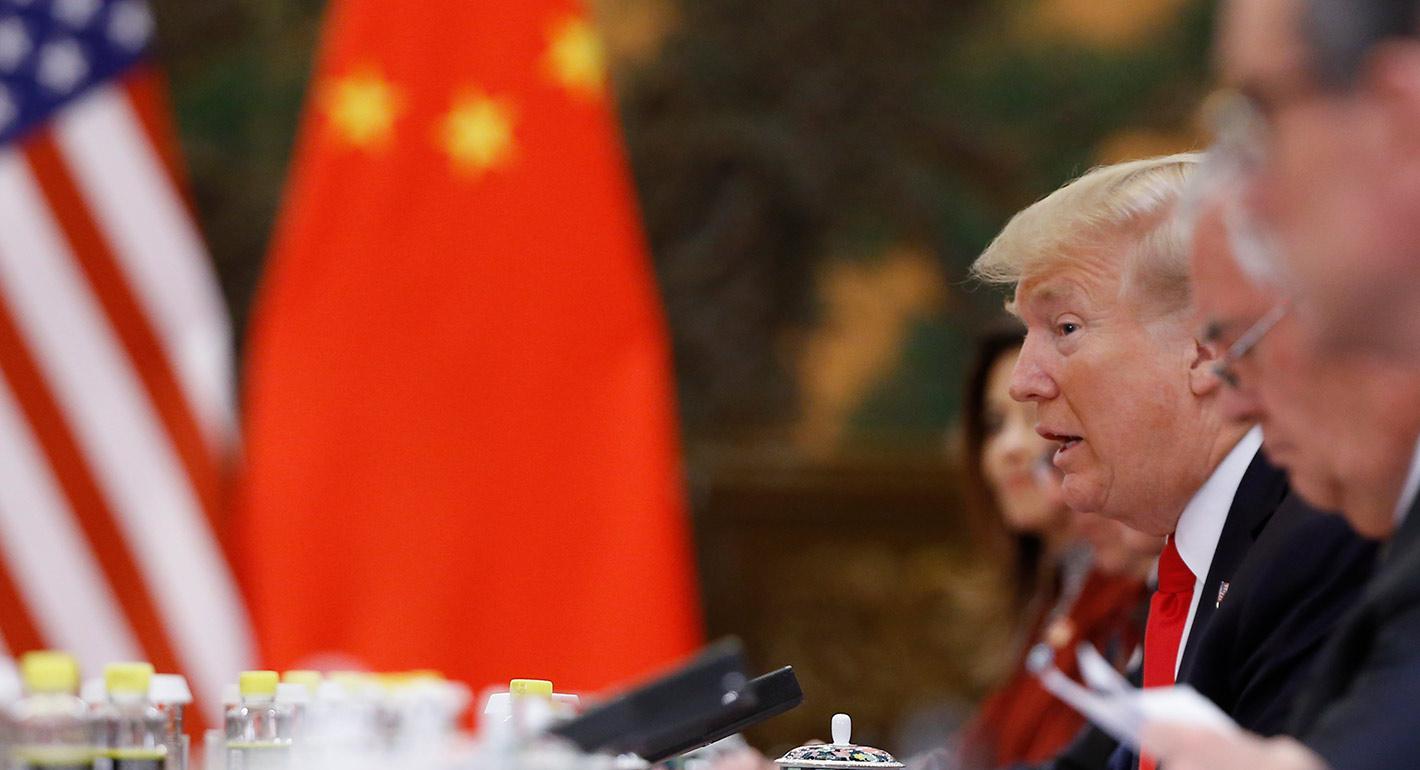
Countries don’t need to be “friends” to get meaningful things done. But U.S.-China strategic competition is giving way to a kind of “managed enmity” that is disrupting the world and forestalling the prospect of transnational responses to transnational threats.
In February 1972, then president Richard M. Nixon landed in Beijing to formalize the establishment of official contact between the United States and the People’s Republic of China.
That journey to Beijing had been a long one for Nixon—a man who began his career as a noted anti-Communist and was vice president to Dwight D. Eisenhower, the last U.S. president to make a state visit to Taiwan, which the United States then recognized as the seat of the legitimate government of all China.
But even by 1967, two years before he took office as president, Nixon had already developed some strong ideas about what the relationship between the United States and China might mean for the world—or not.
When Nixon ultimately made his famous visit to Beijing, China was still crawling out of the mass hysteria of the Cultural Revolution, and Washington and Beijing were fighting a bitter proxy war in Vietnam. So, Nixon surely had no illusions about two things—first, that the United States and China did not share political systems, much less political ideologies; and second, that while both countries were in conflict with the Soviet Union, they shared few security concepts either.
It should be no surprise, therefore, that in the forty-eight years since then, Chinese Communism and American constitutionalism have repeatedly clashed and collided.
But Nixon did think that the nature of China’s involvement with the world—and the U.S. relationship with China—was going to matter a lot. And so, Nixon wrote in a now famous 1967 essay in Foreign Affairs magazine: “We simply cannot afford to leave China forever outside the family of nations, there to nurture its fantasies, cherish its hates, and threaten its neighbors.”
On that premise, once he had taken office as president, Nixon sought to open a relationship between Communist China and the United States.
But in 2020 all that lies deep in the recesses of history. Today, both countries—and the world—are in a vastly different era. And the U.S.-China relationship is more fraught than it has been in a generation.
The strategic competition between the United States and China is deep, abiding, and intensifying. In many areas, especially those related to the security future of the Indo-Pacific region, it is now crystal clear that U.S. and Chinese interests will clash—and clash often.
But these U.S.-China tensions raise tough questions for the rest of the world—not just about what China and the United States are doing but, perhaps more importantly, about what they are not doing. Neither Washington nor Beijing is helping to organize and lead a collective global response to the new coronavirus, the most acute health and economic crisis since World War II. They are not mobilizing the Group of 20, nor international institutions, nor multinational health and financial instruments. And that leaves too many other countries to fend for themselves against the dreadful predations of the virus.
So, U.S.-China strategic competition is giving way to a kind of “managed enmity” that is disrupting the world and forestalling the prospect of transnational responses to transnational threats.
But strategic competition between the United States and China is not, in itself, new at all. It is a feature, not a bug, of the U.S.-China relationship. So, the fact that prior episodes of coordination are not being replicated today is the result of several new dynamics:
The net result of all this is that security competition is bleeding back into every area of U.S.-China interaction, from economic exchange to scientific research, and even infectious disease prevention, mitigation, and vaccine development.
And yet the fact is, over the last twenty years, these two countries did coordinate, act in complementary ways, and help lead global responses to global threats—coordination happened despite their strategic tension.
But now the two countries that have led the globalization of the world economy for the past twenty-five years are failing—utterly—to foster collective action during the global health crisis set off by the coronavirus. Instead, they are racing to the bottom, with both governments refracting the outbreak through the prism of their geopolitical competition while hurling insults about each other’s competence and intent.
What has happened?
For one thing, the United States and China have always had ideological, political, and security tensions. But once they began to exchange goods, capital, people, and technology on a large scale in the 1990s, each country shelved at least some of its political and security concerns about the other. In effect, they consented to let forces of economic integration work their will.
As a result, many people came to presume that economic integration would mitigate security competition. But that has not happened. In fact, if anything, military tensions and competitive security dynamics are actually intensifying—from the South China Sea to the Taiwan Strait.
What is more, now those security dynamics are bleeding back into trade, investment, educational exchanges, scientific research, and nearly everything that the United States and China either do, or could do, together.
That means the things that were supposed to integrate the two countries are actually dividing, not uniting, them. And this dynamic has become worse in recent years, intensifying, in particular, in the years since Xi Jinping came to power in China in 2012. Chinese foreign policies have become more pugnacious and assertive, Chinese domestic policies more statist, and China itself considerably less open than in the prior decade.
But amid all that, the central lesson of past crisis coordination between Washington and Beijing is that coordination can and should be possible even when the two countries do not get along. Sadly, however, both China and the United States have forgotten a good deal of that shared history.
Four lessons flow from this:
First, countries don’t need to be “friends” to get meaningful things done.
When the United States and China coordinated in past crises, altruism had nothing to do with it. Beijing and Washington coordinated for self-interested reasons, not because they were in love, shared deep ties of affection, or even because either of them was much interested in providing global public goods through any sort of joint effort.
As former treasury secretary Hank Paulson has argued in discussing the 2008 financial crisis, the things that China helped him to get done were also the things that China wanted to see done. And the things that he tried to convince Beijing to do that were more about U.S. needs than Chinese interests, quite simply did not yield cooperation.
Second, that means the United States and China don’t need common interests to get things done, just complementary ones.
And if these two countries do not have a complementary interest in halting the worst global pandemic in over a hundred years and stopping it from wreaking havoc on the world economy, then there are virtually no other areas in which they could possibly have complementary goals.
Third, U.S.-China geopolitical competition is real. And nobody can simply wish that away.
Working together on things like stopping Ebola, or reducing the production and consumption of hydrofluorocarbons, or forestalling financial contagion, or assuring food safety is not necessarily a platform to fix the hardest things between the United States and China. But those instances have demonstrated what is possible when interests do coincide.
That matters for Americans, for Chinese, and for everybody else because it would not have been easier to stop Ebola if these two countries had instead been working to obstruct one another. Nor would it have forestalled financial contagion if these two countries hadn’t taken some complementary steps.
Fourth, coordination is incredibly hard.
Governments, regimes, and leaders do not act against their self-defined interest. The financial crisis provides an ideal example because before he was treasury secretary, Paulson had worked closely with Chinese leaders for decades, including as the chairman and chief executive of Goldman Sachs. But even he couldn’t get the Chinese to do some things during the 2008 crisis.
At the end of the day, U.S. and Chinese actions are dictated by U.S. and Chinese interests. And it requires incredibly hard work by people with vision, persistence, and a sense of the moment to produce cooperation.
There is no magic wand to induce altruistic joint action. But it is hard to solve real problems that affect real people the world over when the two most significant actors in the international system not only are not coordinating but are actually working at cross purposes, even if they are doing so for their own purposes.
The question facing the international system is whether and how the countries, governments, and peoples affected by what happens between Beijing and Washington can get those two to coordinate on things that really matter to the entire world. Or to put that a little bit differently, what does the rest of the world do if no crisis is truly big enough anymore to elicit even modest cooperation between Beijing and Washington? The world surely won’t be better off. And past episodes of coordination and cooperation demonstrate how it can sometimes be made better.
The fact is, this pandemic may have led the world to a point where only third parties can change this debilitating dynamic between Beijing and Washington, especially in the immediate crisis. A multinational effort by other countries that leaves China, the United States, or both of them as the spoiler of meaningful collective action is perhaps the only immediate way to arrest this downward spiral, at least with respect to public health and economic mitigation in the current crisis.
But beyond the current crisis, something else might possibly help—a richer understanding of the history that too many people on both sides have forgotten.

Vice President for Studies
Evan A. Feigenbaum is vice president for studies at the Carnegie Endowment for International Peace, where he oversees work at its offices in Washington, New Delhi, and Singapore on a dynamic region encompassing both East Asia and South Asia. He served twice as Deputy Assistant Secretary of State and advised two Secretaries of State and a former Treasury Secretary on Asia.
Recent Work
Evan A. Feigenbaum
Evan A. Feigenbaum
Carnegie does not take institutional positions on public policy issues; the views represented herein are those of the author(s) and do not necessarily reflect the views of Carnegie, its staff, or its trustees.

The U.S.-sponsored TRIPP deal is driving the Armenia-Azerbaijan peace process forward. But foreign and domestic hurdles remain before connectivity and economic interdependence can open up the South Caucasus.



Thomas de Waal, Areg Kochinyan, Zaur Shiriyev
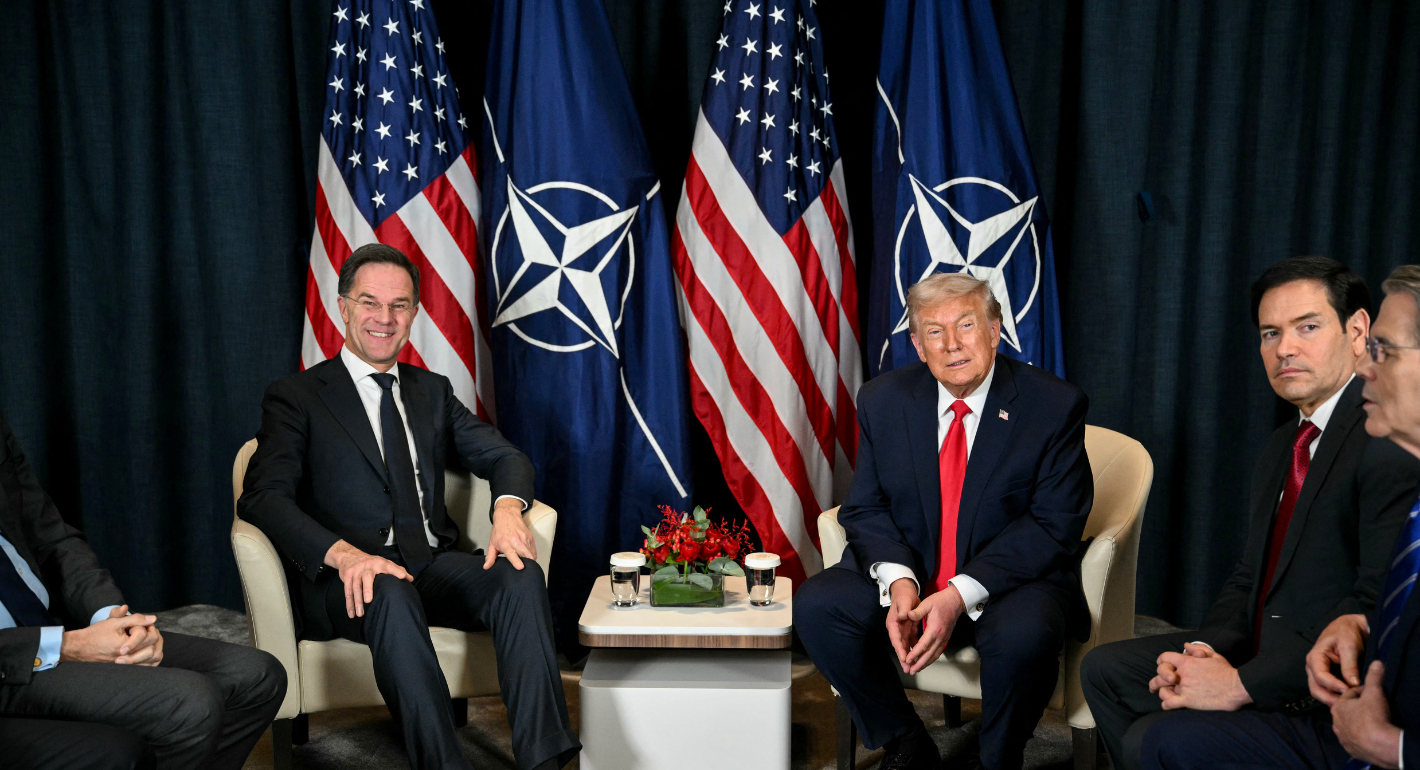
Donald Trump has demanded that European allies send ships to the Strait of Hormuz while his war of choice in Iran rages on. He has constantly berated NATO while the alliance’s secretary-general has emphatically supported him.

Rym Momtaz, ed.
The EU is structurally incapable of reacting to today’s foreign policy crises. The union must fold the EEAS into the European Commission and create a security council better prepared to take action on the global stage.

Stefan Lehne
The war in Ukraine is costing Russia its leverage overseas. Across the South Caucasus and Middle East, this presents an opportunity for Europe to pick up the pieces and claim its own sphere of influence.


William Dixon, Maksym Beznosiuk

Amid increased polarization and the influence of disinformation, radical-right parties are once again gaining traction across Europe. With landmark elections on the horizon in several countries, are the EU’s geostrategic vision and fundamental values under existential threat?


Catherine Fieschi, Cas Mudde