

Commentary
Bader Al-Saif
{
  "authors": [
    "Bader Al-Saif"
  ],
  "type": "other",
  "centerAffiliationAll": "dc",
  "centers": [
    "Carnegie Endowment for International Peace",
    "Malcolm H. Kerr Carnegie Middle East Center"
  ],
  "collections": [
    "Coronavirus"
  ],
  "englishNewsletterAll": "menaTransitions",
  "nonEnglishNewsletterAll": "",
  "primaryCenter": "Malcolm H. Kerr Carnegie Middle East Center",
  "programAffiliation": "MEP",
  "programs": [
    "Middle East"
  ],
  "projects": [],
  "regions": [
    "Gulf",
    "Kuwait",
    "Middle East"
  ],
  "topics": [
    "Economy",
    "Political Reform"
  ]
}
Source: Getty
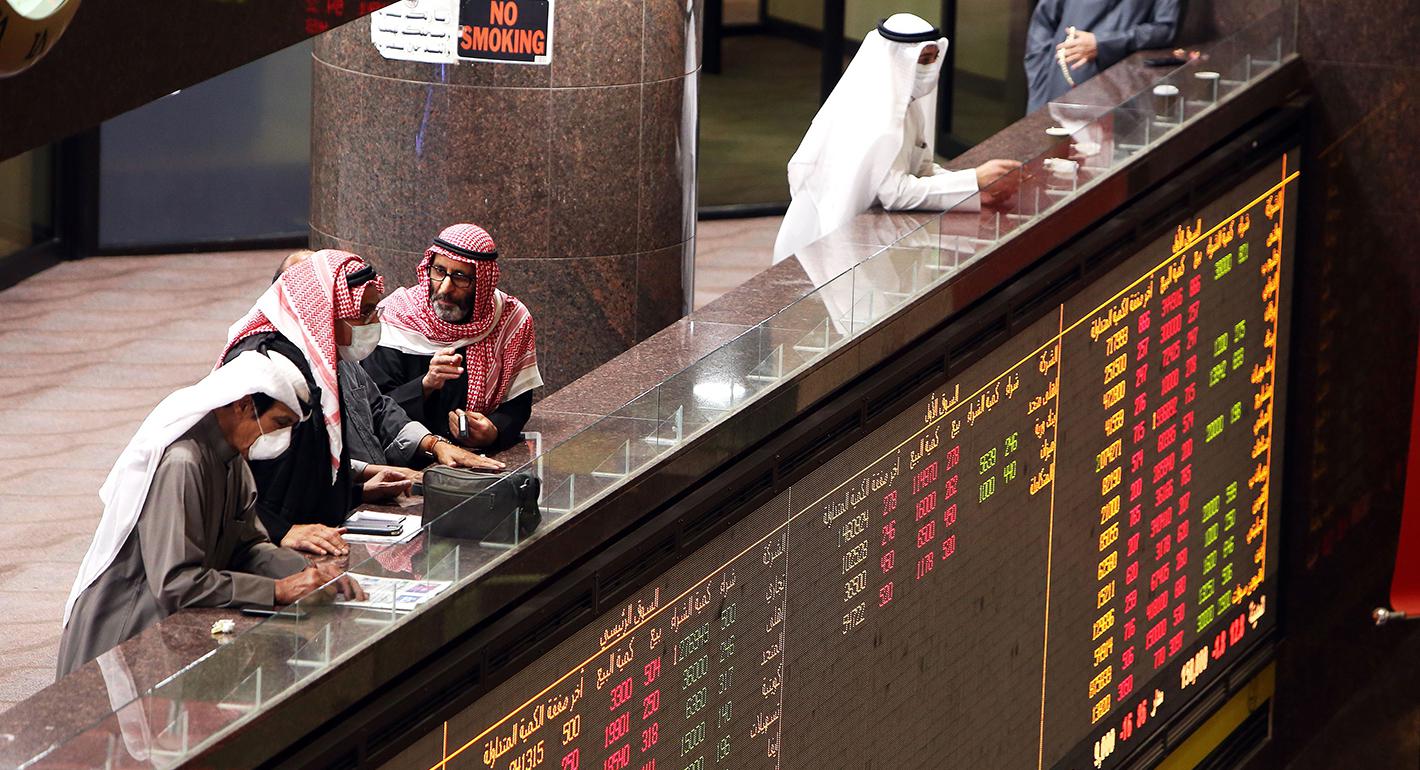
Kuwait was known as the “Pearl of the Gulf” until a major crisis hit – its 1990-91 occupation by Iraq. Now a second crisis provides a golden opportunity for Kuwait to up its game and recover its status.
Source: ITALIAN INSTITUTE FOR INTERNATIONAL POLITICAL STUDIES
The first hundred days of Prime Minister Sabah Al-Khaled Al-Sabah’s first, and Kuwait’s thirty-sixth, government have passed without much fanfare. The new PM has the novel coronavirus both to blame and thank. Even though this is a government that is intended to be short-lived until the next parliamentary elections in Fall 2020, the pandemic has breathed new life into the executive branch and enhanced the standing of the incoming PM. It transformed a government reeling from a parliamentary interpellation and the early resignation of two ministers to an efficient crisis government – a powerhouse working around the clock to manage a developing pandemic. Yet this efficiency is increasingly coming into question, especially with the abrupt onset of the total curfew and the recent rapid spread of the coronavirus across 35 residential districts through their cooperative societies (supermarkets). Given the character of the crisis, many decisions were either reactive or targeted short-term needs. Having absorbed the initial shock and as it prepares for a gradual reopening, the Kuwaiti government would be best served by adopting medium and long terms strategies and more evidence-based policies in line with the country’s participatory culture should they wish to avoid reverting to politics as usual.
Kuwait was one of the earliest states to receive the coronavirus in the region given its proximity to the Middle East’s epicenter at the time, Iran. The government has taken several bold steps to combat and contain the spread of the coronavirus. These measures include early border lockdown and halt on travel; closure of gathering spaces (schools, work, mosques, and malls); imposition of a partial curfew (that went from 11 to 16 hours); a 21-day total curfew since May 10; quarantine of two cities suspected of having a high number of infections; daily Ministry of Health press briefings and unprecedented regular press conferences from several ministers; setup of a national donations drive; daily random testing; and the ongoing repatriation of close to thirty thousand Kuwaitis abroad for free – the largest in Kuwait’s history.All these policies and more are the result of interactive governmental work. The government has been on high alert and constantly convening. Upon the announcement of the first cases on February 24, the government created a higher committee to combat the coronavirus. This interagency taskforce has branched out into sixteen committees charged with specific objectives ranging from education, the economy, IT support, food security, repatriation of Kuwaitis abroad, and so on. These steps have restored the trust of many Kuwaitis in their executive branch and received the praise of the WHO. Yet more is needed to strengthen the country’s response. This is especially the case as the pandemic lingers and the government risks getting fatigued. The following five policy recommendations would be a good start:
- Increase transparency. While the state has done a good job of disseminating information relative to its neighbors, there is more to be done. No sufficient information exists on public spending to combat the pandemic; the number of medical equipment and supplies available; quarantine spaces and capacity by type; home quarantine measures; instructions for repatriation; and pandemic peak expectations. This opaqueness is evident in the leadup to the current complete curfew. The decision was rolled out within two days of a record high in the number of infections, spurring panic and the absence of social distancing in supermarkets in the lead up to the curfew. Due to the dearth of information, the rationale behind the new policy has come under question. The government’s latest decision to ban live TV interviews under health pretexts contravenes the spirit of transparency and free flow of information long characterizing Kuwait in the region. One area where transparency has markedly improved is testing results. Kuwait stopped publicizing its testing ratio in mid-March to only resume sporadic dissemination between April 28-May 13. It now publishes the daily and total number of swabs. The Ministry of Health still needs to clarify whether these numbers reflect swabs for different patients or repeats for the same patient. Full disclosure of information reassures people and alerts to any mishaps or areas in need of attention.
- Enhance intragovernmental cooperation and mobilize community support. While both of these measures are underway, at present they are either embryonic, too sporadic for the focus at hand, or witness infighting. Increasing collaboration and putting forth measures to calibrate efforts will reduce redundancies, maximize costs and human labor, and lead to better results.
- Support the current ramping up of the Gulf Cooperation Council (GCC) and build a unified platform for the six Gulf states. Kuwait has led in this regard by mediating among GCC members. Consolidating support and comparing best practices across a larger geographic space will enable a better pandemic response. The incoming Kuwaiti secretary-general is well positioned to encourage better pan-Gulf coordination. This effort needs to plug in immediate neighbors like Iraq, Iran, and Yemen given the salience of transnational considerations during a fast-moving pandemic. Supporting these states will not only help them, but also aid GCC states and move them closer to reconciliation.
- Kuwait has been leading in humanitarian assistance. It is also the single largest provider of aid to the WHO in its fight against the coronavirus. This needs to continue and increase. It sharpens Kuwait’s soft power and international standing.
- Address non-health issues that impact the ability to manage and contain the pandemic:
a. Migrant workers: With only 30% of Kuwait’s residents holding the Kuwaiti citizenship, foreign labor and expatriate relations rise to the fore:
a.i. Tackle human trafficking disguised as labor management by exposing and persecuting traffickers, the so-called “visa merchants,” regardless of status or background.
a.ii. Apply humane labor housing standards and address social distancing direly missing in current labor residences.
a.iii. Implement the recently reformed labor laws that stipulate minimum wage and honorable living conditions, and suggest new laws if necessary.
a. iv. Persecute all forms of xenophobia and discriminatory behavior.
b. Food security: The GCC approved a Kuwaiti suggestion to create a pan-GCC food security network. This needs to be followed up and shielded from political tensions plaguing member states.
c. Economic stimulus: modest efforts have taken place on this file to date. Missing is a well-planned stimulus and economic relief, especially for those reliant on daily wages and who are likely to forgo the social distancing and curfew rules in order to meet their ends.
d. Educational reforms are needed to create, among several initiatives, a legible online platform to lessen the impact of the pandemic on students, especially since the public educational system in Kuwait is the only one in the Gulf to halt studying due to the lack of proper remote learning infrastructure.
Notwithstanding the criticisms and the high stakes involved, the Kuwaiti government is living its best days in years. In order to ensure the sustainability of the government’s current status, as well to combat the pandemic and ensure the successful implementation of the aforementioned policies, these four perennial problems must be tackled:
I. Corruption: Kuwait ranked last in the GCC on the Corruption Transparency Index in 2019. Its position has severely worsened over the years moving from the 35th rank globally in 2003 to 85th in 2019. This new reality led two ex-MPs to raise the red flag regarding public spending during the pandemic, a response the government viewed as slander as no evidence was presented.
II. Economic overhaul: 95% of Kuwait’s income comes from oil. There is no better time to address the country’s unsustainable reliance on oil amid a pandemic and an oil price crash.
III. Better service provision, whether in education, healthcare, or housing.
IV. Resetting the relationship with Parliament: Both the government and parliament are supposed to last four years. But the chronic tensions between the two has led to 18 governments and 7 parliaments in the last 20 years. The parliament has been largely absent from the scene, but not for long as the pandemic will not be around forever.
Kuwait was known as the “Pearl of the Gulf” until a major crisis hit – its 1990-91 occupation by Iraq. Now a second crisis provides a golden opportunity for Kuwait to up its game and recover its status.
This article was published by Italian Institute for Political Studies.
Former Nonresident Fellow, Malcolm H. Kerr Carnegie Middle East Center
Bader Mousa Al-Saif was a nonresident fellow at the Malcolm H. Kerr Carnegie Middle East Center in Beirut, where his research focuses on the Gulf and Arabian Peninsula.
Recent Work
Bader Al-Saif
Bader Al-Saif
Carnegie does not take institutional positions on public policy issues; the views represented herein are those of the author(s) and do not necessarily reflect the views of Carnegie, its staff, or its trustees.

As the EU confronts profound challenges, several leaders have called for fundamental reform to the union’s model—but only modest, superficial changes have resulted. What if Europe really could be reimagined from zero today: What should such a redesigned European order look like?

Richard Youngs, ed.

When the U.S.-Iran memorandum of understanding was announced, the UK, France, Germany, and Italy declared their readiness to help demine the Strait of Hormuz and lift nuclear sanctions on Tehran. But does Europe need new tools to recover a diplomatic role?

Rym Momtaz, ed.

As geopolitical rivalry weaponizes global supply chains, the EU’s true vulnerability lies in emerging-risk imports. For these goods, suppliers are growing more concentrated, substitution more difficult, and political risk is looming.

Sinan Ülgen

The EU is putting together a new security strategy to meet today’s myriad challenges. But for any proposal to be effective, the union needs to grapple with its identity and ambitions.

Pierre Vimont
The EU’s new migration policy is not suited to today’s realities. With climate change increasingly becoming a driver of displacement, Europe needs to rethink its deterrence-focused approach.

Shana Tabak