

Article
Zaha Hassan
{
  "authors": [
    "Zaha Hassan"
  ],
  "type": "other",
  "centerAffiliationAll": "dc",
  "centers": [
    "Carnegie Endowment for International Peace"
  ],
  "collections": [],
  "englishNewsletterAll": "menaTransitions",
  "nonEnglishNewsletterAll": "",
  "primaryCenter": "Carnegie Endowment for International Peace",
  "programAffiliation": "MEP",
  "programs": [
    "Middle East"
  ],
  "projects": [],
  "regions": [
    "North America",
    "United States",
    "Middle East",
    "Israel",
    "Palestine"
  ],
  "topics": [
    "Security"
  ]
}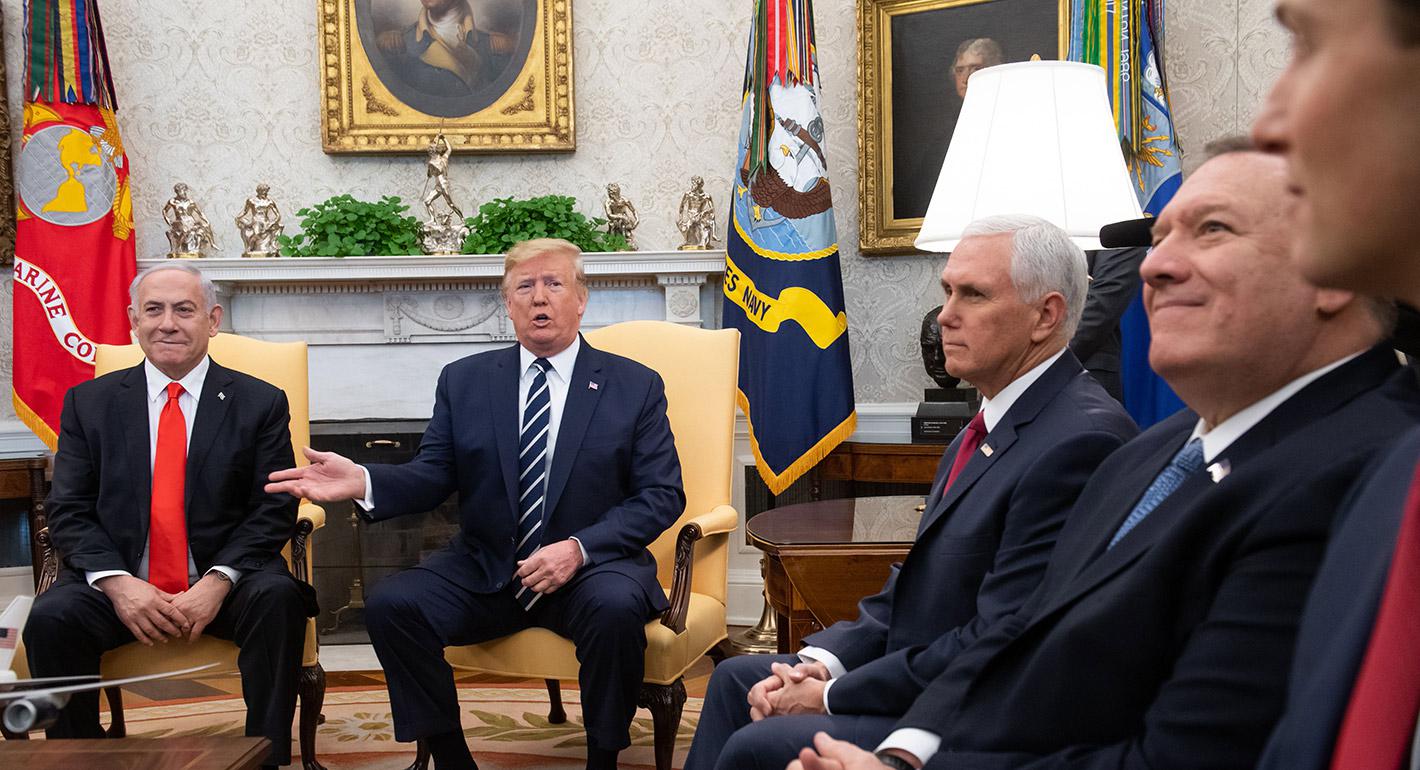
Source: Getty
The history of U.S. mediation between Palestinians and Israelis is one in which Palestinians have had to first negotiate their agency, representation, and peoplehood.
Source: Palestine Strategy Group
The history of US mediation between Palestinians and Israelis is one in which Palestinians have had to first negotiate their agency, representation and peoplehood. When political recognition finally came from Israel and the US, opening the door to peace talks, it was at a considerable cost to the Palestinian national cause. The US has used its influence as lone peace broker and superpower to alter the terms of reference for an agreement while providing political cover for Israel’s expansionist tendencies. In US policy parlance, settlements went from “illegal” under Carter to being on the cusp of official US recognition as Israeli sovereign territory today under Trump. The removal of the refugee issue from the negotiating table did not begin with Trump; it began with Clinton.
Both political parties in the US, whether in control of the White House or Congress, have consistently worked to constrain Palestinians in their ability to operate in the US, to advocate for their rights in international fora, and to receive economic support while negotiating for an end to occupation. The US has done this both acting alone and through its participation in the multilateral mechanism, the Middle East Quartet. Though support for Israeli policies are on the wane among the base of the Democratic Party, the political polarization within the US on Israel/Palestine means that there will not be a significant change in US policy in the near term....
This policy paper was originally published by the Palestine Strategy Group.
Senior Fellow, Middle East Program
Zaha Hassan is a human rights lawyer and a senior fellow at the Carnegie Endowment for International Peace.
Recent Work
Zaha Hassan
Zaha Hassan, Charles H. Johnson
Carnegie does not take institutional positions on public policy issues; the views represented herein are those of the author(s) and do not necessarily reflect the views of Carnegie, its staff, or its trustees.

Canadian Prime Minister Mark Carney has twice inspired praise for standing up to U.S. President Donald Trump: at the 2026 World Economic Forum in Davos and on Canada-U.S. trade negotiations. Is Carney showing a third way better than the EU has in dealing with the Trump administration?

Rym Momtaz, ed.

European states control several Overseas Countries and Territories around the world that carry strategic, economic, and environmental weight. As great powers challenge the rules-based order, defending them is a geopolitical imperative for Europe.

Marc Pierini

In supporting Europe’s far-right, MAGA and Russia both want the same thing: a weaker EU. Europe must defend itself without abandoning the openness these forces exploit.

Armida van Rij

As we close out another season of Strategic Europe, it is worth taking stock of the deep shifts underway.
Rym Momtaz

The hybrid warfare landscape is evolving rapidly, leaving policymakers without clear strategies. To better inform their work in addressing emerging challenges, governments must dig deeper into the underlying dynamics at play.


Raluca Csernatoni, Alicia Wanless