

Commentary
Trump is distracted and Ukraine wants Europe to step up. The continent’s leaders must find their voice and assert it in talks with Russia.
Alissa de Carbonnel
{
  "authors": [
    "Dmitri Trenin",
    "Andrey Kortunov"
  ],
  "type": "legacyinthemedia",
  "centerAffiliationAll": "",
  "centers": [
    "Carnegie Endowment for International Peace",
    "Carnegie Russia Eurasia Center"
  ],
  "collections": [],
  "englishNewsletterAll": "",
  "nonEnglishNewsletterAll": "",
  "primaryCenter": "Carnegie Russia Eurasia Center",
  "programAffiliation": "",
  "programs": [],
  "projects": [],
  "regions": [
    "East Asia",
    "Russia",
    "North Korea"
  ],
  "topics": [
    "Foreign Policy"
  ]
}
Source: Getty
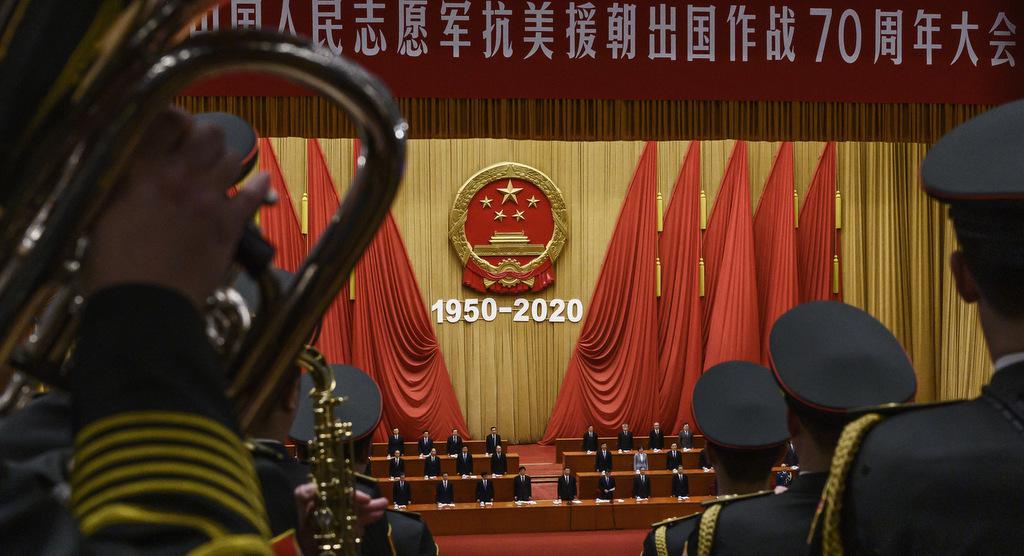
This year marks the 70th anniversary of the outbreak of the Korean War. It was initially a civil war that gradually evolved into an international conflict, during which the Soviet Union and China supported North Korea.
Source: Global Times
Last Friday, China commemorated the 70th anniversary of the Chinese People's Volunteers army entering the Democratic People's Republic of Korea (DPRK) in the War to Resist US Aggression and Aid Korea. How to evaluate China's decision to aid DPRK? What's the significance of commemorating that war nowadays? What lessons can relevant countries draw from the war to better handle conflict? The Global Times talked to two Russian scholars about these important issues.
First, the war was an epic national tragedy for the Korean people. More than two million people, most of them civilians, were killed. The North and the South were almost completely destroyed. Since the war, Korea remains divided. Political and military tensions between the North and the South from time to time escalate to dangerous confrontations. Internationally, the Korean conflict meant that the Cold War, which had been earlier limited primarily to Europe, had finally become global. For the Soviet Union, this was the first large-scale direct confrontation with the US in Russia's history. It revealed limitations of the US power projection capabilities and demonstrated that the Soviet Union could successfully compete with the US, especially in the air. The war was also a test for the emerging Soviet-Chinese alliance: The Soviet Union and the People's Republic of China had signed their bilateral Treaty on Friendship, Alliance and Mutual Assistance in February 1950. The Treaty generally passed the test, though some leaders in Beijing hoped for a broader Soviet involvement in the Korean Peninsula.
The Chinese role in the war was critical. Without China's engagement, the outcome of the conflict would have been very different. The Chinese decision to help North Korea was particularly significant in view of the fact that at the time of the Korean War, Beijing did not have any nuclear weapons - it could not deter a direct massive US nuclear strike against the Chinese territory. As we now know, the risk of such a strike at some point was quite high. Over 197,000 Chinese people lost their lives in the Korean War. At the same time, the outcome of the war demonstrated that China was already in a position to successfully confront the US and its Western allies. In historical terms, the Korean War meant that for China, the "century of humiliation" was finally over. It is important to remember this today, because many scholars and politicians in the West argue that only today Beijing has acquired the political will and the military capacity to stand up to the US challenge. This view demonstrates poor knowledge of history.
The Korean War demonstrated both how far the US-Chinese confrontation can go and how the two sides can stop this escalation, if they really want to. I hope that I will not see a direct US-Chinese military conflict in my lifetime, but I am afraid that we will witness new crises between the two countries - around questions of Taiwan, Hong Kong, the South China Sea or in other locations. Even the Korean Peninsula itself might once again generate new tensions escalating to a direct full-fledged military conflict. All of us, but, most importantly, key decision makers in Washington and in Beijing should remember the dire consequences of the Korean War. Today, 70 years after it started, the international community is still struggling with its aftershocks, and new generations of Koreans live as a divided nation. This is a tragic lesson to learn. As a famous philosopher and writer, George Santayana put it, "Those who cannot remember the past are condemned to repeat it." In the 21st century, the challenge is not to win yet another war, but to avoid it. I do hope that this is not beyond our reach.
Celebrations of historical anniversaries are always tied to current situations. Historical allusions are very clear. As with 70 years ago, though under very different circumstances, China and the US were in confrontation. The most important development of the Year 2020, in my view, is the degeneration of the US-China rivalry into a full-blown confrontation. It is no longer just a trade war, a technology war, or information war. It is a state of confrontation, which I describe as a condition just one step removed from a military collision. Such a collision, alas, is no longer unthinkable. Thus, it makes all the more sense for Chinese leaders to boost the morale of the Chinese People's Liberation Army and the people as a whole by referring to the time when the Chinese were battling the Americans in Korea.
The Soviet Union, of course, was very much involved in the decision-making and strategizing throughout the three years of the war. For the Soviet Union, however, the Korean War was a much less direct encounter with the US military. The Soviet Union mostly sent pilots to fly missions in Korea. So the memories of that war in today's Russia are more muted.
The decision to intervene in Korea by force was very much a joint decision taken by then Soviet leader Joseph Stalin in Moscow and late Chinese leader Mao Zedong in Beijing: the two countries were very close allies then. As I can read it, the significance of the celebration in China is to consolidate the people of China in the face of the sharpening confrontation with the US. It is also to send a message to the US that China has the full resolve to stand up to the US. In Russia, the anniversary is not celebrated for the reasons I already mentioned above. However, I note that on October 22, in replying to a question from a Chinese academic, President Vladimir Putin said that he could imagine a military alliance between Russia and China, even if at this point in time the level of bilateral cooperation between Moscow and Beijing is very high and getting higher. The message to the US probably was: We can get even closer if the circumstances demand that.
Former Director, Carnegie Moscow Center
Trenin was director of the Carnegie Moscow Center from 2008 to early 2022.
Andrey Kortunov
Kortunov is director general of the Russian International Affairs Council.
Carnegie does not take institutional positions on public policy issues; the views represented herein are those of the author(s) and do not necessarily reflect the views of Carnegie, its staff, or its trustees.

Trump is distracted and Ukraine wants Europe to step up. The continent’s leaders must find their voice and assert it in talks with Russia.

Alissa de Carbonnel

Mounting economic strain and battlefield losses will not necessarily make the Kremlin less dangerous. They could instead push Moscow toward a more aggressive hybrid campaign designed to test NATO’s Eastern flank, exploit allied hesitation, and fracture European resolve.

Maksym Beznosiuk
Over the past ten years, NATO has held almost as many summits as it did during the entirety of the Cold War. Are they still useful, or is it time to stop holding annual meetings?

Rym Momtaz, ed.
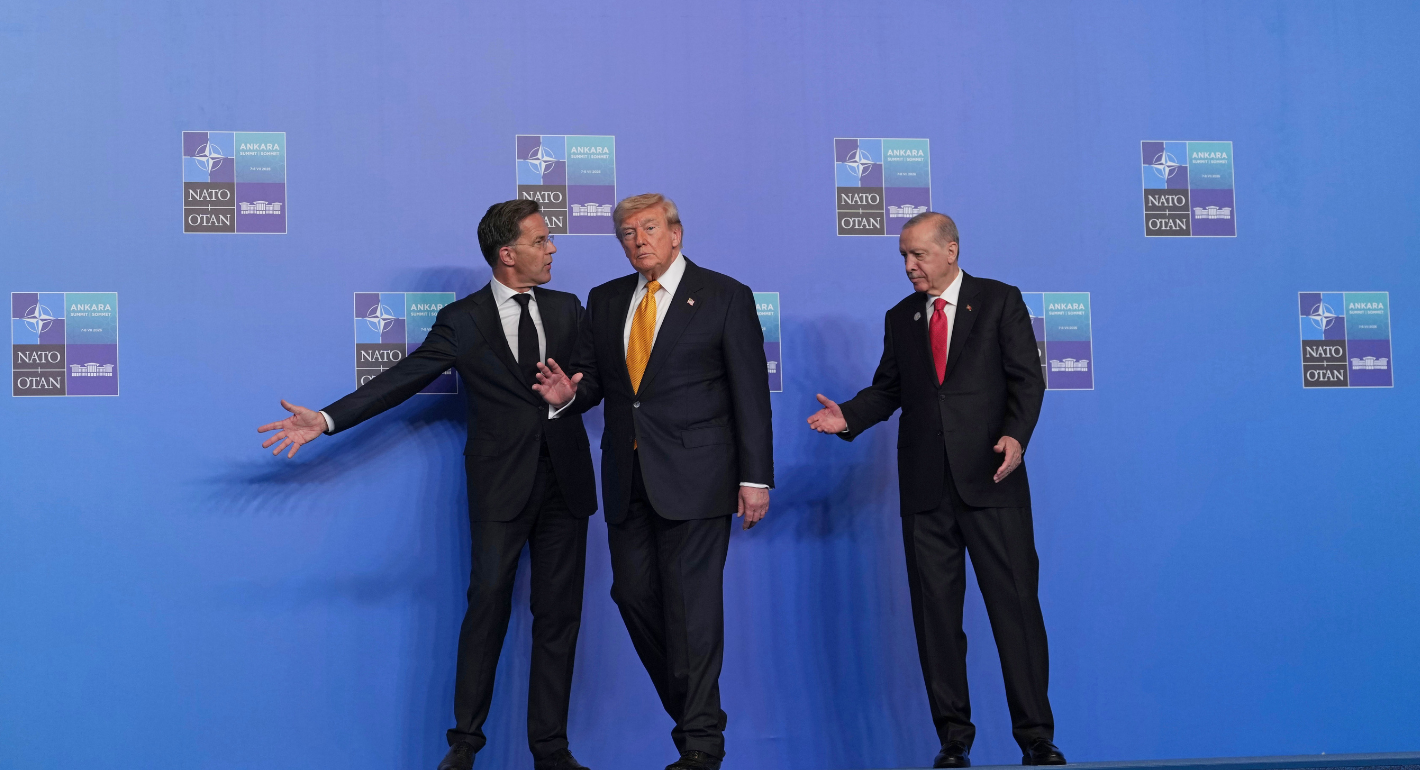
Nearly a year and a half after Europeans leaned into sucking up to Trump, the strategy has produced some benefits when it comes to Ukraine.
Rym Momtaz
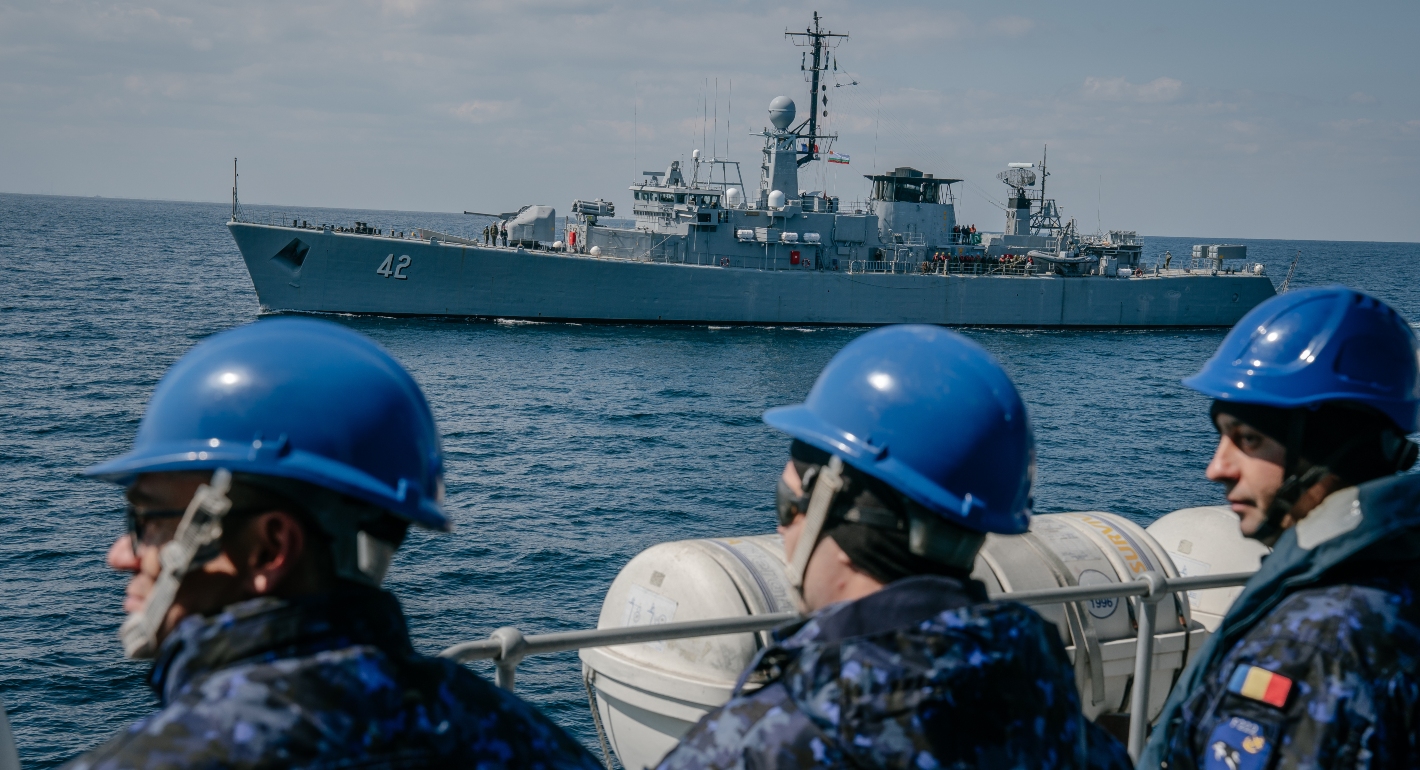
As Russia's war on Ukraine drags on, NATO is expanding its footprint in the Black Sea. Turkey, Romania, and Bulgaria are upgrading their fleets and deepening trilateral cooperation.

Dimitar Bechev