

Commentary
Tatiana Stanovaya
{
  "authors": [
    "Tatiana Stanovaya"
  ],
  "type": "commentary",
  "centerAffiliationAll": "",
  "centers": [
    "Carnegie Endowment for International Peace",
    "Carnegie Russia Eurasia Center"
  ],
  "collections": [],
  "englishNewsletterAll": "",
  "nonEnglishNewsletterAll": "",
  "primaryCenter": "Carnegie Endowment for International Peace",
  "programAffiliation": "",
  "programs": [],
  "projects": [],
  "regions": [
    "Russia"
  ],
  "topics": [
    "Economy"
  ]
}
Source: Getty
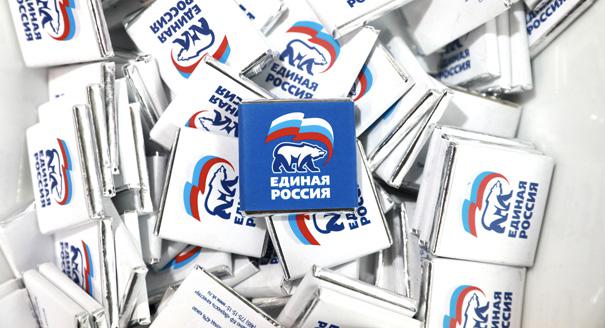
The upcoming Duma elections could turn out to be United Russia’s farewell tour in its current lineup.
A glimpse inside the black hole of Russia’s corridors of power reveals that the fault line within the regime is getting deeper, and the current campaign for the upcoming State Duma elections on September 17–19 is one of the factors determining that line.
For several years now, there has been a debate behind closed doors within the Russian leadership over what to do with the United Russia party. To put it simply, there are two possible approaches. The first is that the ruling party—despite the knocks it has taken over the unpopular increase in the retirement age, public fatigue, and its toxic leaders like former president Dmitry Medvedev—remains a powerful political force with a valuable support hub and the potential for a ratings boost. In other words, United Russia is an irreplaceable pillar of the regime and must be reinforced.
This point of view is shared not only by the leaders of the party, such as party secretary Andrei Turchak, Medvedev, and Defense Minister Sergei Shoigu, but also by conservative circles in general, who believe that any changes bring with them the risk of destabilization and a loss of control. It’s also the view of the siloviki, or security services, for whom the stricter the regime, the safer it is.
In practice, this approach means tightening the screws and mobilizing all possible resources to ensure a resounding victory for the ruling party, creating an impression of complete and uncontested domination.
The second approach proceeds from the logic that United Russia’s prospects are uncertain. The party’s popularity has been in decline since the retirement age was raised back in 2018, and efforts to return to stable growth have not been successful. There is talk of the party being morally obsolete and having exhausted its potential, and of the need for something new.
This is the prevailing view among those tasked with overseeing domestic politics, who have already tried to make some changes. In 2020, several new “in-system” parties (nominally opposition parties which are in fact largely loyal to the Kremlin) were formed. United Russia itself saw its ranks swell through the addition of various kinds of volunteers, the Kremlin-led “Leaders of Russia” program to nurture new talent, and young technocrats. It was even suggested that it wouldn’t be the end of the world if United Russia failed to secure a constitutional majority (300 seats out of a total of 450).
No one has set the difficult task of repeating the results of the last Duma elections back in 2016. After all, pollsters with ties to the government regularly report on the latest fall in ratings, and different sources have been sending out mixed signals on the performance targets that the party should be trying to meet.
In other words, a strange new contradiction is emerging: as the regime gets tougher and even less tolerant of any dissent, expectations of United Russia are lower than they were during more liberal times.
So which approach does Russian President Vladimir Putin favor? Judging by his actions, the president belongs both politically and psychologically to the first camp. The toying with new parties has been curtailed (only the New People remains, with slim chances of clearing the 5 percent threshold needed to win seats). Meanwhile, Putin threw himself into campaigning for United Russia, severely complicating discussions on changes to the party system.
Right from the start, the current campaign has had the conservative aim of getting the Duma reelected in its current lineup, with some minor changes. It was obvious from Putin’s warm words of gratitude to the current deputies that the president has found it easy to work with the current Duma.
Just like last year’s nationwide vote on changing the constitution, Putin needs these elections to reaffirm the legal authority of his regime, including to the elite, who must not be exposed to any temptation to start casting around in search of a successor to Putin. For the president, elections are an unpleasant but unavoidable political checkup: proof that the existing system is effective, fit for purpose, and the best that there is.
This has resulted in a leader who does not want to change anything and who believes that the glorious future has arrived, and in a sizeable part of the elite who feel increasingly uncomfortable with the problematic status quo. It’s like living in a building with decaying foundations: the owner doesn’t want to listen, and the inhabitants are starting to panic and look for a solution: either a gut renovation, or simply stabilizing the existing structures.
Now imagine that those in favor of a gut renovation start shaking the structure to make their argument more convincing, while those who fear big changes and major expenditure introduce stricter rules for the building’s use.
This is how the Russian authorities are approaching the three-day voting in a situation where on the one hand they need to obtain the results that the president wants, and on the other it is tempting to undervalue any victory for United Russia in order to add to doubts over the party’s ability to repeat that result in the future. In other words, this could turn out to be United Russia’s farewell tour in its current lineup.
The most interesting is still to come, after the elections. The collective discomfort will grow, together with the need to do something—anything—to safeguard the system against erosion. For without a convincing ruling party, the structure of the Putin regime loses its fundamental strength.
And so we come to a fork in the road, where one path leads to a crackdown and a system of repression and no choice, like the Soviet-era Communist Party, while the other path represents an attempt to build a more synthetic and multi-module system in which, no matter how people vote, it is still a vote for the regime. This second path is, of course, also fully compatible with a repressive state. This explains the growing pressure on the Communist Party: it is an attempt to knock the party off of its central position, and replace it with yet another political project conjured up by the technocrats.
This is the first time in many years that differences (not yet conflicts) over fundamental issues of the functioning of the regime have taken shape so clearly within the Russian power system. We have not seen such clashes over the party system since Kremlin ideologist Vladislav Surkov’s experiments with the Just Russia party back in the 2000s.
The slow erosion of the party of power as a key pillar of the regime is exacerbating fears for the future and, more interestingly still, is devaluing Putin’s role as the chief hardliner and guarantor of stability. The Duma elections are simply compounding the situation, since they are an attempt by the system to reconstruct itself using old logic in a new political reality.
In this new reality, with the “non-system” (real) opposition decimated and politics replaced with administrative procedures, the ruling party is a dinosaur that appears to be losing relevance. Simply achieving the required results at these elections will not solve the problems that will arise after the vote.
The real election—the war between the different approaches to changing the party system—will begin after the new Duma deputies are chosen, and the first sign will be the battle to interpret United Russia’s results. Whoever wins that battle will get a head start in implementing one of the scenarios outlined here.

Senior Fellow, Carnegie Russia Eurasia Center
Tatiana Stanovaya is a senior fellow at the Carnegie Russia Eurasia Center.
Recent Work
Tatiana Stanovaya
Tatiana Stanovaya
Between the United States’ market-driven approach and China's state-led industrial strategy, Europe is reckoning with how it can remain competitive in the global economy. But is Europe in danger of becoming a U.S. or China colony?
Noah Barkin, Anu Bradford
Europe has an interest in supporting Armenian leader Nikol Pashinyan as he tries to make peace with neighbors and loosen ties with Russia. But it is depersonalized support in the long term, not quickfire flash, that will win the day.

Thomas de Waal
The U.S.-sponsored TRIPP deal is driving the Armenia-Azerbaijan peace process forward. But foreign and domestic hurdles remain before connectivity and economic interdependence can open up the South Caucasus.

Thomas de Waal, Areg Kochinyan, Zaur Shiriyev
The war in Ukraine is costing Russia its leverage overseas. Across the South Caucasus and Middle East, this presents an opportunity for Europe to pick up the pieces and claim its own sphere of influence.

William Dixon, Maksym Beznosiuk
Amid increased polarization and the influence of disinformation, radical-right parties are once again gaining traction across Europe. With landmark elections on the horizon in several countries, are the EU’s geostrategic vision and fundamental values under existential threat?
Catherine Fieschi, Cas Mudde