

Commentary
The EU can impose sanctions but struggles to enforce them without the United States. With Washington increasingly disinterested in backing European interests, the bloc must now fend for itself.
Nicu Popescu, Tiago Antunes
{
  "authors": [
    "Steve Feldstein",
    "Andrew S. Weiss"
  ],
  "type": "commentary",
  "centerAffiliationAll": "dc",
  "centers": [
    "Carnegie Endowment for International Peace"
  ],
  "collections": [
    "Tech and Democracy"
  ],
  "englishNewsletterAll": "ctw",
  "nonEnglishNewsletterAll": "",
  "primaryCenter": "Carnegie Endowment for International Peace",
  "programAffiliation": "russia",
  "programs": [
    "Russia and Eurasia",
    "Democracy, Conflict, and Governance"
  ],
  "projects": [
    "Digital Democracy Network"
  ],
  "regions": [
    "Russia"
  ],
  "topics": [
    "Democracy",
    "Technology"
  ]
}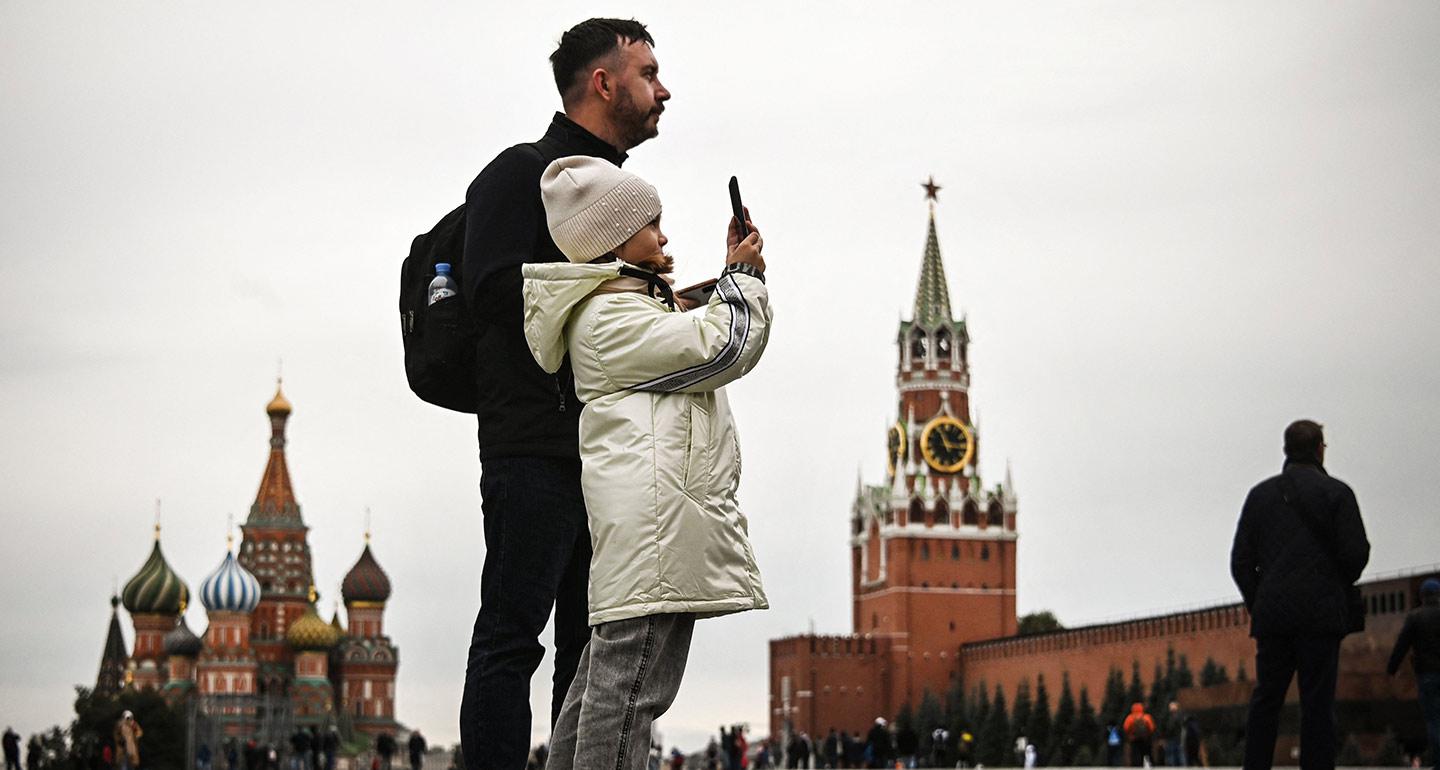
Source: Getty
During last week’s Russian elections, the Kremlin put two major Western tech companies on notice: remove content pushed by Putin’s foes or risk being chased out of the market. Sadly, concessions by leading tech companies to authoritarian governments are nothing new. These companies must do better.
Western tech firms were sucked into the vortex of the Kremlin’s crackdown on opposition politician Alexei Navalny’s organization in the run-up to last week’s predictably dull Duma elections. Even though Navalny has been in prison since January 2021, and while many of his key associates have since been arrested or encouraged to leave the country, the Kremlin’s hard-edged approach left nothing to chance. It was the latest demonstration of famed Russian writer Arkady Vaksberg’s private observation to one of us nearly thirty years ago: “In Russia, it’s not enough to win. You need to win with cruelty.”1
Still, the Navalny team responded with characteristic pluck and defiance, releasing a series of humorous social media takedowns of Russia’s political stars. The team also promoted their “smart voting” project, which centered on a mobile app for communicating with and mobilizing anti-regime voters. The concept behind smart voting was simple enough: to mobilize anti-regime voters to support a single candidate in a given constituency. By bleeding support from pro-regime candidates, Navalny’s team could be spoilers and disrupt the conduct of the elections.
But a surprise move by Apple and Google to remove the smart voting app from their online stores on the eve of the election upended these best-laid plans.
As election day approached, the Russian authorities attacked Western tech companies for allegedly supporting Navalny’s efforts. Of course, it is hardly news that such online platforms have been a key force multiplier for Navalny. What was different this time was the Kremlin’s determination to limit how Western tech firms operate on its territory. The regime made a series of escalating claims against several tech firms, including Apple, Facebook, Google, Twitter, YouTube (which is owned by Google), and Telegram.
Rapidly unfolding changes to how the Kremlin manages the digital realm are, arguably, the most meaningful fallout from the large wave of angry street demonstrations sparked by Navalny’s arrest in early 2021. Up until that point, relatively open access to the internet had been a hallmark of the Putin-era social contract with the Russian people and a key point of difference between Russia and more repressive countries like China.
Over the years, Russian officials, lawmakers, and regulators have pushed a grab bag of initiatives loosely known as the “sovereign internet.” That amorphous goal boils down to trying to reverse engineer the separation of the Russian segment of the internet from the global internet and seeking to ensure that the online activity of Russian citizens and businesses is largely controlled by players whose loyalty to the Russian government is beyond question. Given the Kremlin’s perennial fears of foreign-sponsored color revolutions, the concept of establishing tighter control over the internet was seen as a small price to pay to minimize the dangers posed by perceived hostile forces inside and outside the country.
Yet actually reining in Western tech firms is a far more complex challenge than commonly understood. Unlike in China, the architecture of Russia’s internet was built to be open to the outside world. Asserting the Kremlin’s dominance over all platforms, content, and data created in or accessed from a country of Russia’s size is much easier said than done.
For years, the Kremlin tried to accomplish much of this goal largely by jawboning, criticizing, or fining Western firms over all manner of alleged violations, including failing to take down various types of prohibited content; ignoring requirements to store data belonging to Russian citizens inside the country; and (more recently) censoring Kremlin-affiliated propaganda, disinformation, and pro-regime mouthpieces. Early on, Western firms responded to this pressure in disparate fashions. Some, like Apple, quietly complied with the Kremlin’s requests to store users’ data locally. Others politely deflected demands from Russian officials and kept their heads down. The resulting stalemate largely benefited average Russians even as the vise started to tighten.
Not surprisingly, none of this dynamic mattered much to Navalny’s team as they continued to attack their foes in the Kremlin. As Navalny’s chief spokesperson Kira Yarmysh put it on Twitter over the weekend, their team simply never expected an about-face by tech companies like Google that would imperil their activities.
All this built up to the pressure campaign against Apple and Google that led them, on September 17, to remove the Navalny team’s smart voting app from their respective app stores—ostensibly because the app represented a form of illegal interference in the Russian election process. At first, official Russian claims that the companies were interfering in the election or even operating on secret instructions from the Pentagon looked laughable, especially since they were being made by the same people who insist the Kremlin never engages in such activities itself.
But ultimately, the political theater and real threats aimed at Apple and Google—neither of which is any stranger to such situations in other parts of the world—tipped the decisionmaking of these companies’ leaders. They probably had no desire to test Moscow’s& stay-out-of-politics red line but found themselves caught in the crossfire between the Kremlin and Navalny’s team.
In the end, both Apple and Google complied with the Kremlin’s requests and made other concessions. On September 18 in the middle of the three-day voting period, Google complied with a request from Russia’s internet watchdog Roskomnadzor to block smart voting–related material posted on YouTube. Election-related Google Docs created by Navalny’s team containing lists of their preferred candidates also became inaccessible for users located inside Russia. (The actual harm of the latter move was somewhat limited since the information was widely dispersed and available on other platforms.) For good measure, Apple reportedly disabled Private Relay, a new privacy feature of its operating system that was unveiled over the summer, for Russian users.
Both firms benefit disproportionately from the leading roles they enjoy in the Russian market. For years, Apple and Google have been able to generate healthy income streams from selling things like mobile phones, online advertising, and other digital services. In the end, neither Apple nor Google was willing to walk away. But their commercial success in Russia is largely exceptional compared to that of other Western tech firms, which helps explain why the Kremlin targeted them in the first place.
And given the Russian authorities’ growing digital crackdown, it is likely that Apple and Google’s actions will only buy them a bit of time before they’re forced to yield even more ground. Surely, for Russian officials who fear their own people far more than the long-term costs they are imposing on Russia’s economic vitality, no amount of control over the tech sector and the internet will likely be enough.
What is happening in Russia, however, is not unique. Globally, tech firms face increasing pressure worldwide to censor and suppress opposition voices. Apple’s experience in China is illustrative. For instance, a recent New York Times investigation revealed that, under pressure from the Chinese government, Apple has preserved Chinese customers’ personal data on state-owned data servers, which means government security agencies may be able to access such data. The reporting also indicates that Apple “proactively censors its Chinese App Store” and “block[s] apps that Apple managers worry could run afoul of Chinese officials.” Apple also gained notoriety during the 2019 wave of Hong Kong protests after it removed the HKmap.live app, which demonstrators had been relying on to avoid police violence, from its App Store.
Such trends extend to democracies as well. In India, authorities have instituted a pressure campaign against Twitter and Facebook to remove unfavorable content. According to the Lumen Database at Harvard University, Twitter has censored posts critical of the government’s pandemic response, and it has also temporarily blocked Indian user accounts that had posted content supportive of the farmers’ revolt in the country. More recently, the government passed new IT regulations requiring social media platforms—like Google, Facebook, and Twitter—to appoint resident grievance officers and to establish local offices to address government complaints. These firms now have just twenty-four hours to act on the government’s requests to take down “unlawful [content], misinformation, and violent content.”
Other examples of state coercion against private tech companies abound. In Vietnam, Google reportedly blocked a gaming app in 2019 that allegedly disparaged the country’s political figures (an activity proscribed under Vietnam’s cybersecurity law). In Turkey, the government passed a new social media law in 2020 requiring platforms like Facebook, Twitter, and YouTube to localize data and to remove content deemed offensive within forty-eight hours. And in the case of Belarus, Telegram CEO Pavel Durov has stated that Apple required him to remove channels run by Belarusian opposition groups. As Durov said, “Apple is requesting that we shut down 3 channels used by the people of Belarus to expose the identities of their oppressors.”
Russia’s internet crackdown is disheartening, but it is not exceptional. Russia’s actions represent an escalating global trend of digital censorship and suppression. Private companies are caught in a difficult position: they must either submit to government demands or risk expulsion from lucrative markets. Yet platforms can do more to push back against illegitimate requests and to provide greater public transparency when they face such pressures.
The internet has become a major battleground for politics, ideas, and free expression, a struggle that repressive governments are winning. Liberal democracies must take this struggle seriously. Government crackdowns on tech platforms and the emergence of the splinternet—the breakdown of a common information ecosystem into an array of national or regional internets, governed by different norms and rules—will determine the future of digital democracy and political freedom.
1 Author conversation with Arkady Vaksberg, 1993.

Director and Senior Fellow, Democracy, Conflict, and Governance Program
Steve Feldstein is a senior fellow and director of the Democracy, Conflict, and Governance Program at the Carnegie Endowment for International Peace. His research focuses on technology, national security, the global context for democracy, and U.S. foreign policy. His new book, Bytes and Bullets: Global Rivalry, Private Tech, and the New Shape of Modern Warfare, is now available from St. Martin’s Press.

James Family Chair, Vice President for Studies
Andrew S. Weiss is the James Family Chair and vice president for studies at the Carnegie Endowment for International Peace, where he oversees research on Russia, Ukraine, and Eurasia. His graphic novel biography of Vladimir Putin, Accidental Czar: the Life and Lies of Vladimir Putin, was published by First Second/Macmillan in 2022.
Carnegie does not take institutional positions on public policy issues; the views represented herein are those of the author(s) and do not necessarily reflect the views of Carnegie, its staff, or its trustees.

The EU can impose sanctions but struggles to enforce them without the United States. With Washington increasingly disinterested in backing European interests, the bloc must now fend for itself.


Nicu Popescu, Tiago Antunes

Russia is testing the waters of NATO’s mutual defense clause. What do strikes in Romanian territorial waters mean for the alliance’s posture toward Moscow?

Dimitar Bechev

Europe is facing rising populism internally as well as external pressures from Russia, China, Turkey, and the United States.
Dimitar Bechev

A notable degree of participative democracy has firmly arrived in Europe. But to have more far-reaching impact, democratic deliberation needs to move into a radically new phase.

Richard Youngs

The domestic impacts of how long it is taking to end the war in Ukraine have pushed the French electorate to the political extremes and compromised the country’s diplomatic capacity.

Rym Momtaz