

Commentary
Andrei Kolesnikov
{
  "authors": [
    "Andrei Kolesnikov"
  ],
  "type": "commentary",
  "centerAffiliationAll": "",
  "centers": [
    "Carnegie Endowment for International Peace",
    "Carnegie Russia Eurasia Center"
  ],
  "collections": [],
  "englishNewsletterAll": "",
  "nonEnglishNewsletterAll": "",
  "primaryCenter": "Carnegie Endowment for International Peace",
  "programAffiliation": "",
  "programs": [],
  "projects": [],
  "regions": [
    "Russia"
  ],
  "topics": [
    "Economy"
  ]
}
Source: Getty
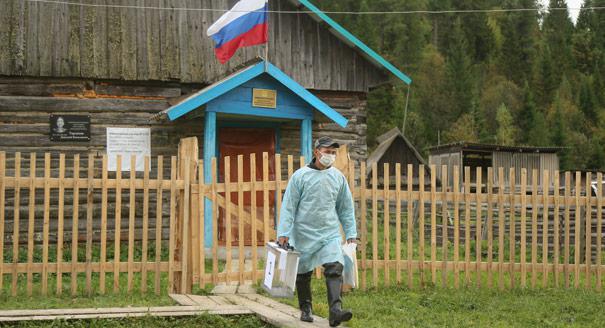
The authorities are faced with the fiendish task of convincing democratic-minded voters that there is no point in voting, while making every effort to boost turnout among the conformist, state-dependent electorate.
The significance of Russia’s impending parliamentary elections is generally either grossly overstated or seriously understated. On the one hand, they certainly won’t be able to change anything about the form and substance of the verticalized political system in which “everything is decided in advance,” as virtually any focus group participant will tell you these days. On the other hand, the elections are happening for a reason, and not just because the constitution mandates them: the indifferent public could easily be persuaded to scrap the costly elections, just as it consented to the constitutional changes last year that will potentially allow President Vladimir Putin to remain in power until 2036.
It is the Russian regime, rather than the public, which needs the elections. They serve to validate the regime’s legality and legitimacy, and also keep the so-called majority relatively mobilized.
The parliamentary elections are not about power rotation, nor even about reshuffling the Duma itself. They are not about political representation: large swaths of the electorate are not represented in the Russian parliament, since it only functions as a representative body for preselected elites and clans.
The elections are about support for the president and his system. What will happen over the three days of September 17–19, 2021, is more of a confidence vote on Putin and his regime, just like the 2018 presidential election and the 2020 constitutional referendum.
Russia’s mature authoritarian regime turns any electoral procedure, especially on the federal level, into a vote for something, rather than a choice of options. Those dissatisfied with the United Russia ruling party will show up to vote for United Russia anyway, because it’s not about the party per se, but about the rationale for the elections, which is to approve the status quo and current regime.
It’s a state-run therapy of sorts: the goal behind the election is to show the greater part of the electorate, which ostensibly has increasingly few reasons to be unified amid mounting discontent with the situation in the country, that they are still in the majority and still support Putin. You doubt that your friends, neighbors, and co-workers still rally behind the regime? But look: it’s you and your compatriots who voted for Putin, his reset of presidential term limits, and his party. And since the majority is still here, it would be prudent to join it rather than dream of change, let alone side with the persecuted and suppressed minority.
Fewer people openly oppose the regime than actively support it, but the bulk of the electorate is an apathetic majority that readily adjusts to any given situation. Their main concern is having a stable job and income. One-off social payouts aimed at buying voters’ loyalty right before elections are a plus, though these financial infusions have little long-term effect, since the majority sees them as the state’s obligation rather than an act of generosity.
Elections reveal two paternalistic trends: one from above, in which the state tells the public to take the money, vote, and keep their heads down and they’ll get another payout the next time around; and one from below, from the people, who are more willing to vote for those with money and resources. It makes no sense for them to support those who have nothing.
This explains why the impoverished segments of the Russian population—those below the middle class—vote for the regime. The state is their only source of money and, in many cases, employment. The state plays an increasingly large role in the Russian economy. The more people there are who depend on the state, the more willing they are to vote for their employer and the hand that feeds them.
Russian authoritarian rule hinges upon state dependence and the predetermined obedience that stems from it, plus indifference. Of course, falsifications and dirty tricks will also come into play at the elections: they are already plain to see in the current election campaign. But the government’s main instrument is still mobilizing those who depend on the state by applying administrative or corporate pressure to vote.
Under this scenario, faced with the threat of dismissal or other financial or administrative penalties, employees have to report to their superiors that they have voted. Of course, employees could always vote for someone other than United Russia. But many of them are convinced that their superiors can monitor who they cast their vote for and so tend to act very cautiously.
The authorities are therefore faced with the fiendish task of reducing turnout among democrat-minded voters (through the strict filtering of candidates, creating the impression that there is no point in voting), while making every effort to boost turnout among the conformist, state-dependent electorate.
As in other recent Russian elections, the upcoming Duma vote is certain to see smart voting, an initiative by the opposition activist Alexei Navalny to vote for any strong candidate from any party who is not a member of United Russia. An important nuance of this tactical voting is that a vote for an ostensibly alternative party (or candidate in a single-mandate district), such as the Communists, who have come to replace the “against all” ballot option, is still a vote for the government. Of course, the Russian Communist Party is not a constituent part of the presidential administration, but it needs to be fairly loyal to the regime to survive. Therefore, a vote for this so-called opposition party is, in fact, another vote for the regime.
All four parliamentary opposition parties are important elements in preserving the authoritarian political system and Putin’s personal power. By imitating choice and democracy, they keep the electorate—whether left-leaning or conservative—under government control and prevent it from engaging in undesirable political activity.
Smart voting is simply a way of demonstrating to United Russia that the opposition is at least capable of splitting the vote. It shows voters that this powerful and seemingly invincible system may have weaknesses after all, but as a tactic, it doesn’t involve any real political choice, and it favors results over values. If a pro-democracy voter wanted to vote based on their ideological preferences, they would vote for the liberal Yabloko party, for example, not for a Communist candidate, even if that Communist candidate is simply using the party as a springboard to enter the Duma.
Once the Duma elections are over, protests are unlikely, since the opposition and civil society are demoralized. This is not 2011, when electoral fraud at the Duma elections triggered mass protests. Back then, basic civic activism didn’t amount to breaking the law, and compromise, dialogue, and vacillation within the establishment were still possible. Over the last ten years, the enlightened velvet autocracy that had eased somewhat during Dmitry Medvedev’s presidency (2008–2012) has transitioned to full-fledged authoritarianism.
The few new faces that will appear in the Duma following the loyalist reshuffle won’t bring about even the slightest change in the political system. The regime crackdown will intensify: it has very little to do with the elections, but it is part of the regime’s strategy following last year’s resetting of the clock on presidential terms. The Kremlin will get what it wanted: the Duma as an institute of support for a political system that is entering a stage not of transition, but effectively another reset in 2024.
Former Senior Fellow, Carnegie Russia Eurasia Center
Kolesnikov was a senior fellow at the Carnegie Russia Eurasia Center.
Recent Work
Andrei Kolesnikov
Andrei Kolesnikov
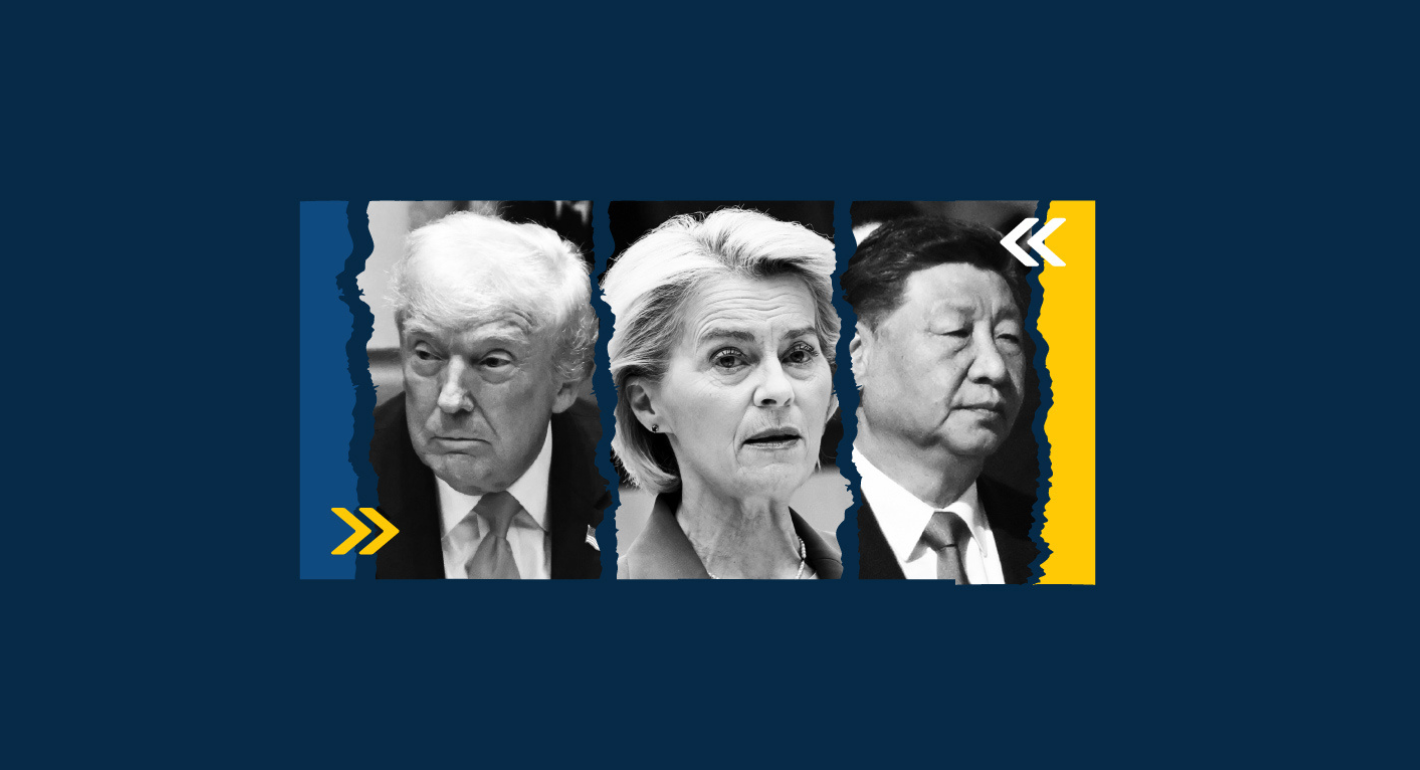
Between the United States’ market-driven approach and China's state-led industrial strategy, Europe is reckoning with how it can remain competitive in the global economy. But is Europe in danger of becoming a U.S. or China colony?
Noah Barkin, Anu Bradford
Europe has an interest in supporting Armenian leader Nikol Pashinyan as he tries to make peace with neighbors and loosen ties with Russia. But it is depersonalized support in the long term, not quickfire flash, that will win the day.

Thomas de Waal
The U.S.-sponsored TRIPP deal is driving the Armenia-Azerbaijan peace process forward. But foreign and domestic hurdles remain before connectivity and economic interdependence can open up the South Caucasus.
Thomas de Waal, Areg Kochinyan, Zaur Shiriyev
The war in Ukraine is costing Russia its leverage overseas. Across the South Caucasus and Middle East, this presents an opportunity for Europe to pick up the pieces and claim its own sphere of influence.

William Dixon, Maksym Beznosiuk
Amid increased polarization and the influence of disinformation, radical-right parties are once again gaining traction across Europe. With landmark elections on the horizon in several countries, are the EU’s geostrategic vision and fundamental values under existential threat?

Catherine Fieschi, Cas Mudde