

Commentary
With its public finances in shambles, the far right polling at 35 percent ahead of the 2027 presidential election, and a growing protest movement, is France’s crisis a threat to the EU’s geopolitical awakening?
Rym Momtaz, ed.
{
  "authors": [
    "Jane Munga",
    "Kyla Denwood"
  ],
  "type": "commentary",
  "centerAffiliationAll": "dc",
  "centers": [
    "Carnegie Endowment for International Peace"
  ],
  "collections": [
    "Chart of the Month",
    "Technology and Innovation",
    "Africa’s Shifting Politics and Geopolitics"
  ],
  "englishNewsletterAll": "africa",
  "nonEnglishNewsletterAll": "",
  "primaryCenter": "Carnegie Endowment for International Peace",
  "programAffiliation": "AFP",
  "programs": [
    "Africa"
  ],
  "projects": [],
  "regions": [
    "Southern, Eastern, and Western Africa"
  ],
  "topics": [
    "Economy",
    "Foreign Policy",
    "Technology"
  ]
}
Source: Getty
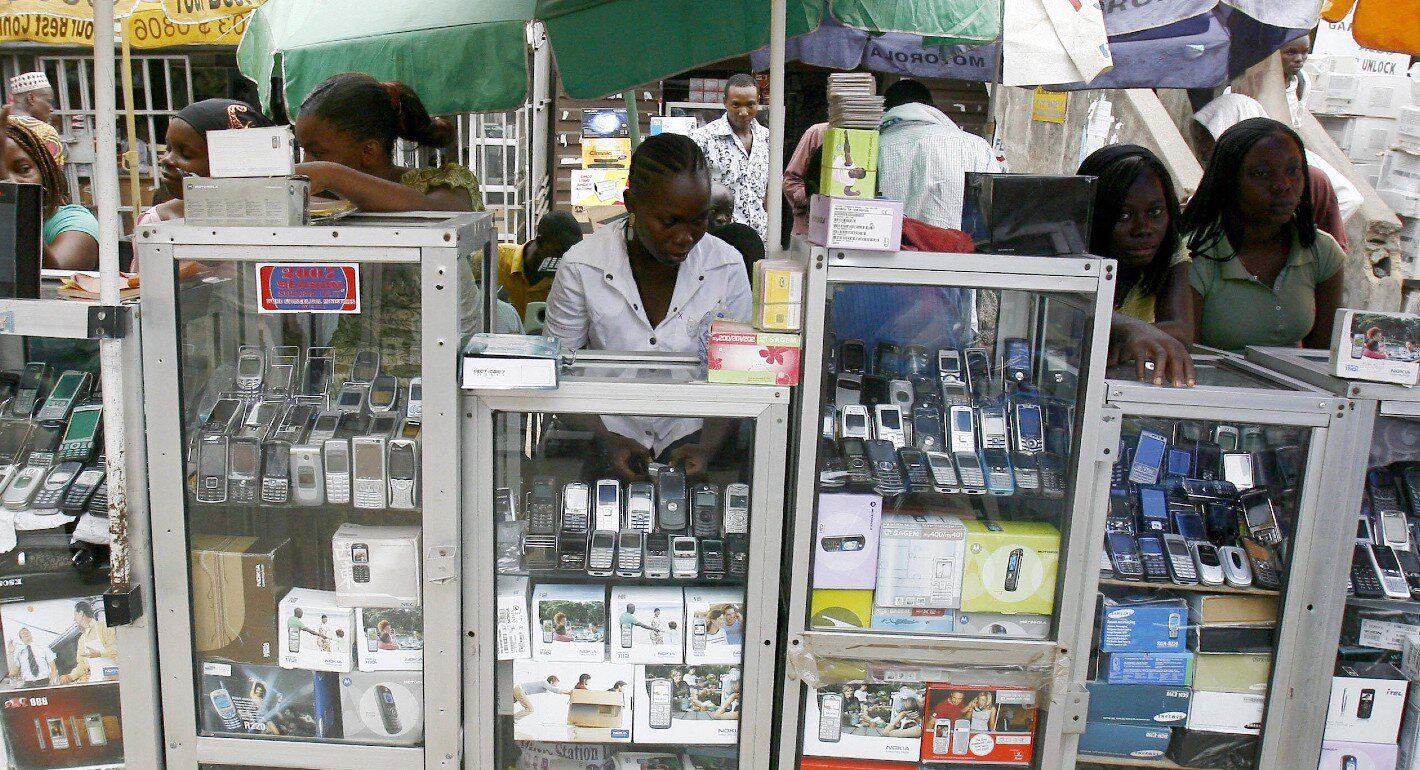
Africa’s mobile phone market is one area where U.S.-China technology decoupling will be evident, an industry at the heart of Africa’s digital transformation.
The African continent’s growing population is increasingly connecting to the internet. Between 2019 and 2021, internet use in Africa grew by 23 percent. Still, only about 33 percent of the population are active internet users, leaving an estimated 900 million people without the web’s digital dividends. While several factors contribute to Africa’s digital divide, the prospect of a U.S.-China technology decoupling could create additional complexities that may affect the digital transformation of African countries, as the world’s two leading economies contemplate unwinding or reshoring at least some tech-related supply chains.
The tensions between the United States and China over digital technologies are growing with wide-ranging implications for Africa’s digital economy on issues from infrastructure and platforms to hardware devices. Like other regions of the world, the continent must contend with the ramifications of great power competition for its digital agenda. African nations, however, must navigate the prospects of such decoupling alongside China’s substantive investments and dominance in telecommunications infrastructure.
Africa, a mobile-first continent, connects to the internet primarily through mobile phones. About 70 percent of Africans access the internet using mobile devices (see figure 1) rather than desktop or tablet computers.

A large share of these mobile phones is from vendors incorporated in China (see figure 2). Out of the forty-two vendors with market share in the continent, nineteen are incorporated in China, while just four are incorporated in the United States. Chinese brands not only have a larger market share but also offer variety with options for phones specifically designed for African consumers. Among the Chinese options, Huawei and Tecno are the most popular mobile phone brands. Tecno, a rarely known brand outside of the continent, was specifically established by the Chinese firm Transsion to penetrate the African market. Its features account for local nuances in terms of both technical design, such as the picture clarity of cameras for darker skin types, and pricing.

Given this background, it is clear that the ramifications of U.S.-China technology decoupling will have repercussions for African consumers. Some mobile users are already feeling the effects of technology decoupling. In 2019, the U.S. Department of Commerce’s Bureau of Industry and Security added Huawei and its affiliates to its Entity List. The list designates foreign organizations with restrictions on their ability to export specified items to the United States. The addition of Huawei to the Entity List hinders the company from trading with U.S. tech companies such as Google and those in the markets of U.S. trading partners without U.S. government approval. Google was prohibited from including Gmail, Google Maps, YouTube, or the Play Store on Huawei phones. Mobile phone users with Huawei devices manufactured after 2019 must thus contend with limited accessibility to key mobile applications, depleting the digital dividends of such devices for millions of Africans across the continent.
Beyond restricting access to mobile apps, U.S.-China technology decoupling has made for vibrant policy conversations, especially on the future of the internet. As debates on internet standards unfold in multilateral organizations such as the International Telecommunication Union (ITU), African policymakers must engage in digital foreign policy. For example, at the ITU’s Telecommunication Standardization Advisory Group meeting in 2019, China Mobile, China Unicom, Huawei, and the Chinese Ministry of Industry and Information Technology proposed the standardization of a new set of internet protocols (dubbed “New IP”), which would support a new internet by 2030. Ten African countries, a cohesive front from the continent, supported the proposal. The proposal on “New IP” slowed when the World Telecommunication Standardization Assembly was postponed due to the coronavirus pandemic. However, the conversation on the future of the internet has continued to elicit debate, studies, and political alignments, causing African countries to engage more disparately and cautiously on the matter. This is evident from the U.S.-led Declaration for the Future of the Internet, which garnered just three African signatories (Cabo Verde, Kenya, and Niger), though one of those countries (Kenya) stated its signature was added prematurely before government officials reached an official decision.
Even as the U.S.-China decoupling debate continues for Chinese and American firms alike, there is a lot of room for further action across the continent’s telecommunications industry especially with regard to mobile technology. The demand for mobile devices on the continent is expected to rise alongside increased internet access, offering immense opportunities for telecommunications companies. With Africa being a mobile-first continent, the mobile economy is expected to continue contributing to the continent’s socioeconomic growth. Mobile technology in sub-Saharan Africa is projected to boost economic activity by $155 billion by 2025, a total rising from $130 billion in 2020 (accounting for an 8 percent share of GDP). In the same report by the Global System for Mobile Communications, estimates show that sub-Saharan Africa will have 120 million new mobile subscribers by 2025 (an increase from 495 million in 2020 to 615 million), a shift largely driven by the continent’s growing youthful population. The UN has projected that by 2040 the population of Africa will increase by 50 percent. Of the expanded populace, the majority (53 percent) will be under the age of twenty-five. This young population will drive demand for mobile phones and create opportunities for U.S. mobile companies to increase their market share in African economies.
The recently launched U.S. Strategy Toward Sub-Saharan Africa outlines a new American vision for the region. A key focus in the strategy is strengthening trade and commercial relations with African countries; it lists digital transformation as one of the approaches that “both align with U.S. priorities and meet . . . African partners’ needs.” The strategy provides a springboard for American tech giants to provide affordable mobile devices for African consumers and thereby support the African Union’s Digital Transformation Strategy for Africa, Smart Africa’s Digital Economy Blueprint, and other national digital strategies from around the continent.
Africa’s mobile phone market is one area where U.S.-China technology decoupling will be evident, an industry at the heart of Africa’s digital transformation. The demand for mobile devices throughout the continent will allow mobile phone vendors to shape how millions of Africans connect to the internet and access digital services. This latent demand also means that Africa’s projected population of 2.5 billion people by 2050 could shape the future of these global tech companies.

Fellow, Africa Program
Jane Munga is a fellow in the Africa Program focusing on technology policy at the Carnegie Endowment for International Peace.
Kyla Denwood
Former Research Assistant, Africa Program
Kyla Denwood is a research assistant in Carnegie’s Africa Program.
Carnegie does not take institutional positions on public policy issues; the views represented herein are those of the author(s) and do not necessarily reflect the views of Carnegie, its staff, or its trustees.

With its public finances in shambles, the far right polling at 35 percent ahead of the 2027 presidential election, and a growing protest movement, is France’s crisis a threat to the EU’s geopolitical awakening?

Rym Momtaz, ed.

Ahead of a tough winter for Ukraine, Donald Trump’s swing back toward Russia bodes ill. But instead of panicking, Kyiv’s European allies are focusing on action.
Rym Momtaz

Funding Ukraine remains a priority for European leaders. As Russia’s war of aggression heads into another winter, two feasible options to mobilize support for Kyiv should be fast-tracked.


Vladyslav Rashkovan, Gregory P. Wilson

While the EU and European governments are embracing the much-lauded middle-power moment, this entails three difficult conundrums.

Richard Youngs

Much has been said of the changes Brussels is trying to make to the EU enlargement process. Here’s why gradual integration might—or might not—be the answer.

Dimitar Bechev