

Commentary
A summer of escalation in the Black Sea has hurt Ukraine economically and is exacerbating world food security. A truce is needed—as is a broader reframing of Europe’s Ukraine strategy.
Thomas de Waal
{
  "authors": [
    "David Ndii"
  ],
  "type": "other",
  "centerAffiliationAll": "dc",
  "centers": [
    "Carnegie Endowment for International Peace"
  ],
  "collections": [
    "Trade and Investment",
    "Investments in Africa"
  ],
  "englishNewsletterAll": "africa",
  "nonEnglishNewsletterAll": "",
  "primaryCenter": "Carnegie Endowment for International Peace",
  "programAffiliation": "AFP",
  "programs": [
    "Africa"
  ],
  "projects": [],
  "regions": [
    "Southern, Eastern, and Western Africa"
  ],
  "topics": [
    "Economy"
  ]
}
Source: Getty
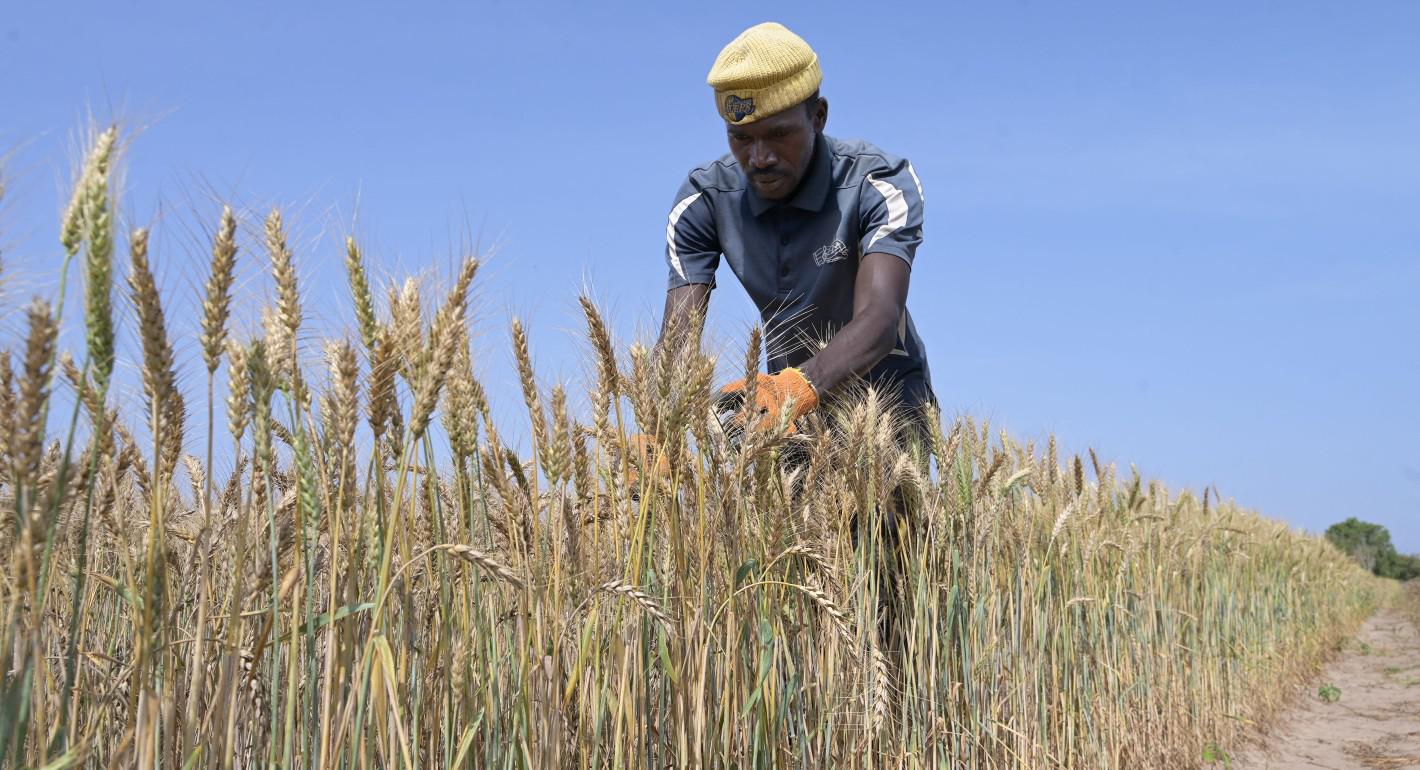
African policymakers should embrace a more pragmatic economic agenda that recognizes and capitalizes on Africa’s comparative edge: a greater abundance of land rather than low-cost labor.
Over the past few decades, several low- and middle-income economies in Africa have sought to turbocharge growth by adopting an export-led economic model premised on heavy investments in infrastructure and building up domestic manufacturing capacity. But this strategy has often not produced the economic gains that have been promised for a variety of reasons.
The continued emphasis on infrastructure investments fails to account for the fact that even those African countries that have invested a great deal in infrastructure continue to lag other countries in Asia (like Bangladesh) in key manufacturing sectors like textiles regardless of infrastructure quality. In addition, this approach overlooks the fact that African countries do not have the same comparative advantages as the Asian countries that perfected and popularized the export-led growth model: while those Asian countries had an abundance of low-wage labor, wages in Africa are typically higher than those of other countries at comparable income levels.
Instead of fixating on infrastructure, African countries should look to the experience of Latin American countries with similar resource endowments—a greater relative abundance of land than low-cost labor. As this experience shows, countries can make far more durable, sustainable economic gains by focusing on improving agricultural productivity with relatively low-cost improvements targeted at smallholder farmers for whom a boost in productivity would have the largest impact.
Africa’s recent experience challenges the infrastructure-led growth paradigm and calls for a different approach. Mega-infrastructure projects including railways, power stations, state-of-the-art airports and seaports, impressive highways, and spectacular bridges have been, and continue to be, built at an unprecedented pace. Yet these investments have not turbocharged growth. Understanding why this infrastructure binge has not spurred as much growth as expected and why such ventures are responsible for the incipient debt distress in several countries on the continent is imperative.
The claim of infrastructure-constrained economic growth lacks a theoretical foundation or empirical evidence. Over the last three decades, a third wave of Asian countries—including Bangladesh, Cambodia, and Vietnam—have leapfrogged African countries in terms of per capita income using export-led manufacturing with similarly deficient infrastructure.
In addition, it is not evident that the infrastructure has crowded in the productive private sector investments on which the governments’ ability to repay the debts incurred in the process is predicated. Private investment has remained generally flat over the entire infrastructure investment drive even as the debt-to-GDP ratio has risen rapidly, which suggests that, far from crowding in, the infrastructure drive may have crowded out private investment.

Export-led growth premised on infrastructure investment seeks to fuel an economic surge by leveraging relatively low labor costs to capture global manufacturing market share. The Asian Tigers’ export-led industrial takeoff is a reflection of the region’s factor endowments, namely an abundance of labor relative to land; with a high share of population to hectare, Asia’s labor productivity increased by 135 percent in only three decades (from the mid-1960s to the mid-1990s). Conversely, Africa’s relatively high wages compared to those of other destinations competing in the area of labor-intensive export manufacturing reflect the continent’s factor endowments, namely abundant land relative to labor.
It is no surprise then that Africa’s massive industry-focused infrastructure investment drive of the last two decades has precipitated debt distress rather than accelerated growth, given that the industry-focused investments, such as massive electric power projects, are not aligned with Africa’s comparative advantage.
The infrastructure-led growth paradigm has channeled debt finance into investments that have contributed little, if anything, to agricultural development. Rather than a scarcity of infrastructure, the real binding constraint on growth in Africa is low agricultural productivity. Small-scale farming dominates African agriculture. Agriculture accounts for a large share of most African economies (all non-oil-producing or mineral-rich countries) and is the primary or a leading secondary source of income for, on average, more than half, and up to 80 percent, of the populations even in oil-producing and mineral-rich countries. Because of this, low productivity is a drag on these countries’ entire economies. Africa is barely, if at all, converging with the rest of the world economically because of slow productivity growth in African economies, particularly in the agricultural sector (see figure below).

There are at least four reasons why the case for agriculture-led growth is more compelling for African countries than their prevailing preoccupation with infrastructure and with the associated growth models centered on export-led manufacturing.
It is difficult to see how the African continent can become economically competitive without a broad-based increase in agricultural productivity. The continent’s factor endowments effect—an abundance of land relative to labor—is compounded by low agricultural productivity, which makes food expensive and renders globally competitive low-skill wages unattractive compared to wages earned in subsistence farming since much of the low-wage income would be spent on buying expensive food.
Yet while African policymakers recognize this, they seem unable to resist the allure of industrial miracles. The widely held view that the East Asian model is the silver bullet for economic transformation is also called into question by the successful agriculture-led transformations in Latin American countries whose factor endowments are similar to those of Africa. African policymakers should embrace a more pragmatic stance on an economic agenda that recognizes and fully capitalizes on Africa’s comparative edge.
These recommendations are drawn from David Ndii’s paper “Africa’s Infrastructure-Led Growth Experiment Is Faltering. It Is Time to Focus on Agriculture.,” Carnegie Endowment for International Peace, December 20, 2022, https://carnegieendowment.org/2022/12/20/africa-s-infrastructure-led-growth-experiment-is-faltering.-it-is-time-to-focus-on-agriculture-pub-88662.

David Ndii
David Ndii is founder and managing director of Africa Economics and a former economic advisor to the governments of Rwanda and Kenya.
Carnegie does not take institutional positions on public policy issues; the views represented herein are those of the author(s) and do not necessarily reflect the views of Carnegie, its staff, or its trustees.

A summer of escalation in the Black Sea has hurt Ukraine economically and is exacerbating world food security. A truce is needed—as is a broader reframing of Europe’s Ukraine strategy.

Thomas de Waal

As geopolitical rivalry weaponizes global supply chains, the EU’s true vulnerability lies in emerging-risk imports. For these goods, suppliers are growing more concentrated, substitution more difficult, and political risk is looming.

Sinan Ülgen

The EU is putting together a new security strategy to meet today’s myriad challenges. But for any proposal to be effective, the union needs to grapple with its identity and ambitions.

Pierre Vimont

Between the United States’ market-driven approach and China's state-led industrial strategy, Europe is reckoning with how it can remain competitive in the global economy. But is Europe in danger of becoming a U.S. or China colony?


Noah Barkin, Anu Bradford

The U.S.-sponsored TRIPP deal is driving the Armenia-Azerbaijan peace process forward. But foreign and domestic hurdles remain before connectivity and economic interdependence can open up the South Caucasus.


Thomas de Waal, Areg Kochinyan, Zaur Shiriyev