

Commentary
The EU can impose sanctions but struggles to enforce them without the United States. With Washington increasingly disinterested in backing European interests, the bloc must now fend for itself.
Nicu Popescu, Tiago Antunes
{
  "authors": [
    "Rudra Chaudhuri",
    "Shruti Sharma"
  ],
  "type": "commentary",
  "centerAffiliationAll": "",
  "centers": [
    "Carnegie Endowment for International Peace",
    "Carnegie India"
  ],
  "collections": [
    "India-U.S. Emerging Technologies Working Group"
  ],
  "englishNewsletterAll": "",
  "nonEnglishNewsletterAll": "",
  "primaryCenter": "Carnegie India",
  "programAffiliation": "",
  "programs": [],
  "projects": [
    "Technology and Society"
  ],
  "regions": [
    "India",
    "United States"
  ],
  "topics": [
    "Technology"
  ]
}
Source: Getty
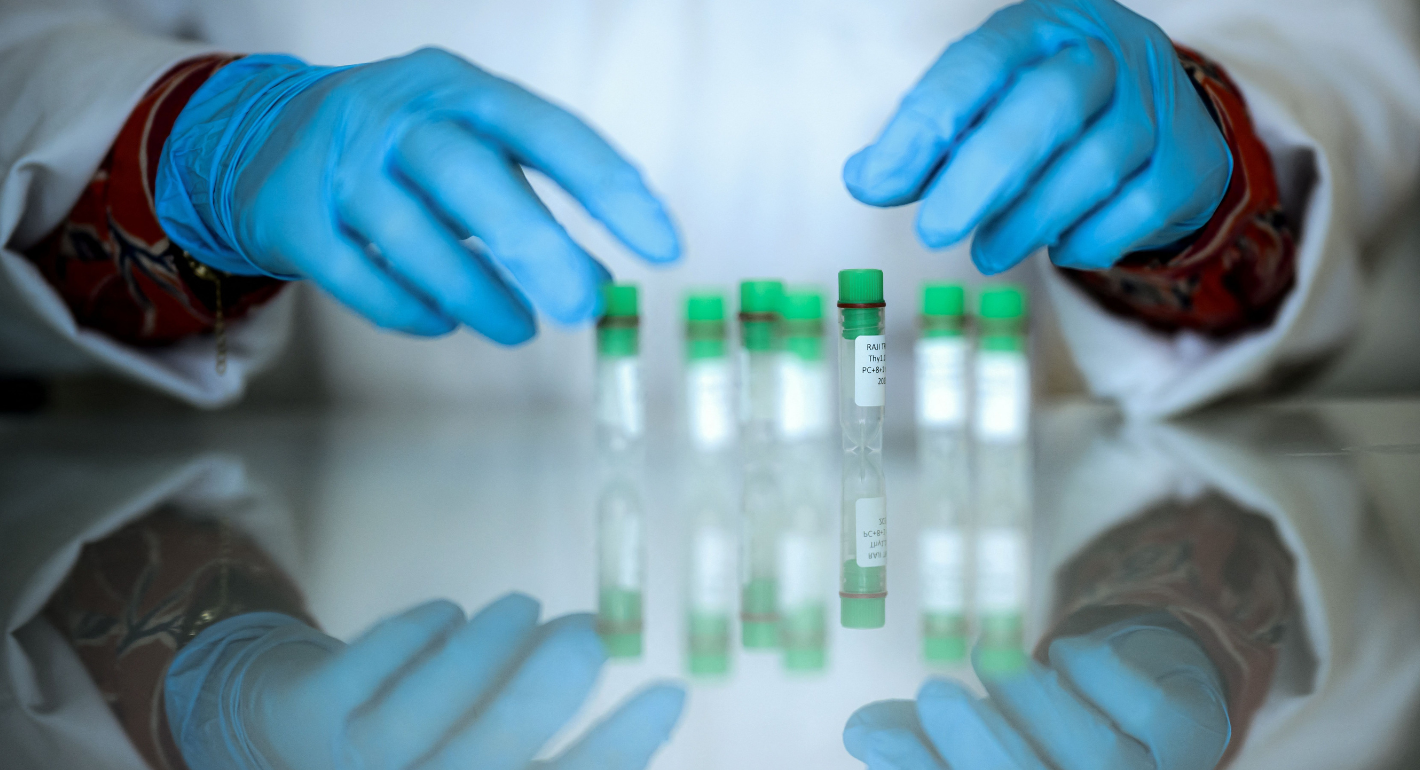
India and the United States should consider launching “Bio-X,” to foster cooperation in biotechnology. This initiative would leverage the synergies between the domestic programs of the two countries, thereby boosting the competitiveness of their biotech industries.
In December 2023, the national security advisers of India and the United States agreed to expand the scope of the iCET, or the Initiative on Critical and Emerging Technology, to encompass biotechnology. While a detailed agenda for this biotechnology cooperation under the iCET is yet to be defined, this presents a prime opportunity to propose initial discussion points before the next review meeting. These ideas could initially be incubated within the iCET framework—a bilateral mechanism to deepen technology and economic cooperation, and in time, be adapted into a wider framework involving other countries.
Much like the India-U.S. Defense Acceleration Ecosystem, or the INDUS-X—an innovation bridge for defense technology collaboration under the iCET, India and the United States should consider launching “Bio-X,” to foster cooperation in biotechnology. This initiative would leverage the synergies between the domestic programs of the two countries, thereby boosting the competitiveness of their biotech industries.
In many ways, Bio-X could be modeled loosely around the INDUS-X. Industry bodies, think tanks, and a wider ecosystem of bioincubators in India and the United States could shepherd this new initiative, anchored between the Department of Biotechnology (DBT) under the Indian Ministry of Science and Technology and its counterpart in the United States.
To start, Bio-X could focus on identifying shared objectives and aspirations in the biotechnology sector. The United States aims to boost biomanufacturing to expand its bioeconomy; India is also working towards scaling its biomanufacturing capacity to support its own. Bio-X could facilitate discussions on collaborative research to support bioeconomies, address challenges in commercializing bioproducts, explore funding mechanisms, and identify regulatory obstacles that impede collaborative research. Bio-X should include startups, industry leaders from small and large companies, academics, venture capitalists, biotech industry associations, policy researchers, lawyers, and regulatory agencies from both countries.
Initially, Bio-X could support the Implementation Arrangement (IA) between the U.S. National Science Foundation (NSF) and the DBT to develop biomanufacturing solutions. The IA promotes collaborative research in synthetic and engineering biology, systems and computational biology, and related fields, streamlining the selection and funding of joint research projects. However, information on research under the IA is often confined to researchers and grant-making organizations. Bio-X could be pivotal in breaking these information siloes, ensuring that policymakers, industry players, and other funding organizations and researchers are informed about ongoing projects to identify more opportunities for collaboration. This would help avoid research duplication, keep policymakers updated on emerging technologies, enable the development of new biomanufacturing solutions, promote translational research, and create a competitive market environment.
Securing adequate funding for projects outside the IA remains a challenge in both India and the United States. Despite the potential of the biotechnology sector, private investors often hesitate to fund early-stage biotech ventures due to the lengthy time before commercialization, compounded by bureaucratic delays in bioproduct approvals. Bio-X could connect researchers with the right funders and industry leaders to transform promising research into marketable products and services. In the long term, Bio-X could facilitate partnerships and technology transfer between companies and research institutions in the two countries.
Beyond funding, Bio-X could also serve as a primary touchpoint for policymakers to stay updated on advancements in the field while maintaining independent review protocols for bio-based products. Regular check-ins through Bio-X could enhance coordination among regulatory agencies in both countries, anticipating necessary measures and regulatory pathways for new bioproducts. This improved coordination would expedite approvals for bioproducts, encouraging private investors to support early-stage research.
Once operational, Bio-X could expand its scope to include workforce development in the bioeconomy and improve public awareness and acceptance of bio-based products and services. This would address systemic challenges across the entire value chain—from collaborative research to the development of publicly acceptable and commercially viable bio-based products.

Former Director, Carnegie India
Rudra Chaudhuri was the director of Carnegie India. His research focuses on the diplomatic history of South Asia, contemporary security issues, and the important role of emerging technologies and digital public infrastructure in diplomacy, statecraft, and development. He and his team at Carnegie India chair and convene the Global Technology Summit, co-hosted with the Ministry of External Affairs, Government of India.

Former Associate Director, Fellow, and Chief Coordinator, Global Technology Summit, Technology and Society Program
Shruti Sharma was an associate director and a fellow with the Technology and Society Program at Carnegie India, where she is currently working on exploring the challenges and opportunities in leveraging biotechnology to improve public health capacity in India. Additionally, she is the Chief Coordinator of Carnegie India's Global Technology Summit.
Carnegie does not take institutional positions on public policy issues; the views represented herein are those of the author(s) and do not necessarily reflect the views of Carnegie, its staff, or its trustees.

The EU can impose sanctions but struggles to enforce them without the United States. With Washington increasingly disinterested in backing European interests, the bloc must now fend for itself.


Nicu Popescu, Tiago Antunes

Ahead of a tough winter for Ukraine, Donald Trump’s swing back toward Russia bodes ill. But instead of panicking, Kyiv’s European allies are focusing on action.

Rym Momtaz

While the EU and European governments are embracing the much-lauded middle-power moment, this entails three difficult conundrums.

Richard Youngs

Europe is facing rising populism internally as well as external pressures from Russia, China, Turkey, and the United States.

Dimitar Bechev
European NATO countries are wrestling with the possibility of U.S. disengagement from the alliance. With the continent’s security increasingly uncertain, governments must restore the credibility of their collective defense.



Hans-Dieter Lucas, Adam Thomson, Pierre Vimont