

Commentary
A summer of escalation in the Black Sea has hurt Ukraine economically and is exacerbating world food security. A truce is needed—as is a broader reframing of Europe’s Ukraine strategy.
Thomas de Waal
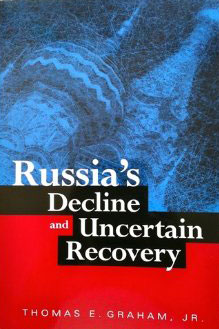
The precipitous decline of Russian power and influence in the world may stand as the most significant development for international relations of the last quarter of the 20th century. Never in modern history has a great power fallen so far so fast during peacetime.
Source: Washington, DC: Carnegie Endowment for International Peace, 2002
The precipitous decline of Russian power and influence in the world may stand as the most significant development for international relations of the last quarter of the 20th century. Never in modern history has a great power fallen so far so fast during peacetime. This decline initially brought the four-decades-long Cold War to a hasty, unexpected conclusion, and subsequently the Russian state and people have experienced a traumatic decade of chaos and widespread impoverishment that can be compared with the Time of Troubles at the turn of the 17th century or the Bolshevik Revolution and ensuing civil war in the early 20th century.
In this monograph, Thomas E. Graham, Jr., clearly and succinctly analyzes the sources of Russia's decline during the Soviet period and the dangerous fragmentation and erosion of state power in Russia during the 1990s. In finding roots in Russian history for the oligarchic regime of the Yeltsin years and the increasingly authoritarian characteristics of the Putin regime, he challenges the appropriateness of the transition paradigm for what has emerged in Russia during the past ten years. According to Graham, whether Russia will achieve sustainable economic growth, political stability, and renewed international influence remains an open question.
About the Author
Thomas E. Graham, Jr. is associate director of the Policy Planning Staff at the Department of State. He was previously a senior associate in the Russian and Eurasian Program of the Carnegie Endowment for International Peace, where he undertook a two-year project on the fragmentation of Russia that resulted in this monograph.
Former Senior Associate
Carnegie does not take institutional positions on public policy issues; the views represented herein are those of the author(s) and do not necessarily reflect the views of Carnegie, its staff, or its trustees.

A summer of escalation in the Black Sea has hurt Ukraine economically and is exacerbating world food security. A truce is needed—as is a broader reframing of Europe’s Ukraine strategy.

Thomas de Waal

European Commission President Ursula von der Leyen is about to give her annual address on the state of the EU. Here’s what she won’t—but should—say.

Rym Momtaz

Canadian Prime Minister Mark Carney has twice inspired praise for standing up to U.S. President Donald Trump: at the 2026 World Economic Forum in Davos and on Canada-U.S. trade negotiations. Is Carney showing a third way better than the EU has in dealing with the Trump administration?
Rym Momtaz, ed.

The EU’s responses to two recent incidents expose the gulf between European perceptions and capabilities. Unless the union can bridge that gap, it will never become a real geostrategic power.
Rym Momtaz

European states control several Overseas Countries and Territories around the world that carry strategic, economic, and environmental weight. As great powers challenge the rules-based order, defending them is a geopolitical imperative for Europe.

Marc Pierini