

Article
Miriam Rajkumar

REQUIRED IMAGE
Many U.S. officials and experts are surprised by India’s reluctance to support Iran’s referral to the Security Council. They should not be. Politically, no Indian government can afford to appear subservient to U.S. interests. New Delhi values an independent foreign policy shaped, as Prime Minister Manmohan Singh has said, by its own geography, economics and domestic considerations. At a press conference in New York on September 16, Prime Minister Singh pointed out that India is located in the region neighboring Iran, that there are three-and-a-half million Indian workers in the Middle East and that India has the second largest Shiite population in the world, trailing only Iran itself. “Any flare up would present immense difficulties,” he said. (Read More)
Many U.S. officials and experts are surprised by India’s reluctance to support Iran’s referral to the Security Council. They should not be. Politically, no Indian government can afford to appear subservient to U.S. interests. New Delhi values an independent foreign policy shaped, as Prime Minister Manmohan Singh has said, by its own geography, economics and domestic considerations. At a press conference in New York on September 16, Prime Minister Singh pointed out that India is located in the region neighboring Iran, that there are three-and-a-half million Indian workers in the Middle East and that India has the second largest Shiite population in the world, trailing only Iran itself. “Any flare up would present immense difficulties,” he said.
It’s true that India wants to implement the promised nuclear deal with America, and that New Delhi now keenly seeks a closer and broader partnership with Washington. Neither, however, trumps a determination to maintain an independent foreign and economic policy. Any Indian government’s support for US tactics towards Iran would have found little backing either in the Indian parliament or with the public at large.
Let’s let the Indians speak for themselves. The well-respected English-language paper, The Hindu editorialized “India needs to stand firm.”
“ India has come under intense pressure to fall in line with Washington. The United Progressive Alliance Government, unfortunately, has equivocated. It has reiterated its opposition in principle to any kind of nuclear proliferation and declared that Iran was obliged to honour its commitments. It also hopes that the diplomatic processes will produce a `consensus' behind which it can take cover. That will simply not do. A decision on this critical issue must be based on a careful, principled examination of all aspects of the dispute between Teheran and the IAEA. There is absolutely no need to fall in line with the U.S.-led attempt to bully and box in Iran, which unlike India is a party to the NPT, has not conducted any nuclear weapon tests, and has its rights under the Treaty. The IAEA admits it has found no evidence that the Iranian uranium enrichment programme has a weapons orientation; at worst, the regulatory body is `sceptical' about Teheran's claim that the programme is solely for civilian purposes. The imperatives of an independent foreign policy as well as national interests — among other things, India has major stakes in projects for constructive cooperation with Iran, including the proposed gas pipeline — demand that New Delhi take an independent and constructive stand in favour of moderation and an amicable negotiated resolution of a potentially explosive dispute.”
Any regional flare up would create immense difficulties for India in the Persian Gulf and broader Middle East both from an economic and diplomatic perspective, and would present a political challenge for Singh’s coalition government domestically. India is highly dependent on oil imports. About seventy percent of India’s oil is imported. India's oil imports are expected to rise to some 5 million barrels a day by 2020, from around 1.4 million barrels at present. India signed a $4 billion gas-pipeline agreement with Iran, over U.S. objections. Any Indian government will be loathe to incur the wrath of a major energy supplier such as Iran. Furthermore, India sees its relationship with Iran as independent of closer ties with the United States and Israel, much like the United States views its close relationship with Pakistan as unrelated to its emerging partnership with India.
Iran points out that it has a legitimate right to pursue civilian nuclear energy within the framework of its treaty obligations. It says that its growing domestic energy necessitates the pursuit of nuclear energy. It says that the country’s sovereign rights are being threatened by the United States, which is trying to change the rules and rob Tehran of its legitimate rights. These arguments will resonate in a country that is resolutely independent.
The Indo-U.S. nuclear deal, for example, was viewed with some suspicion in India, and Prime Minister Singh had to reassure the country that he had not compromised India’s ability to act independently in the nuclear sphere. If the Prime Minister had agreed to the US tactics on Iran, he would have been besieged with accusations of succumbing to U.S. pressure. Having often referred to the existing nonproliferation regime (with special emphasis on the NPT) as “nuclear apartheid,” India cannot easily support referral of a neighbor with whom it has enjoyed increasingly good relations since the 1990s, one who is a major source of energy and one who has been supportive of India on the Kashmir issue,
Singh says that he agrees with the United States on its objectives with Iran, but disagrees with the “tactics.” With U.S. intelligence services calculating that Iran is about 10 years away from acquiring a nuclear weapon, and with the IAEA still on site in Iran, Singh would be hard pressed to sell a stand that argues that there is no time for diplomacy to work. Speaking in New York, Singh said that India was against Iran acquiring nuclear weapons, but added, “diplomacy must be given scope. The IAEA should be given a chance to work out a consensus.''
Influential Minister for Petroleum and Natural Gas Manishankar Aiyer summarizes New Delhi’s cost-benefit decision-making well: “None of us in Asia should fall victim to the strategies of outsiders. The only way to counter the geopolitics of others is to have our own geopolitics.”

Former Associate, Non-Proliferation Project
Recent Work
Miriam Rajkumar
Carnegie does not take institutional positions on public policy issues; the views represented herein are those of the author(s) and do not necessarily reflect the views of Carnegie, its staff, or its trustees.

Trump is distracted and Ukraine wants Europe to step up. The continent’s leaders must find their voice and assert it in talks with Russia.

Alissa de Carbonnel

Over the past ten years, NATO has held almost as many summits as it did during the entirety of the Cold War. Are they still useful, or is it time to stop holding annual meetings?

Rym Momtaz, ed.
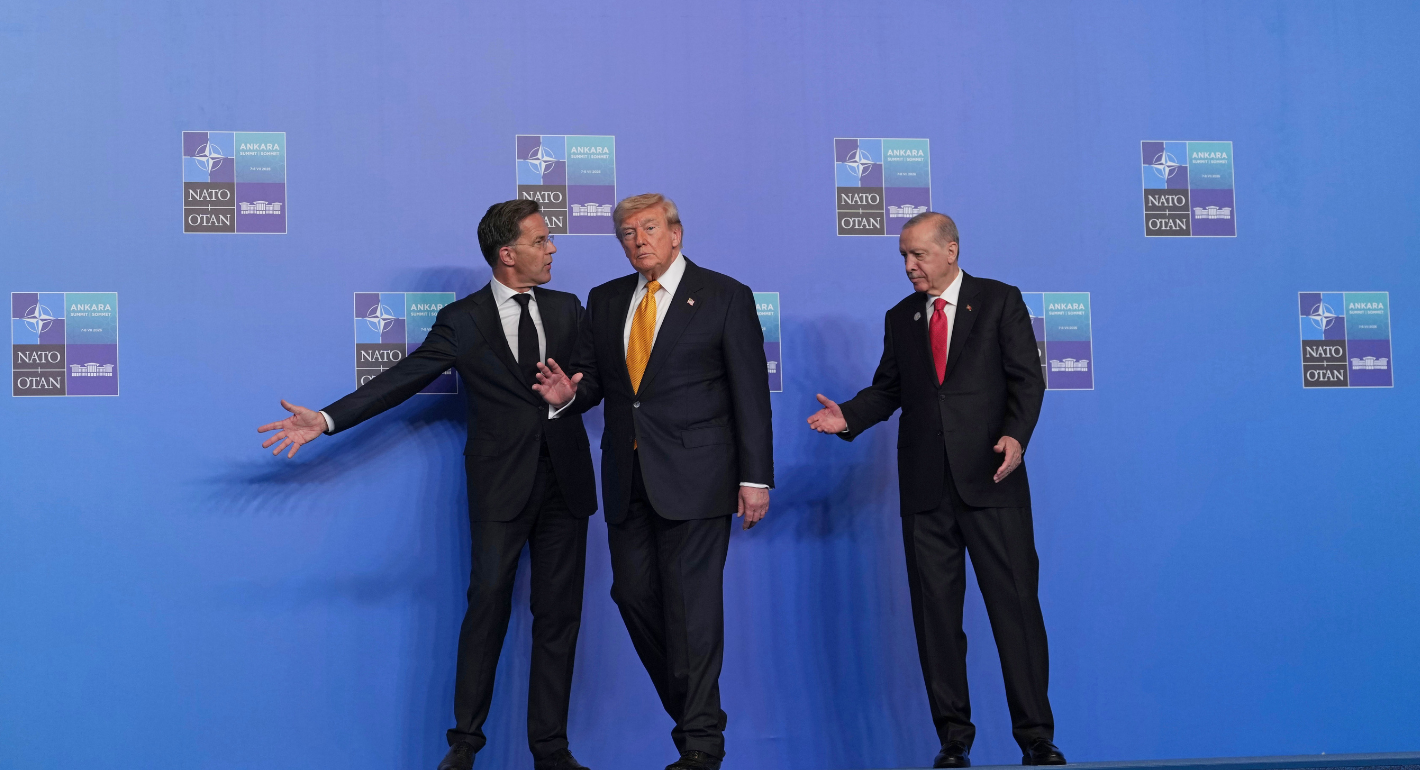
Nearly a year and a half after Europeans leaned into sucking up to Trump, the strategy has produced some benefits when it comes to Ukraine.
Rym Momtaz

Autonomous AI agents are increasingly prevalent in cyberspace. The EU needs a real-time monitoring strategy, to invest in AI defenses, and to reduce its strategic dependence on U.S. frontier models.


Raluca Csernatoni, Patryk Pawlak
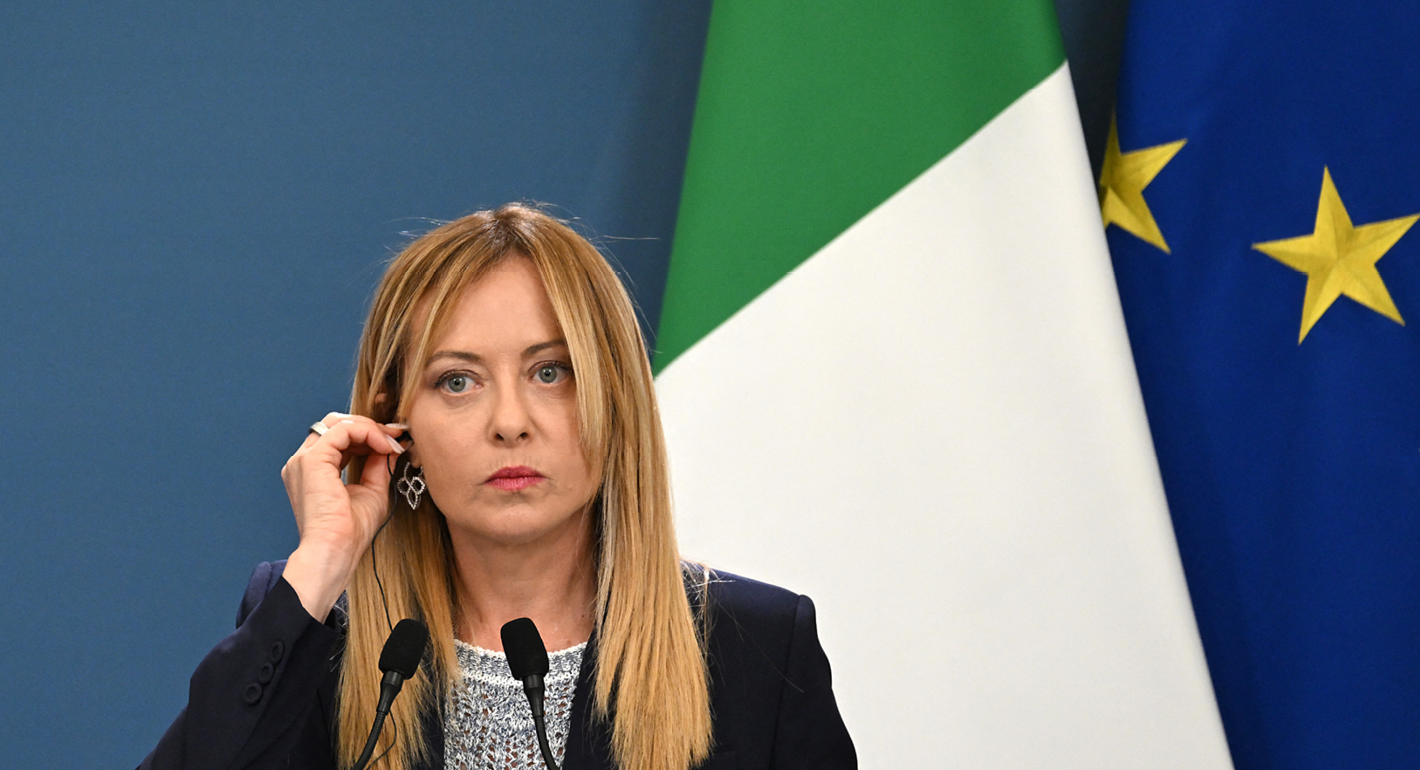
When Giorgia Meloni very publicly rebuked Donald Trump’s disparaging remarks about her, it surprised many who saw her as a European extension of Trumpism. Is the spat a sign of trouble in the radical right’s transatlantic axis?
Rym Momtaz, ed.