

Paper
Douglas H. Paal
Source: Getty
As the deadlock continues over North Korea’s nuclear program, China is likely to stick to its risk-averse policy of dialoguing with Pyongyang despite high costs and limited returns.
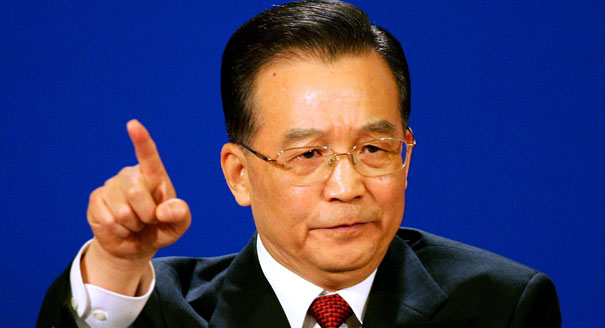
Chinese Premier Wen Jiabao will visit Pyongyang this weekend. The official spokesman announced Wen will sign several agreements while there, probably including new industrial, agricultural, energy, and food assistance. But Washington will be watching more for signs that the Chinese leader has won North Korea’s agreement to re-enter multilateral talks on the nuclear issue.
Wen’s visit comes after a preparatory trip to Pyongyang by State Councilor Dai Bingguo, who has long dealt with North Korea in his former capacity as head of the Chinese Communist Party’s International Liaison Department. Before Dai’s recent visit, there was extensive consultation between Washington and Beijing on how to close the gap between demands that Pyongyang resume talks on denuclearization based on the September 2005 declaration at the Six Party Talks (6PT), and the North’s declaration that past agreements are null and void and refusal to attend any more 6PT sessions.
If a formula can be found that allows both sides to say they have not backed down in principle but permits bilateral and multilateral talks to resume, then U.S. Special Envoy Stephen Bosworth will be able to proceed to Pyongyang and explore what might subsequently be achievable. Given the flexibility shown in some of the North’s recent actions, such as releasing American and South Korean prisoners, and leader Kim Jong Il’s conversations with former President Bill Clinton, there is some hope this will occur. Pyongyang has a strong motivation to temper the implementation of UN sanctions against it. The terms of new talks undoubtedly will be vague and subject to wide ranging interpretation.
Nevertheless, the North meanwhile has been forcefully reasserting through official mouthpieces that it has no intention of returning to the 6PT, that it has successfully enriched uranium, and that nuclear weapons are not on the bargaining table. Pyongyang evidently believes now more than ever that keeping nuclear weapons is the key to its long term security. This suggests that the talks, if they occur, will satisfy those who believe that talking itself is a kind of therapy, but probably anger those who believe the North is leading the U.S. by the nose while never intending to surrender its nuclear weapons. For President Obama, who has plenty of other tough issues on his plate at the moment, this less than satisfactory outcome may still be good enough to proceed. The mantra is likely to be that you cannot know whether progress is possible until you try.
What does China seek in playing this role? Beijing’s behavior embodies the dilemma it faces. On the one hand, China was genuinely angered by the North’s defiant firing of a long range missile and testing of a second nuclear device earlier this year, so it voted for UN sanctions. Beijing does not want Tokyo, Seoul, or Taipei to be inspired by the North to seek nuclear weapons or damage ties with China in response.
On the other hand, Beijing does not want to squeeze Pyongyang so firmly that it is destabilized, risking the loss of a convenient if difficult buffer state on the peninsula. At a big Chinese interagency meeting in July, called by the State Council, strong and opposing views reportedly were expressed on how to deal with North Korea. The outcome was a deadlock, which led Dai Bingguo to declare by default that policy would continue as is, without substantive change.
So Beijing continues to talk to the U.S. and the other five parties about denuclearization and the enforcement of sanctions, but enforces those sanctions selectively itself, so as to preserve Chinese influence in the North (witness the Wen agreements) and prevent instability and unpredictable, meaning uncontrollable, change on the peninsula. Beijing tells Washington that “dialogue” and “negotiations” are the best route to denuclearization, while clearly harboring strong doubts that such an outcome is attainable. Meanwhile, debate continues in China’s open media about the ultimate best course for handling North Korea.
Ironically, while Washington is more serious than Beijing about enforcing sanctions and denuclearizing the North, but less concerned about threats to the North’s regime, American near term policy is likely to be close to indistinguishable from China’s. That is, both capitals will deploy negotiators who say their goal is denuclearization even as Pyongyang says no. U.S. politics will constrain the use of incentives with the North, but China will be prepared to provide whatever is necessary to get and keep the talks going.
The North Korean nuclear “dead horse” that Defense Secretary Bob Gates and others have said the U.S. will “not buy again,” will likely be paid for by China this time. That is the price China is willing to pay not to take risks, a policy wholly in keeping with the behavior everywhere of the Chinese leadership today, as it struggles to deal with a host of domestic challenges.

Distinguished Fellow, Asia Program
Paal previously served as vice chairman of JPMorgan Chase International and as unofficial U.S. representative to Taiwan as director of the American Institute in Taiwan.
Recent Work
Douglas H. Paal


Douglas H. Paal, Tong Zhao, Chen Qi, …
Carnegie does not take institutional positions on public policy issues; the views represented herein are those of the author(s) and do not necessarily reflect the views of Carnegie, its staff, or its trustees.

European Commission President Ursula von der Leyen is about to give her annual address on the state of the EU. Here’s what she won’t—but should—say.

Rym Momtaz

Radical-right parties are expected to do well in upcoming elections in four of the EU's biggest member states. If successful, they could prevent the union from addressing key challenges ahead.

Stefan Lehne

Canadian Prime Minister Mark Carney has twice inspired praise for standing up to U.S. President Donald Trump: at the 2026 World Economic Forum in Davos and on Canada-U.S. trade negotiations. Is Carney showing a third way better than the EU has in dealing with the Trump administration?
Rym Momtaz, ed.

European states control several Overseas Countries and Territories around the world that carry strategic, economic, and environmental weight. As great powers challenge the rules-based order, defending them is a geopolitical imperative for Europe.

Marc Pierini

In supporting Europe’s far-right, MAGA and Russia both want the same thing: a weaker EU. Europe must defend itself without abandoning the openness these forces exploit.

Armida van Rij