

Commentary
Alexey Malashenko
Source: Getty
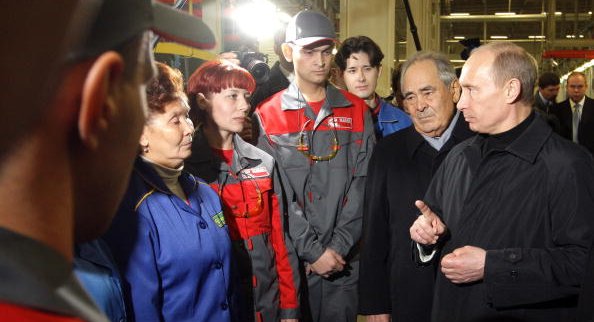
The imminent departure of Mintimer Shaimiev as president of Tatarstan may mark the beginning of the end for the aging titans of Russian regional politics, but it will bring little if any real change to one of Russia’s most important ethnic republics.
The imminent departure of Mintimer Shaimiev as president of Tatarstan may mark the beginning of the end for the aging titans of Russian regional politics, but it may bring little if any real change to one of Russia’s most important ethnic republics, according to Carnegie Moscow Center expert Alexey Malashenko.
“Shaimiev’s departure has already been settled. It’s hard not to add automatically ‘it seems’ or ‘it looks as though’, because there has been talk of Shaimiev’s departure for the last ten years now. But this time the decision is final and irreversible. What are the reasons?
“First, there is Shaimiev’s age. He is simply tired. He wanted to step down earlier, a few years ago, but was persuaded to stay on. It is interesting that despite Shaimiev’s extraordinary character, his ability to criticise the federal authorities and stand up for Tatarstan’s interests, Moscow always needed him. For many years, no one in Moscow could imagine who else could possibly take the reins of this wealthy and strong-willed region. Shaimiev succeeded in maintaining inter-ethnic and religious harmony and managing internal conflicts within the Islamic community throughout these difficult years.
“Second, Shaimiev’s departure could sound the final chord for the first generation of Russian regional leaders. You count them on the fingers of one hand now. Many people are talking of the end of an era, but what comes to mind more in this respect is the Moscow’s own ‘last of the Mohicans,’ mayor Yury Luzhkov, who has also reached a kind of threshold now and is unlikely to remain an exception much longer. President Shaimiev has shown that even he cannot keep going forever.
“Third, Shaimiev is confident that little will change in the system he has built up in Tatarstan. His successor at the top will be Rustam Minnikhanov, who will follow the tried and tested principle of not changing what has already proved its worth. Minnikhanov’s toughest job will be maintaining the kind of authority that Shaimiev had with the Kremlin and the federal government. I imagine that the ‘senior president’ will help his ‘junior’ colleague with this.
“Fourth, Shaimiev has an excellent retirement career to fall back on: by stepping down from politics, he can concentrate on cultural projects, namely the restoration of the Bulgar Museum and Park, and the creation of a ‘museum island’ in Sviyazhsk, an amazingly beautiful place not far from Kazan. In any case, even retired, Shaimiev will still be an important political factor in Tatarstan.”
Former Scholar in Residence, Religion, Society, and Security Program
Malashenko is a former chair of the Carnegie Moscow Center’s Religion, Society, and Security Program.
Recent Work
Alexey Malashenko
Alexey Malashenko
Carnegie does not take institutional positions on public policy issues; the views represented herein are those of the author(s) and do not necessarily reflect the views of Carnegie, its staff, or its trustees.