

Article
A notable degree of participative democracy has firmly arrived in Europe. But to have more far-reaching impact, democratic deliberation needs to move into a radically new phase.
Richard Youngs
Source: Getty
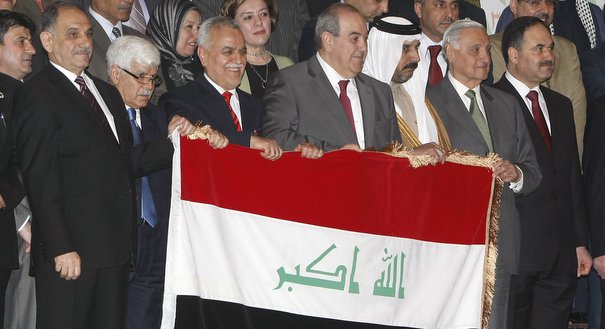
The post-election phase in Iraq appears even more difficult than anticipated, postponing improvements in Iraq’s long-term security and economic development.
The post-election phase in Iraq appears even more difficult than anticipated, postponing indefinitely improvements in Iraq’s long-term security and economic development. Forming a new government is being endlessly delayed by a “post-election de-Baathification” process, coupled with burgeoning demands for a widespread recount.
Ironically, the current negotiations between coalitions most likely will be of little consequence, because in the end it will be impossible for any one to form a government that does not draw support from Shi’a, Sunna, and Kurds, and thus from the four coalitions that won most of the seats in the Council of Representatives—Iraqiya, State of Law, the Iraqi National Alliance (INA), and the Kurdish Alliance. Iyad Allawi, whose Iraqiya coalition won 91 seats, would need the support of the INA and State of Law to form a government that is credible in the eyes of the Shi’i majority. State of Law and the INA would be courting disaster if they excluded Iraqiya, who has the bulk of the Sunni votes. And neither side can hope to rule a united Iraq if the Kurdish Alliance is not part of the government. The rival factions need each other to form a government and they know it, but this is not making an agreement any easier.
The major problem is the conflict between Iraqiya, which won 91 seats, and State of Law, which gained 89 but has been maneuvering ever since the election to reduce or eliminate Iraqiya’s advantage. The two organizations are battling each other in two arenas: the de-Baathification process and the vote recount. In both, State of Law has taken the offensive. While in the short run things appear to be developing in its favor, this could well prove to be a Pyrrhic victory.
The first salvo in the post-election de-Baathification battle was fired immediately after the elections by Nouri al-Maliki, when he said that some of elected candidates belonged in prison rather than in the Council of Representatives. In fact, less than a week before the elections, Ali al-Lami, the head of the Justice and Accountability Commission (JAC), had sought to disqualify an additional 52 candidates—in addition to the over 500 already banned before the elections. On April 26, the judicial appeals panel upheld the disqualification of those 52 candidates even though the elections had already taken place.
While only one or two of the 52 banned candidates had actually won seats, the ruling had far-reaching political implications. Furthermore, the JAC has indicated that nine more winning candidates may be banned soon. According to the federal appeals court’s interpretation, the parties will forfeit not only the seats won by banned candidates, but also all votes cast for these candidates. This means that the total vote count will be affected and, as a result, the distribution of the 325 seats as well—an unintended consequence of the adoption of the open list system (much-lauded by the international community) that allowed voters to choose not only parties but also individual candidates. An unfortunate aspect of the situation is that the rules concerning what will happen as a result of the bans are being made in an ad hoc fashion by the JAC. Many parties argue that they should keep all the votes cast for their parties and their candidates, and that the seats won by now banned candidates should go to the next person on the list.
This decision to ban elected officials has truly taken Iraq into uncharted waters, where it is becoming increasingly difficult to separate ad hoc political decisions from those based on the legal criteria. The January 2008 law that established the JAC and defined its mandate did not foresee the possibility of banning candidates after the election and no precedent exists on which to base a decision as these are the first elections under the law. Making the decision even more political—the post-election bans will affect Iraqiya particularly hard, as did the pre-election exclusions. With twenty-two of the candidates banned after the vote belonging to Iraqiya, it could lose its slim two-seat advantage over State of Law.
There are also questions concerning the current legal status of the JAC, whose members were nominated by the council of ministers, approved by parliament, and ratified by the presidency council—institutions whose mandate was terminated at the end of the last parliament and are operating in a legal limbo in the transitional period until a government is formed. The situation will worsen as the transitional period stretches from the few weeks foreseen by the constitution to the many months that now appear possible.
Adding to the confusion about the JAC members’ tenure, a member of Iraqiya claims that Maliki voiced his intent to replace some of the commissioners—something he could probably not legally do at this point. Nevertheless, some members of State of Law and the Iraqi National Alliance have defended the decision of the JAC and the ad hoc appeals panel, which was also approved by the outgoing parliament. Maliki appears to be having some second thoughts about the wisdom of aligning himself too closely with the decisions of the JAC’s and appeals panel; on April 29, his spokesperson, Ali Dabbagh, declared that the latest de-Baathification decision needs to be reexamined, as does the Justice and Accountability law, in light of their political ramifications.
Demands for Recount
The controversy surrounding the vote recount is equally puzzling and in a legal limbo, with politics playing a role at least equal in importance to rules and due process. The formal process requires that complaints against election violations be filed within 48 hours of the time the alleged violation was witnessed, presumably on election day or during the recount. Six weeks after the election, political parties are still asking for recounts in various parts of the country. Indeed Faraj Haidari, the head of the Iraqi High Election Commission (IHEC), has acknowledged that the parties did not respect the deadlines for filing complaints, nor did they necessarily submit precise complaints. He also pointed out that the election law provides for a recount of the vote in stations where specific complaints were filed, but that he is now faced with the decision by the judicial appeals panel that all ballots in Baghdad be recounted, even in stations where no specific complaints were filed.
The laxness in observing the law has opened the door to a veritable flood of demands for recounts. As mentioned, State of Law has demanded a vote recount in Baghdad and that recount is supposed to start on May 3. But other parties are now getting into the act. Iraqiya has requested a vote recount in Basra and Najaf, alleging irregularities there; however, a statement issued by the parties on April 20 also expresses concern about the whereabouts and control over the ballot boxes it wants recounted. They also voiced concerns over whether IHEC employees have also been targeted by the government. These statements suggest that Iraqiya no longer believes that a fair recount is possible. Indeed, Allawi and other members of the Iraqiya leadership are now hinting that the situation may have moved beyond the point where a vote recount could solve the problems and that new elections might become necessary, or that the UN, the EU or the Arab League might need to intervene—on what basis, it is not clear. Despite these comments, Iraqiya has not officially called for new elections.
The Kurdish parties have also gotten into the act. First, they announced, as did the Iraqi National Alliance, that they have stopped negotiations over their participation in the future government until the recount process is over and certified election results are published. Second, they have appealed for a recount in certain areas. Sources close to the Kurdish Alliance indicate the need for a recount in Kirkuk and, depending on the reports, in Mosul and/or Nineveh—in other words, in all contested areas. The IHEC has denied receiving a formal request from the judiciary for a recount in these areas so far, but one of its members has stated that if such request was received and accepted, the IHEC would have to hold new elections instead.
Not only is the battle over elections results far from over, it is intensifying. No matter how it is solved, it is clear now that it will be on the basis of political decisions, not of legal criteria and that the transition period will continue for months.
Former Senior Associate, Middle East Program
Before joining the Endowment, Ottaway carried out research in Africa and in the Middle East for many years and taught at the University of Addis Ababa, the University of Zambia, the American University in Cairo, and the University of the Witwatersrand in South Africa.
Danial Kaysi
Carnegie does not take institutional positions on public policy issues; the views represented herein are those of the author(s) and do not necessarily reflect the views of Carnegie, its staff, or its trustees.

A notable degree of participative democracy has firmly arrived in Europe. But to have more far-reaching impact, democratic deliberation needs to move into a radically new phase.

Richard Youngs

Before the next wave of EU enlargement takes place, the union needs to grapple with thorny questions of how power is distributed among its members.


Emil Sondaj Hansen, Ditte Brasso Sørensen

As the EU confronts profound challenges, several leaders have called for fundamental reform to the union’s model—but only modest, superficial changes have resulted. What if Europe really could be reimagined from zero today: What should such a redesigned European order look like?
Richard Youngs, ed.
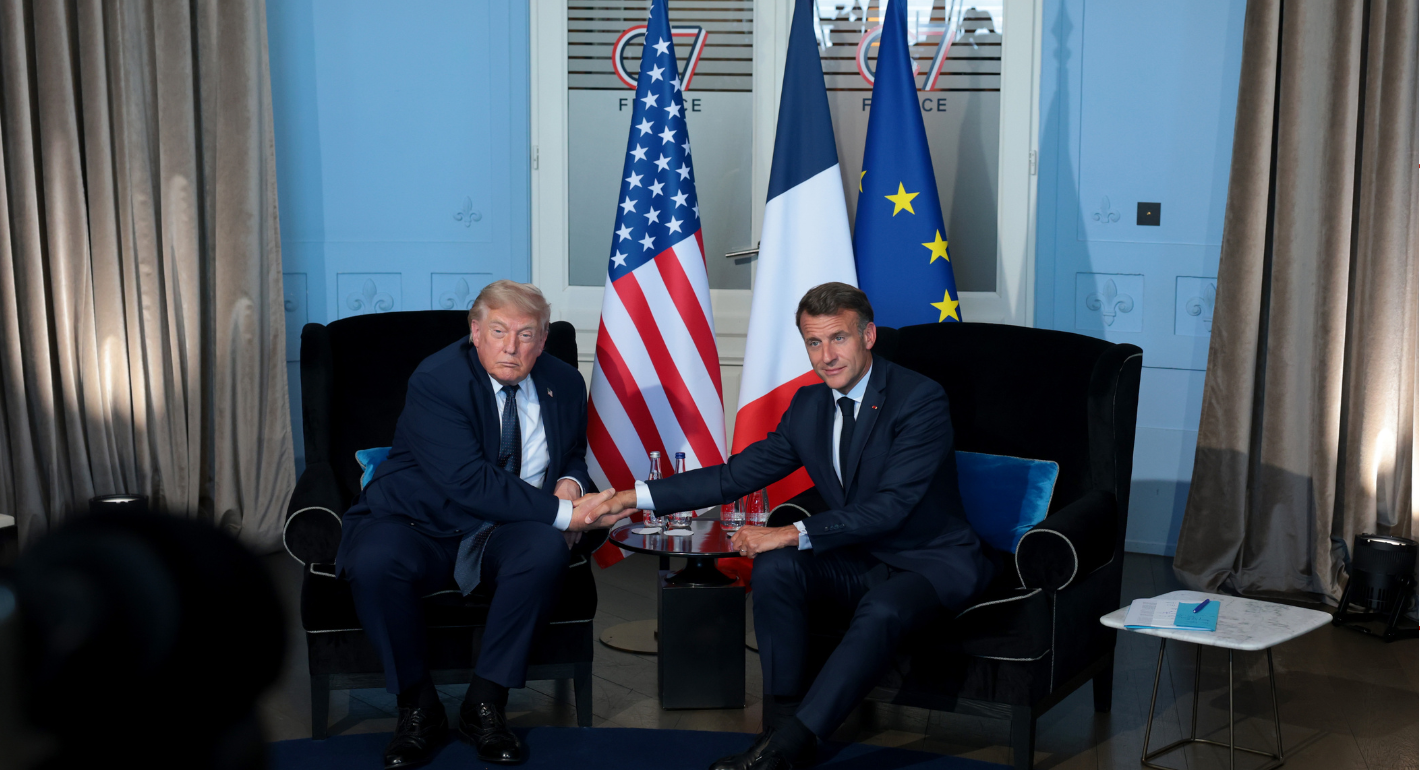
When the U.S.-Iran memorandum of understanding was announced, the UK, France, Germany, and Italy declared their readiness to help demine the Strait of Hormuz and lift nuclear sanctions on Tehran. But does Europe need new tools to recover a diplomatic role?

Rym Momtaz, ed.

The EU’s new migration policy is not suited to today’s realities. With climate change increasingly becoming a driver of displacement, Europe needs to rethink its deterrence-focused approach.

Shana Tabak