

Paper
Douglas H. Paal
Source: Getty
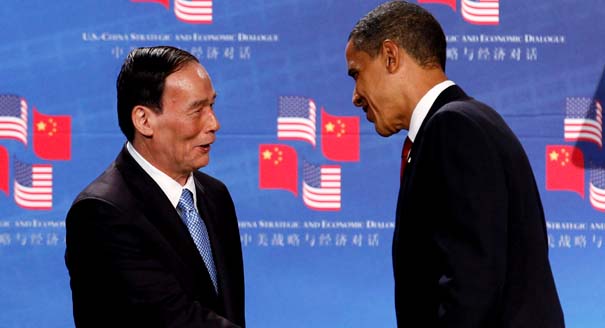
The Obama administrations sustained diplomatic outreach to Asia helps counter China’s increasing influence in the region at a time of economic weakness for the United States while keeping it engaged with Beijing.
The United States recently pulled off the most comprehensive burst of diplomatic and military activity in Asia—particularly Southeast Asia—in decades. Members of the previous U.S. administration get annoyed when current officials say, “we’re back in Asia.” They have a point—the United States never left. Under the Bush administration, the United States played a critical role in the recovery from the 2004 tsunami, oversaw improving relations with the Indonesian military, and increased cooperation on counterterrorism throughout the region. But the current administration has a point too as America was often distracted by other priorities and missed important regional meetings. Over the past month, the Obama administration has delivered on its promise to get back in Asia.
Secretary of State Hillary Clinton recently visited Japan and Korea before delivering a powerful message of re-engagement at the regional forum for the Association of Southeast Asian Nations in Hanoi. President Obama also invited ASEAN’s ten leaders to a major meeting in the United States and to two days of activities in Washington to promote U.S. ties with the region.
While she was in Vietnam, Clinton pushed back against China’s assertiveness in the South China Sea by offering to facilitate negotiations to reestablish a code of conduct to avoid conflicts and unilateral changes to the status quo of disputed islands. China reacted negatively to Washington’s interest in an area that Beijing recently asserted was one of its core interests—along with Taiwan and Tibet.
Last month, Secretary of Defense Robert Gates visited Indonesia to announce the gradual and phased rehabilitation of American defense links to the Indonesian military’s elite kopassus units despite continuing opposition from American human rights groups.
Undersecretary of State for Political Affairs William Burns separately visited four Southeast Asian nations with tailored messages for each capital. And Deputy Secretary of State James Steinberg visited Central Asia, where he scored new transit rights through Turkmenistan to support forces in Afghanistan. After a stop in Mongolia, he also conducted tripartite talks with Japan and Australia.
And at the same time the United States also demonstrated its muscle, conducting major anti-submarine and other exercises with the forces of South Korea in a show of resolve against North Korea’s recent sinking of the South’s corvette, Cheonan. Subsequently, the U.S. Navy prominently visited Vietnam, whose relations with China often chafe, and Hanoi and Washington issued a new nuclear cooperation agreement.
This wide-ranging engagement matters for three reasons. First, ever since the end of the Vietnam War there has been a tentative quality to U.S. diplomacy in Asia. This was most evident in the Clinton administration’s cautious approach to the 1997 Asian financial crisis. U.S. reluctance—and China’s engaged response—left a bad taste for years.
Second, after going through its own financial crisis, the United States has not yet found a way to rejuvenate its society and economy. If the United States were to stay at home and nurse its wounds, the draw of the United States in Asia would fall as the allure of China as an alternative partner would grow.
And finally, China stepped up its game in Southeast Asia starting in 1998. China dispatched its best diplomats, leaders, and an endless flow of commercial and assistance delegations to the region to counter American influence. This warm embrace sent millions of tourists and their money to help restore the region’s economic self-confidence and erode American sway. Over sensitive issues, including Taiwan’s moves toward independence, Asian countries are hesitant to choose between the United States and China.
Under the Obama administration, the United States is back in the game of defending and promoting American interests in the region. Moreover, China’s warm embrace—considered a success—has recently been seen as bringing more of the dragon’s unwelcome breath. This effect was apparent when twelve foreign ministers from the region basically endorsed Secretary Clinton’s call for multilateral commitment to a code of conduct for the South China Sea, rather than China’s preferred bilateral approach, which essentially pitted China against the smaller Southeast Asian nations. Although not seeking confrontation, the Southeast Asian nations were not afraid to choose between Beijing and Washington’s preferences this time.
It is important to remember that it’s not a zero-sum struggle for influence in Asia. America’s activity in the region does not necessarily mean a struggle with China for power. China will naturally take a larger share of Asia’s attention as it continues its rapid growth and re-rises as an Asian power, but it doesn’t need to come at the expense of the United States if Washington continues to tend its interests assiduously. And if things nonetheless head in the direction of conflict with China, the United States will need the healthy and committed partners it is cultivating in the region.
The next test, of course, is for the Obama administration to sustain its level of interest and activity, despite the inevitable setbacks and competing priorities. But that will only be the midway point. The United States must also restore its economy and dynamism in ways that will convince Asia that the United States is “back” at home as well.
Distinguished Fellow, Asia Program
Paal previously served as vice chairman of JPMorgan Chase International and as unofficial U.S. representative to Taiwan as director of the American Institute in Taiwan.
Recent Work
Douglas H. Paal


Douglas H. Paal, Tong Zhao, Chen Qi, …
Carnegie does not take institutional positions on public policy issues; the views represented herein are those of the author(s) and do not necessarily reflect the views of Carnegie, its staff, or its trustees.

Are Germany’s economic, industrial, and political struggles becoming a liability for the EU’s ability to rise to the geopolitical moment?

Rym Momtaz, ed.

European Commission President Ursula von der Leyen is about to give her annual address on the state of the EU. Here’s what she won’t—but should—say.
Rym Momtaz

Radical-right parties are expected to do well in upcoming elections in four of the EU's biggest member states. If successful, they could prevent the union from addressing key challenges ahead.

Stefan Lehne

The aftermath of the Ceuta crisis shows Europe has drawn the wrong lessons. Rather than doubling down on failed migration policies, the EU needs to address the underlying roots of such episodes.

Richard Youngs

Canadian Prime Minister Mark Carney has twice inspired praise for standing up to U.S. President Donald Trump: at the 2026 World Economic Forum in Davos and on Canada-U.S. trade negotiations. Is Carney showing a third way better than the EU has in dealing with the Trump administration?
Rym Momtaz, ed.