

Commentary
Russia is testing the waters of NATO’s mutual defense clause. What do strikes in Romanian territorial waters mean for the alliance’s posture toward Moscow?
Dimitar Bechev
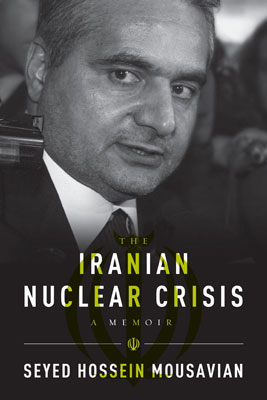
The first detailed Iranian account of the diplomatic struggle between Iran and the international community, begins in 2002 and takes the reader into Tehran’s deliberations as its leaders wrestle with internal and external adversaries.
Source: Washington, DC: Carnegie Endowment for International Peace, 2012

Seyed Hossein Mousavian, previously the head of the Foreign Relations Committee of Iran’s Supreme National Security Council and spokesman for Tehran’s nuclear negotiating team, provides readers with intimate knowledge of Iran’s interactions with the International Atomic Energy Agency and global powers.
Mousavian’s personal story comes alive as he vividly recounts his arrest in 2007 on charges of espionage. This and other dramatic episodes of diplomatic missions tell much about the author and the swirling dynamics of Iranian politics and diplomacy—undercurrents that must be understood now more than ever.
As intense debate continues over the direction of Iran’s nuclear program, Mousavian weighs the likely effects of military strikes, covert action, sanctions, and diplomatic engagement, along with their potential to resolve the nuclear crisis.
“A fascinating, insightful, and new treatment from the perspective of an intimately involved former Iranian senior official on Iran’s nuclear program and responses to it. For those familiar with the details, there is much new information about the Iran side, its ideas, strategies, disputes, and aims. U.S. experts will have some key questions but will learn much from this extraordinary book.”
—Thomas R. Pickering, former U.S. under secretary of state
"…remarkable new book…"
—David Ignatius, Washington Post
“…a fascinating insider’s account…”
—Philip Stephens, Financial Times
Seyed Hossein Mousavian
Princeton University
Carnegie does not take institutional positions on public policy issues; the views represented herein are those of the author(s) and do not necessarily reflect the views of Carnegie, its staff, or its trustees.

Russia is testing the waters of NATO’s mutual defense clause. What do strikes in Romanian territorial waters mean for the alliance’s posture toward Moscow?

Dimitar Bechev

With its public finances in shambles, the far right polling at 35 percent ahead of the 2027 presidential election, and a growing protest movement, is France’s crisis a threat to the EU’s geopolitical awakening?

Rym Momtaz, ed.

Europe is facing rising populism internally as well as external pressures from Russia, China, Turkey, and the United States.
Dimitar Bechev

A notable degree of participative democracy has firmly arrived in Europe. But to have more far-reaching impact, democratic deliberation needs to move into a radically new phase.

Richard Youngs

Before the next wave of EU enlargement takes place, the union needs to grapple with thorny questions of how power is distributed among its members.


Emil Sondaj Hansen, Ditte Brasso Sørensen