

Research
Economic growth is at the heart of a dilemma between planetary and international security.
Olivia Lazard

Source: Getty
Regional stability is vital to sustaining the vibrancy of the Chinese and regional economies. It is in China’s interest to take steps to prevent further militarization of these disputes.
Competing territorial and jurisdictional claims in the resource-rich South China Sea have once again brought states in the region into direct confrontation. Maritime tensions have spilled over into broader regional interactions, injecting new frictions into relations among ASEAN members.
China’s substantial maritime claims in the resource-rich waters put it at the center of these disputes. Beijing’s claims overlap extensively with those of Vietnam, while the Philippines and several other states ringing the South China Sea have competing claims as well. In recent years, more assertive action by claimants, including China, to promote or reinforce their maritime stakes has increased the risk of conflict emerging that could destabilize the region.
Yet, regional stability is vital to sustaining the vibrancy of the Chinese and regional economies. In an era of international uncertainty and global security challenges, it is in China’s interest to take steps to prevent further militarization of these disputes. Beijing should take steps to foster cooperation with neighbors with which it has maritime disputes.
After years of relative calm, claimants in the South China Sea have intensified efforts to assert their interests through official statements, new domestic policies, and more frequent and intrusive patrols. These actions and others have brought China head-to-head with both the Philippines and Vietnam at the same time that a dispute between China and Japan over the Diaoyu/Senkaku Islands in the East China Sea has erupted into risky displays of force.
Beijing contends that its actions in the South China Sea are reactive rather than deliberately escalatory, undertaken to defend its position against challenges to its sovereignty claims and related maritime interests. It has repeatedly conveyed its commitment to an approach to relations with ASEAN member states that promotes peace, stability, and prosperity in the region, including where territorial disputes are concerned.
Nonetheless, some of what Beijing has done, such as the announcement in 2012 by the China National Offshore Oil Company (CNOOC) of a vast sweep of new exploration blocks, has confused this message and reinforced regional concerns that China is prepared to use its superior capabilities to assert its claims. CNOOC’s announcement, for example, set back what had been improving relations with Vietnam at the time.
Meanwhile, Washington’s pivot—or rebalance—to Asia, rolled out during the Obama administration’s first term, reinforced the U.S. commitment to a strengthened forward military presence in the region that focused on supporting its allies and strategic partners. These military measures were complemented by so-called “forward-deployed diplomacy,” marked by a revitalized American presence in regional forums.
The U.S. pivot provoked a positive reaction among some countries, but it aggravated Chinese suspicions of U.S. objectives in the region. Beijing saw the pivot as a zero-sum game in which the United States sought to accrue more relative power in the Asia-Pacific, in part by disrupting relations between China and its neighbors.
In its second term, the Obama administration appears to be trying to improve the atmosphere. Washington has attempted to make clear that it takes no position on the outcome of competing territorial claims. Its interests lie in encouraging restraint by all parties in support of a peaceful resolution of these disputes.
For Beijing, finding a way forward that assures the region that China is committed to remaining a good neighbor while upholding its interests in the South China Sea is challenging but not impossible. A key step would be for China to clarify the extent of its maritime claims in the South China Sea.
The Chinese government has never asserted a claim to the entire South China Sea; however, official maps include a nine-dashed line encompassing much of the sea’s waters. China should clarify that its claims apply to certain land features and that the maritime sovereignty and jurisdictional control it seeks to exert, while extensive, is consistent with the limits permitted under the United Nations Convention on the Law of the Sea to which it is party. This would help ease regional (and international) concerns about the scope of its ambitions in the South China Sea.
China should also identify and institutionalize processes for cooperating with other claimants. It should actively pursue a legally binding code of conduct in the sea that at minimum restrains the use of force to resolve maritime disputes and provides a framework for confidence-building measures in the contested waters.
The April 2013 ASEAN summit illustrated the breadth of consensus among member countries in favor of such a binding code of conduct. Historically, progress in this direction has been stalled partly due to the negotiation process. Most ASEAN members prefer a multilateral approach whereas China favors bilateral negotiations. However, at the April summit, China expressed an interest in holding special consultations on a code of conduct with a group of high-level ASEAN representatives. Meanwhile, Hanoi has also engaged directly with Beijing about the South China Sea in the context of a broader dialogue on bilateral cooperation. This suggests that disagreements over how negotiations should proceed are not insurmountable.
China should also pursue agreements with its neighbors on mutual commercial exploitation of resources in disputed regions. These can be crafted so that none of the claims of participating parties are disregarded or considered waived. An example of a successful scheme along these lines is the Saudi-Kuwaiti neutral zone, which allows both countries to exploit oil in the disputed area under a joint-operating agreement.
China already has a similar agreement with Japan for developing a gas field in the East China Sea, although it has yet to be utilized. Pursuit of comparable arrangements in the South China Sea would only enhance the credibility of China’s statements that defending its maritime interests does not exclude the possibility that claimants can cooperate within disputed areas to achieve such common regional goals. Such goals include improved energy security and sustainable development.
Measures like joint-operating agreements will bolster mutually beneficial cooperation in the disputed areas. Combined with a binding code of conduct and Beijing’s clarification of its maritime claims, these steps offer an increasingly powerful China an opportunity to reassure all states in the region that it will remain a good neighbor. They will also help mitigate the potential for conflicting claims in the South China Sea to spark wider military conflict.
Carla Freeman is an associate research professor at the Johns Hopkins University’s School of Advanced International Studies, where she also serves as the associate director of the China Studies Program and executive director of the Foreign Policy Institute.
Carla Freeman
Carnegie does not take institutional positions on public policy issues; the views represented herein are those of the author(s) and do not necessarily reflect the views of Carnegie, its staff, or its trustees.

Economic growth is at the heart of a dilemma between planetary and international security.

Olivia Lazard

The war in Iran proves the United States is now a destabilizing actor for Europe and the Arab Gulf. From protect their economies and energy supplies to safeguarding their territorial integrity, both regions have much to gain from forming a new kind of partnership together.

Rym Momtaz

French President Emmanuel Macron has unveiled his country’s new nuclear doctrine. Are the changes he has made enough to reassure France’s European partners in the current geopolitical context?
Rym Momtaz, ed.

The drone strike on the British air base in Akrotiri brings Europe’s proximity to the conflict in Iran into sharp relief. In the fog of war, old tensions in the Eastern Mediterranean risk being reignited, and regional stakeholders must avoid escalation.

Marc Pierini
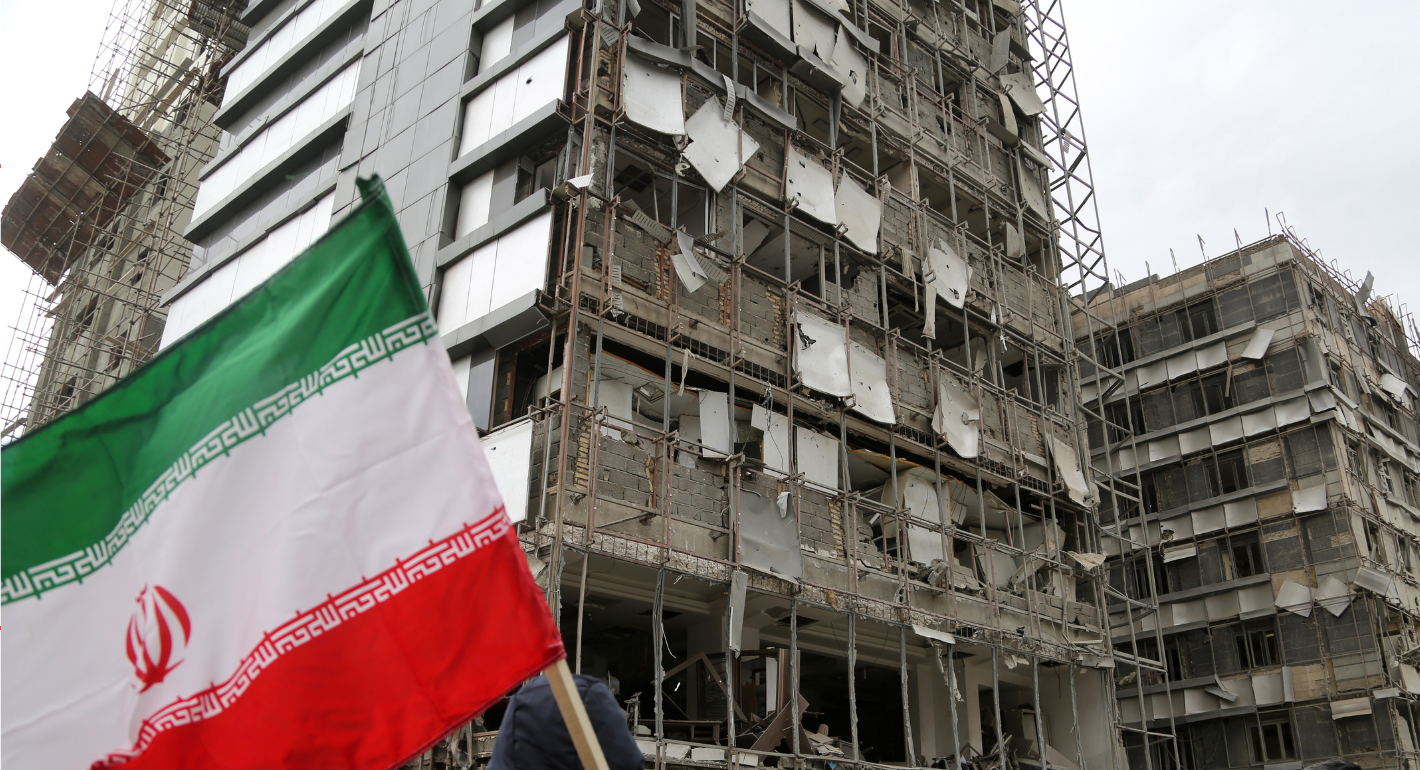
Europe’s reaction to the war in Iran has been disunited and meek, a far cry from its previously leading role in diplomacy with Tehran. To avoid being condemned to the sidelines while escalation continues, Brussels needs to stand up for international law.

Pierre Vimont