• Research
  • Strategic Europe
  • About
  • Experts
Carnegie Europe logoCarnegie lettermark logo
EUUkraine
  • Donate
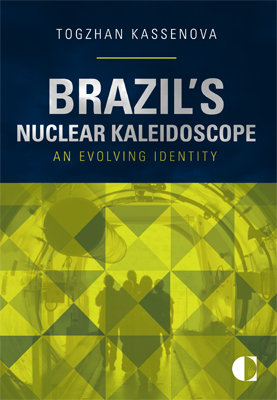
Brazil’s Nuclear Kaleidoscope: An Evolving Identity
Report

Brazil’s Nuclear Kaleidoscope: An Evolving Identity

Remarkably little attention is paid to Brazilian voices on the country’s nuclear policy. Brazilians paint a picture of an emerging power seeking nuclear independence and searching for its role in the global order.

Link Copied
By Togzhan Kassenova
Published on Mar 12, 2014

Additional Links

BriefFull Textportuguês

There is no shortage of international commentary on Brazil’s nuclear policy, especially its advanced nuclear fuel cycle and nuclear submarine program. But remarkably little attention is paid to Brazilian voices on these issues. Brazilians paint a picture of an emerging power seeking nuclear independence and searching for its role in the global order.

The State of Brazil’s Nuclear Program

  • Currently, Brazil mines and mills uranium, produces nuclear fuel, operates two nuclear power plants, and is building a third.
     
  • The Brazilian navy is key in the nuclear field. It developed uranium conversion and enrichment technology, and, since the late 1970s, it has been working on developing a nuclear-powered submarine.
     
  • Rivalry with Argentina was among the drivers of Brazil’s nuclear program. Today, the two countries work together in a bilateral nuclear safeguards regime to verify their nuclear activities are peaceful.
     
  • Brazil has not signed an IAEA Additional Protocol on nuclear safeguards, primarily because it is reluctant to accept additional nonproliferation obligations as long as nuclear-weapon states do not achieve meaningful progress toward nuclear disarmament.
     
  • Demonstrating Brasília’s potential to be an active player in global nuclear politics, Brazil and Turkey persuaded Iran to sign a 2010 joint declaration outlining a nuclear fuel swap, though the deal fell through.

Understanding Brazil’s Policy Drivers

Negative past experiences help explain why Brazil seeks nuclear independence. Brazil struggled to obtain nuclear technology from abroad, prompting Brasília to develop domestic capabilities.

The nuclear industry is more ambitious than the government. Industry representatives believe Brazil could industrialize uranium conversion and enrichment if the government prioritizes the effort.

The nuclear submarine program has multiple drivers. Brazil is pursuing development of a nuclear submarine to protect its coast and offshore natural resources and to stave off potential enemies approaching from the sea. Naval bureaucratic interests also drive the program. But above all, this quest reflects Brazil’s desire to bolster its international standing.

Brazil will forcefully defend its interests on the global nuclear scene. Brasília’s assertive nuclear policy is indicative of the tensions intensifying within the global nuclear order between nuclear-armed and non-nuclear-weapon states, between disarmament and nonproliferation, and between nonproliferation and peaceful uses of nuclear energy. Brasília, for the foreseeable future, will criticize the unfairness of the nuclear order while attempting to carve out a role for itself in it.

For Brazil, the nuclear order is a microcosm of the world order. Brazil sees the global nuclear order and the world order more broadly as unfair and antiquated.

Read Full Text

About the Author

Togzhan Kassenova
Togzhan Kassenova

Nonresident Fellow, Nuclear Policy Program

Kassenova is a nonresident fellow in the Nuclear Policy Program at the Carnegie Endowment.

    Recent Work

  • Commentary
    How Kazakhstan Fought Back Against Soviet Nuclear Tests
      • Togzhan Kassenova

      Togzhan Kassenova

  • Report
    Perspectives on the Evolving Nuclear Order
      • Togzhan Kassenova

      Toby Dalton, Togzhan Kassenova, Lauryn Williams

Togzhan Kassenova
Nonresident Fellow, Nuclear Policy Program
Togzhan Kassenova
North AmericaUnited StatesSouth AmericaNuclear PolicyArms ControlNuclear Energy

Carnegie does not take institutional positions on public policy issues; the views represented herein are those of the author(s) and do not necessarily reflect the views of Carnegie, its staff, or its trustees.

More Work from Carnegie Europe

  • Commentary
    Is the Radical-Right Threat Existential or Overstated?

    Amid increased polarization and the influence of disinformation, radical-right parties are once again gaining traction across Europe. With landmark elections on the horizon in several countries, are the EU’s geostrategic vision and fundamental values under existential threat?

      Catherine Fieschi, Cas Mudde

  • Commentary
    Strategic Europe
    Europe and the Arab Gulf Must Come Together

    The war in Iran proves the United States is now a destabilizing actor for Europe and the Arab Gulf. From protect their economies and energy supplies to safeguarding their territorial integrity, both regions have much to gain from forming a new kind of partnership together.

      • Rym Momtaz

      Rym Momtaz

  • Commentary
    Strategic Europe
    Taking the Pulse: Is France’s New Nuclear Doctrine Ambitious Enough?

    French President Emmanuel Macron has unveiled his country’s new nuclear doctrine. Are the changes he has made enough to reassure France’s European partners in the current geopolitical context?

      • Rym Momtaz

      Rym Momtaz, ed.

  • Commentary
    The Iran War’s Dangerous Fallout for Europe

    The drone strike on the British air base in Akrotiri brings Europe’s proximity to the conflict in Iran into sharp relief. In the fog of war, old tensions in the Eastern Mediterranean risk being reignited, and regional stakeholders must avoid escalation.

      Marc Pierini

  • Commentary
    Strategic Europe
    The EU Needs a Third Way in Iran

    European reactions to the war in Iran have lost sight of wider political dynamics. The EU must position itself for the next phase of the crisis without giving up on its principles.

      Richard Youngs

Get more news and analysis from
Carnegie Europe
Carnegie Europe logo, white
Rue du Congrès, 151000 Brussels, Belgium
  • Research
  • Strategic Europe
  • About
  • Experts
  • Projects
  • Events
  • Contact
  • Careers
  • Privacy
  • For Media
  • Gender Equality Plan
Get more news and analysis from
Carnegie Europe
© 2026 Carnegie Endowment for International Peace. All rights reserved.