

Commentary
Nathalie Tocci, Jan Techau
{
  "authors": [
    "Jan Techau"
  ],
  "type": "commentary",
  "blog": "Strategic Europe",
  "centerAffiliationAll": "",
  "centers": [
    "Carnegie Endowment for International Peace",
    "Carnegie Europe"
  ],
  "collections": [],
  "englishNewsletterAll": "",
  "nonEnglishNewsletterAll": "",
  "primaryCenter": "Carnegie Europe",
  "programAffiliation": "",
  "programs": [],
  "projects": [],
  "regions": [
    "Europe"
  ],
  "topics": []
}
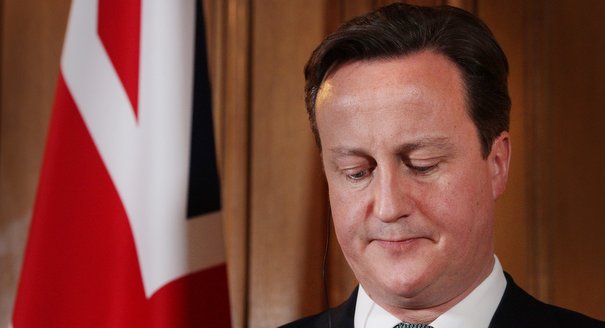
Source: Getty
If Britain wants to stay relevant it must lose its delusions, overcome its mental malaise, commit to the European cause, and drive forward the very integration process that is its own last best hope.
British reluctance about the European integration process has traditionally been met with much sympathy among non-ideological, pragmatic Europeans on the continent. Even strong supporters of the EU have often harbored a silent admiration for what seemed to be the sturdy, healthy resilience of a stubborn island people suspicious of centralized rule and over-regulated cheese markets. But what once looked like common sense, and a welcome pragmatic counterweight to continental integration dogma, has now turned into dogma itself. Britain has become radicalized. And as always, political radicalization has two sources: weakness—perceived or real—and a misadjusted perception of reality.
On the surface, everything seems alright. The continentals were wrong about the euro, Britain was right, and no one could blame the British for enjoying their fair share of schadenfreude. The problem is that the extreme levels of anti-EU rhetoric coming from the island today can no longer solely be explained by the EU's bad shape. Britain itself is too heavily affected by the crisis to continuously bask in the glory of having been right. Furthermore, if one leaves the crisis aside for a moment, global developments seem to make the overwhelming case in favor of more European integration instead of less. If a continent made up of a collection of tiny, small, and a handful of medium-sized countries wants to matter in a rapidly shifting global power balance, it had better work more closely together instead of less. How this fundamental reality can possibly escape the sober, realistic mind of the no-nonsense islanders is puzzling, to say the least.
But maybe it isn't so puzzling after all. Contrary to what the Olympic hype wants to make us believe, Britain in 2012 is mainly characterized by a profound sense of malaise. An astonishingly weak government (paired with an equally weak opposition that poses no credible alternative), the possibility of a double-dip recession, talk about the dissolving of the United Kingdom through Scottish independence, the continued reduction of military capabilities, criminal banks, and a press scandal of enormous proportion have all undermined Britain's formerly rock-solid self-confidence. In combination, these agenda items go against the grain of the British self-image of competence, fair-play, and solidity. Self-doubt prevails, aggravated by, of all things, the obvious political and economic strength of Germany, the continental country Britain likes to dislike most. Britain suffers from a shattered image of self. And, typically, such feeling of weakness breeds doubt, soul-searching, obsession about identity, and, in the end, self-delusion. In this, the country mirrors similar developments in the Netherlands, France, and Hungary. The British identity crisis is very European indeed.
As always, British self-delusions play out best when projected onto the continent. British criticisms of the integration process have a long tradition, and they have often been a very healthy corrective to continental follies. Britain's role as a non-ideological balancer of Franco-German integration fervor has, by and large, served Europe well. More importantly, it has also served Britain extremely well. Contrary to common belief, Britain's economic integration with the world comes through Europe, not through some imagined solitary status as a former world power. What's left of its political clout comes from being an influential player in the EU. And what's left of its special relationship with the United States rests, for the most part, on Washington knowing that the UK is one of the big three in the EU. But instead of adapting to these uncomfortable, but not unmanageable, realities, romantic dreams of an independent Britain, detached from Europe, allied with the United States, and at home in the Commonwealth flourish. But India, Canada, Australia, and South Africa are not exactly waiting for Britain to go retro on an old narrative of Empire. They all play their own geo-political game, and often it's a game much bigger than that of Britain itself. Washington, in the meantime, has realized that if wants to play in Europe, London is not as crucial as it once was. Americans are looking at Berlin, and increasingly, their travels lead them there first. Even some loyal European allies in Eastern Europe seem to have switched allegiances.
Like Britain's common sense, its resilience to accept its role as, at best, a middle power, has at times been rather useful for the EU. It infused thinking on EU foreign affairs with a strategic sense, drove enlargement, and corrected some flawed aspirations about building parallel structures to NATO. But it could only be such a useful corrective as long as it was not going overboard. With calls for a referendum "to get out", a frenzy to "repatriate" competences, and unashamedly inaccurate rhetoric about the EU coming from mainstream politicians, it has decidedly gone overboard. Worse, it has become self-destructive. From an outside perspective, it clearly seems to border on the pathological. What was once constructive criticism has turned into blind rage, and, consequently, auto-aggression. It stands in the way of grasping a very fundamental geo-political truth: that Britain alone matters very little, and that it can only retain its influence in the world if it attaches itself firmly to the continent it so loathes. Admittedly, this is hard to swallow for a proud island nation, wedded to ideas of exceptionalism, and with a great and enviable political tradition built on parliamentary sovereignty. But such is the grim reality of a changed world.
It is understandable that out of weakness dreams of rejuvenated erstwhile greatness spring. But for Britain's own good, and for that of Europe, it is instrumental that these dreams subside quickly and turn into a sharpened sense of reality. The crisis of the eurozone and of the EU will be over one day. And after that, the continent will still be there, and so will a world that rapidly moves away from the Euro-centric perspective that so benefitted Britain. If Britain wants to stay relevant, which is what most of us realistic, sober, non-ideological continental Europeans want direly, it must lose its delusions, overcome its mental malaise, commit to the European cause, and drive forward the very integration process that is its own last best hope.

Director, Europe Team, Eurasia Group
Techau is director with Eurasia Group's Europe team, covering Germany and European security from Berlin. Previously, he was director of Carnegie Europe.
Recent Work

Nathalie Tocci, Jan Techau
Jan Techau
Carnegie does not take institutional positions on public policy issues; the views represented herein are those of the author(s) and do not necessarily reflect the views of Carnegie, its staff, or its trustees.

As we close out another season of Strategic Europe, it is worth taking stock of the deep shifts underway.

Rym Momtaz
The EU had to compromise to adopt a twenty-first sanctions package against Russia, exposing growing cracks in the union’s resolve. Is this latest, weaker round worth it to keep pressure on Moscow?
Rym Momtaz, ed.
Trump is distracted and Ukraine wants Europe to step up. The continent’s leaders must find their voice and assert it in talks with Russia.

Alissa de Carbonnel
Mounting economic strain and battlefield losses will not necessarily make the Kremlin less dangerous. They could instead push Moscow toward a more aggressive hybrid campaign designed to test NATO’s Eastern flank, exploit allied hesitation, and fracture European resolve.

Maksym Beznosiuk
Over the past ten years, NATO has held almost as many summits as it did during the entirety of the Cold War. Are they still useful, or is it time to stop holding annual meetings?
Rym Momtaz, ed.