

Research
- +5
Alper Coşkun, Fatih Ceylan, Tacan İldem, …
{
  "authors": [
    "Sinan Ülgen"
  ],
  "type": "commentary",
  "blog": "Strategic Europe",
  "centerAffiliationAll": "",
  "centers": [
    "Carnegie Endowment for International Peace",
    "Carnegie Europe"
  ],
  "collections": [],
  "englishNewsletterAll": "",
  "nonEnglishNewsletterAll": "",
  "primaryCenter": "Carnegie Europe",
  "programAffiliation": "",
  "programs": [],
  "projects": [],
  "regions": [
    "Europe"
  ],
  "topics": [
    "Climate Change"
  ]
}
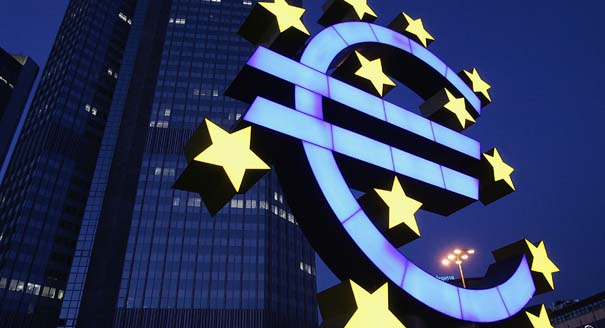
Source: Getty
As the euro crisis continues to unfold, the economic as well as political difficulties associated with producing large and indispensable gains are becoming ever more visible.
As the euro crisis continues to unfold, the economic as well as political difficulties associated with producing large and indispensable gains in Southern Europe’s periphery economies’ competitiveness are becoming ever more visible.
The textbook answer for regaining competitiveness is exchange rate devaluation, fiscal discipline, and structural reforms. Obviously for euro countries that have no independent monetary and exchange rate policies, the devaluation option is not available. So to regain competitiveness, other policy measures that will lead to an internal devaluation must be contemplated.
Economists generally outline four factors for an internal devaluation to be successful and to pull a country back from a decline in competitiveness:
It is this last point that constitutes the sensitive nexus between economics and politics. How are democratic governments going to convince their population to accept declining living standards? But also how are these costs going to be distributed across society? How much will the state finance? How many workers will accept a readjustment in their wages? How many capital holders will accept a drop in their rent incomes?
A tentative answer to this set of troubling questions can be found in literature on the political economics of trade. The question back then was to understand how governments dealt with globalization and trade liberalization.
Harvard economist Dani Rodrik had argued that the answer was dependent on whether the country had actually nurtured domestic institutions that could arbitrate process adjustment and help to reach a consensus about the distribution of costs. For countries that had reached this level of institutional maturity, trade liberalization proved to be positively related to growth. For countries that had no such institutions, the answer was much more mitigated. It was more costly for these countries to adjust to trade liberalization.
This analogy is very pertinent to the Southern countries that are faced with the burden of adjustment. The peeling back of the layers of the current crisis reveals a test of the strength, maturity, and effectiveness of domestic conflict management institutions. In other words, a successful management of the euro crisis, with all its insidious ramifications, is inherently conditional on the effectiveness of governments, political parties, parliaments, trade unions, trade associations, the media, etc., and the established patterns of interaction among them as platforms for internal conflict management.
There are two fundamental conclusions to be drawn from this analysis. The first one is that there are no technical or even economic solutions to the present crisis. It needs a political approach and a political answer.
The second is that there is a limit to what can be accomplished at the EU level. The EU institutions, primarily the European Central Bank, can, at the most, give breathing room to countries that face the burden of adjustment. But the answer still lies with domestic policies and institutions.

Senior Fellow, Carnegie Europe
Sinan Ülgen is a senior fellow at Carnegie Europe in Brussels, where his research focuses on Turkish foreign policy, transatlantic relations, international trade, economic security, and digital policy.
Recent Work

Alper Coşkun, Fatih Ceylan, Tacan İldem, …
Carnegie does not take institutional positions on public policy issues; the views represented herein are those of the author(s) and do not necessarily reflect the views of Carnegie, its staff, or its trustees.

While the EU and European governments are embracing the much-lauded middle-power moment, this entails three difficult conundrums.

Richard Youngs

Much has been said of the changes Brussels is trying to make to the EU enlargement process. Here’s why gradual integration might—or might not—be the answer.

Dimitar Bechev

The European Commissioner for Trade is headed to China. But after President Xi’s bridge-building visit to Washington, can a more isolated EU overcome Beijing’s stranglehold on critical raw materials? Who will blink first?

Rym Momtaz, ed.

The domestic impacts of how long it is taking to end the war in Ukraine have pushed the French electorate to the political extremes and compromised the country’s diplomatic capacity.
Rym Momtaz

Before the next wave of EU enlargement takes place, the union needs to grapple with thorny questions of how power is distributed among its members.


Emil Sondaj Hansen, Ditte Brasso Sørensen