

Commentary
Nathalie Tocci, Jan Techau
{
  "authors": [
    "Jan Techau"
  ],
  "type": "commentary",
  "blog": "Strategic Europe",
  "centerAffiliationAll": "",
  "centers": [
    "Carnegie Endowment for International Peace",
    "Carnegie Europe"
  ],
  "collections": [],
  "englishNewsletterAll": "",
  "nonEnglishNewsletterAll": "",
  "primaryCenter": "Carnegie Europe",
  "programAffiliation": "",
  "programs": [],
  "projects": [],
  "regions": [
    "Europe"
  ],
  "topics": [
    "EU"
  ]
}

Source: Getty
Jan Techau confesses how much he used to envy pundits who immediately have all the answers. And then he read an essay by American writer Ted Gup that changed his life.
Should Europe arm the Syrian rebels? Is the troika right to insist on painful structural reforms in return for bailout money? Should the West be tougher on Russia and China over human rights, or should it stop proselytizing? Does Turkey belong in the EU or not? Is development aid a huge waste of money or a wise humanitarian and strategic investment?
One of the great things about international affairs is that the policy questions involved often lead to fundamental issues of principle and philosophical orientation.
Not all analysts, commentators, and pundits are impressed by the difficult nature of these questions. To many journalists, intellectuals, academics, and think tankers, answers come very easily. Minutes after a major news story has broken, they claim to know what’s right and wrong, who’s to blame, what needs to be done, and how things will pan out. With iron-clad self-assuredness, they are willing to provide guidance and leadership.
For a long time, I agonized about the fact that I’m not like that. What is wrong with me, I asked myself—why am I torn down the middle on so many issues? How come I can see some value in entirely contradictory views on the same subject? Why can’t I have the superior knowledge and the unwavering convictions to lead me straight to the right answers on, well, everything?
Then, a few years ago, I came across a short article by a man called Ted Gup, a noted American writer and professor of journalism at Case Western Reserve University in Cleveland, Ohio. His essay, entitled “In Praise of Wobblies”—first broadcast in 2005 as an episode in National Public Radio’s “This I Believe” series—helped me get over my problem by giving me a new identity. I was a wobbly. Relief was instant.
Gup describes how, as a young journalist, he envied his peers who, unlike himself, seemed dead sure on whatever subject was put in front of them. It took him a while to realize that his indecision—his “wobbliness”—was not necessarily a weakness, but could be a strength. He discovered other wobblies, and recognized that there were more of them than he had initially thought. And usually they were good, thoughtful folks. From then on, when people accused him of being wobbly, he wore the label with pride.
I immediately felt at home with Gup’s story. He took a huge burden off my shoulders. Finally, it was acceptable for me not to have a pronounced position on everything that happened. I did not always need to be certain whether a planned invasion was right or wrong, whether proposed legislation was useful or flawed, or whether a government decision was wise or foolish. Sometimes it was actually OK to think that both could be true.
The urge to get it right is strong in every analyst, especially when he or she is convinced that there is such a thing as “the truth,” and that it is worth looking for. This search for the truth makes being a wobbly very painful at times. But it is great to realize that the truth is often easier to find when you’re a wobbly who is open to different perspectives on an issue, and who resists the temptation to jump to conclusions.
I will admit that I am profoundly wobbly on arming the rebels in Syria. There are good arguments for and against it. I have not yet decided which ones weigh heavier for me. The same goes for austerity as a means to deal with the euro crisis. Or the question of how to deal with certain countries’ abysmal human rights records.
Being a wobbly doesn’t mean you can’t have strong convictions on some issues. I have firm opinions on a number of topics and policy questions, and I have not been shy about voicing them on this blog or elsewhere. But being a wobbly on many other issues now feels more like a forte than it used to. It might make me a less interesting pundit. But hopefully it makes me a better analyst.
My big thanks to Ted Gup for convincing me that being unconvinced can be a good thing. And Happy Easter to all the readers of Judy Dempsey’s Strategic Europe blog!

Director, Europe Team, Eurasia Group
Techau is director with Eurasia Group's Europe team, covering Germany and European security from Berlin. Previously, he was director of Carnegie Europe.
Recent Work

Nathalie Tocci, Jan Techau
Jan Techau

Are Germany’s economic, industrial, and political struggles becoming a liability for the EU’s ability to rise to the geopolitical moment?

Rym Momtaz, ed.

European Commission President Ursula von der Leyen is about to give her annual address on the state of the EU. Here’s what she won’t—but should—say.
Rym Momtaz

The aftermath of the Ceuta crisis shows Europe has drawn the wrong lessons. Rather than doubling down on failed migration policies, the EU needs to address the underlying roots of such episodes.

Richard Youngs
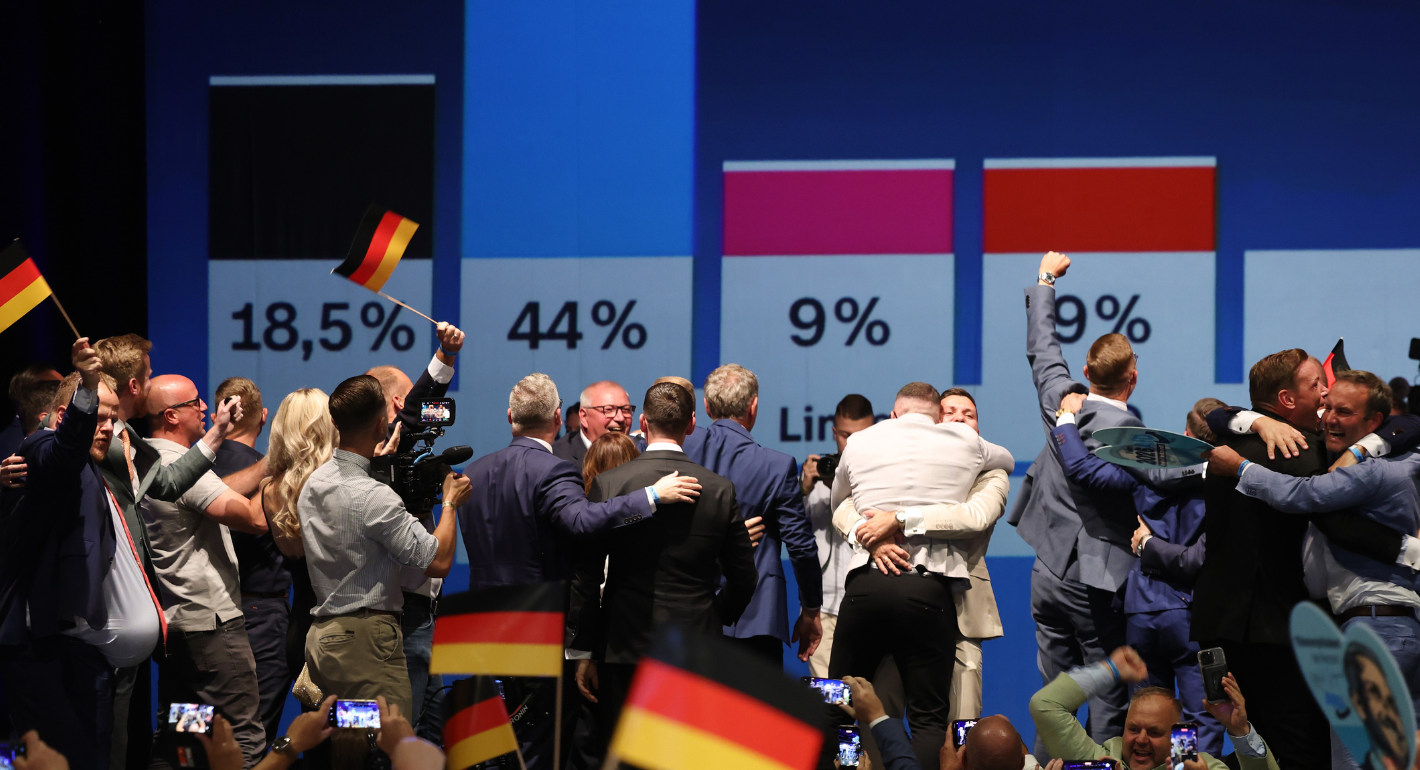
An overwhelming victory by a far-right-wing party in a small state in eastern Germany will have major repercussions for Chancellor Friedrich Merz’s coalition.

Judy Dempsey

Canadian Prime Minister Mark Carney has twice inspired praise for standing up to U.S. President Donald Trump: at the 2026 World Economic Forum in Davos and on Canada-U.S. trade negotiations. Is Carney showing a third way better than the EU has in dealing with the Trump administration?
Rym Momtaz, ed.