

Commentary
Judy Dempsey
{
  "authors": [
    "Judy Dempsey"
  ],
  "type": "commentary",
  "blog": "Strategic Europe",
  "centerAffiliationAll": "",
  "centers": [
    "Carnegie Endowment for International Peace",
    "Carnegie Europe"
  ],
  "collections": [],
  "englishNewsletterAll": "",
  "nonEnglishNewsletterAll": "",
  "primaryCenter": "Carnegie Europe",
  "programAffiliation": "",
  "programs": [],
  "projects": [],
  "regions": [
    "Europe",
    "Middle East"
  ],
  "topics": [
    "EU"
  ]
}
Source: Getty
Every week leading experts answer a new question from Judy Dempsey on the foreign and security policy challenges shaping Europe’s role in the world.
Every week leading experts answer a new question from Judy Dempsey on the foreign and security policy challenges shaping Europe’s role in the world.
In short: yes, the EU foreign policy system has been improving.
There have been more instances of improved coordination among the EU institutions, more joined-up thinking to develop “comprehensive approaches,” and more success stories, such as the breakthrough in Serbia-Kosovo negotiations. Expectations of EU foreign policy have also been lowered, which is quite useful for an EU wishing to make a positive case for its achievements.
Of course, much more can still be done. Better coordination among the EU institutions would ensure that comprehensive approaches become policy. More trust and cooperation with the member states would improve decisionmaking as well as the delivery of agreed policies.
But there is a more preoccupying question: What difference does improved EU foreign policy make? Member states are split on Syria, where there is no hope that the EU will spearhead some kind of solution. The EU was unable to prevent democracy from deteriorating in Egypt, and seems quite uninfluential in shaping the outcome of the crisis there. In Eastern Europe, the EU has dithered so long that Russia has caught up on offering comprehensive policy packages that compete with the EU’s own proposals.
Getting the EU foreign policy system right is essential, but it should not lead to complacency. The aim of the exercise should be to make the world a better place. On this, the jury is still out.
So far this year, the EU’s foreign policy has been like jazz improvisation: messy and discordant and the patterns are at best obscure.
In the first half of 2013, the EU’s relations with the United States, Turkey, Syria, and Egypt have not only taken unexpected turns, they have entered a range of halftones. Ironically, if the EU has struggled to adapt it’s because for years it has been doggedly preparing for precisely this global context—a decline in U.S. power, a rise in global prosperity, and a shift from government to governance. What prevents the EU from using its novel instruments is its classical training: the EU just isn’t very good at improv.
The European External Action Service (EEAS), however, is meant as a tool to pep up the bloc’s repertoire. The EEAS’s soft-spoken secretary general, Pierre Vimont, has sufficient standing not to be cramped by fear of failure. It has been heartening to see him quietly bin the “comprehensive approach” as the EU’s foreign-policy Gesamtkonzept. No longer is the EU putting together a grand plan to coordinate the full range of its policy instruments. It remains to be seen, though, whether the service will be able to build a new pattern from their more ad hoc use.
Since Moscow usually chooses midsummer for a good old international crisis, the question will not go unanswered for long. We may be about to witness a period of intense innovation and improvisation in EU foreign policy.
Or this may turn out simply to be a dangerously overextended metaphor.
Sadly, EU foreign policy has not improved significantly in 2013. This is largely—but not only—due to the unprecedented depth and breadth of Europe’s economic crisis, which is absorbing inordinate amounts of time and energy, to the detriment of other major policy areas.
It is very telling that the EU’s major foreign policy success this year was probably the agreement signed by Serbia and Kosovo in April, which it helped to broker. The deal, which opened the door to EU membership talks for Belgrade, seemed to prove yet again that the EU’s enlargement policy remains the most effective weapon in its foreign-policy arsenal.
Soft power alone will not always do the trick, however, and the EU has failed to contribute to a negotiated solution to the Syrian crisis—though it is by no means uniquely responsible for this. The EU’s performance overall in the Middle East and North Africa has been disappointing, and its reaction to the military coup that toppled Egypt’s former president Mohamed Morsi speaks volumes about the difficulties member states face in reaching a common understanding of complex issues. The same is true of the EU’s reaction to the unrest in Turkey, which is particularly worrying because it involved a major candidate country.
On a more optimistic note, the European External Action Service is finally up and running. Now that the EU has the institutional hardware, the time is ripe for some user-friendly software.
EU foreign policy is facing three major challenges: the East, the South, and Southeast Asia. On all three, the EU’s performance leaves something to be desired.
In the East, Europe must find a way to live with an autocratic Russia. The EU should cooperate where necessary, but at the same time keep up the pressure, with the goal of creating a space for political and economic development. In Eastern Europe and the Southern Caucasus, the EU must encourage and support progress toward liberal democracy, even if that doesn’t please Russian President Vladimir Putin, who prefers to deal with autocratic elites. By supporting the independence of the region’s young states, European powers also help Russia to understand that the imperial age is over.
In the South, the EU should build broad alliances—with the United States, Turkey, and other regional powers—to maintain stability in the Middle East, to pacify Syria (as much as possible), and to support societies on their path to reinventing Arab politics through mass participation.
In Southeast Asia, Europeans must broaden their focus: from the economic to the political, and from China to the entire region. Europe cannot leave the task of managing China’s rise to the regional powers and the United States alone; there is too much at stake to ignore the risk of old-fashioned territorial conflict in the seas around China. Europe must send the right signals and use its economic weight.
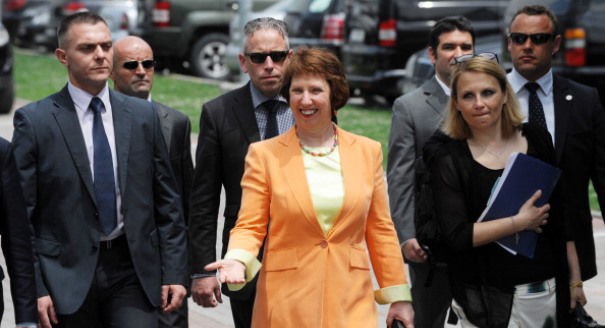
On none of these challenges has the EU played an effective and visible role in 2013. The EU’s foreign policy chief, Catherine Ashton, has demonstrated good negotiating skills in the reconciliation process between Kosovo and Serbia. But this was rather low-hanging fruit in a region already on its way toward EU membership.

Nonresident Senior Fellow, Carnegie Europe
Judy Dempsey is a nonresident senior fellow at Carnegie Europe
Recent Work
Judy Dempsey
Judy Dempsey
Carnegie does not take institutional positions on public policy issues; the views represented herein are those of the author(s) and do not necessarily reflect the views of Carnegie, its staff, or its trustees.
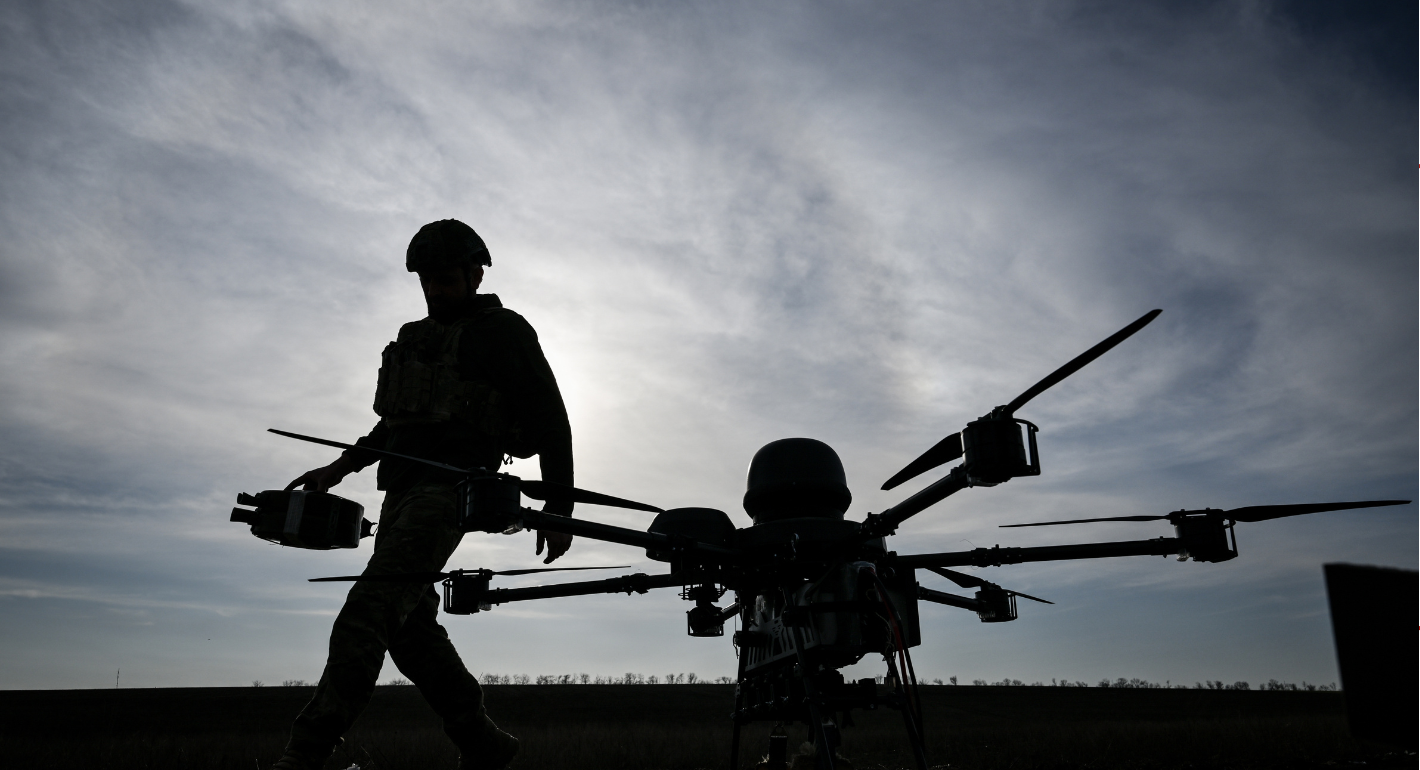
Defense tech innovations will be at the heart of Europe’s new security strategy. But so far, Brussels has been making moves without a broader plan, undermining readiness and credibility.

Raluca Csernatoni

When the U.S.-Iran memorandum of understanding was announced, the UK, France, Germany, and Italy declared their readiness to help demine the Strait of Hormuz and lift nuclear sanctions on Tehran. But does Europe need new tools to recover a diplomatic role?

Rym Momtaz, ed.
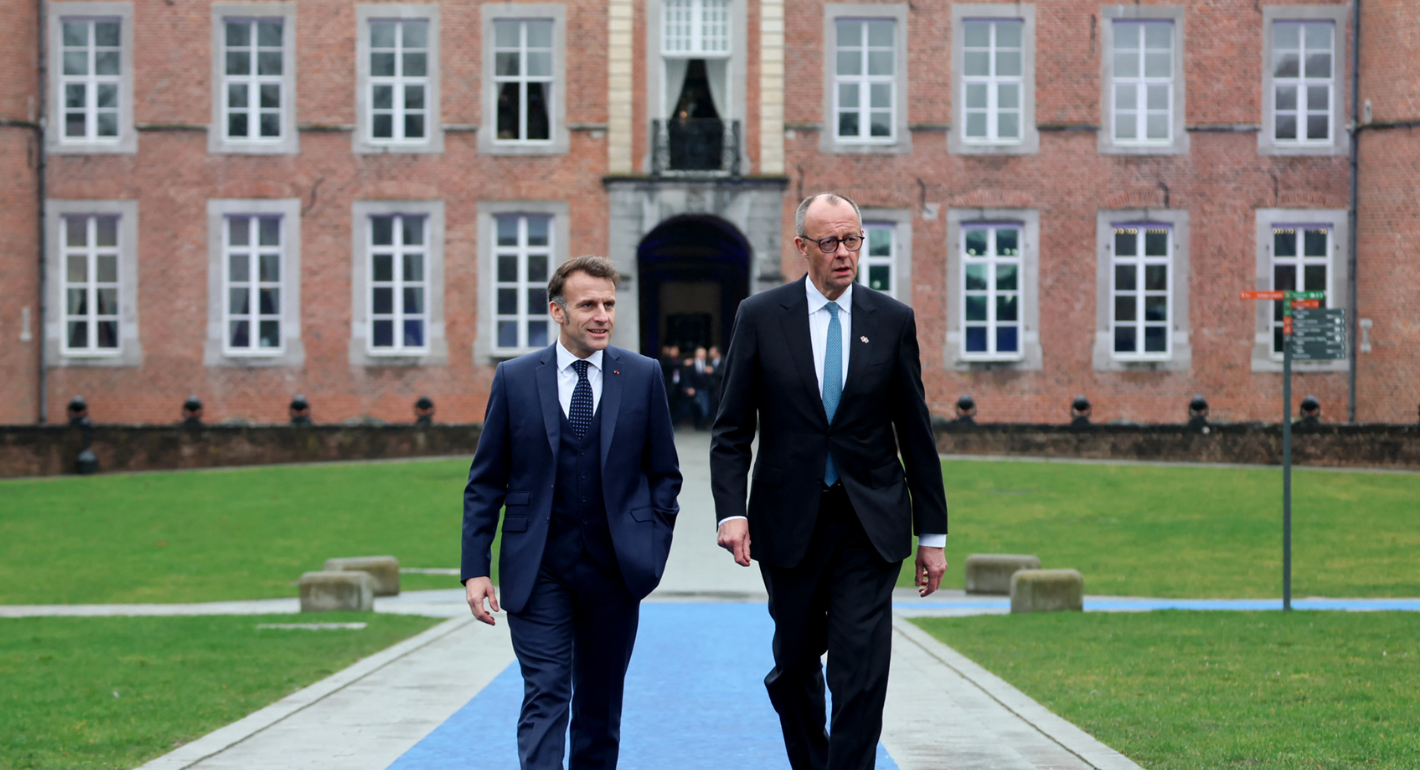
The Franco-German relationship is on the rocks again. But unlike previous moments of tension, the epochal changes on the world stage require that both step up investment in their bilateral ties.
Rym Momtaz
The EU is putting together a new security strategy to meet today’s myriad challenges. But for any proposal to be effective, the union needs to grapple with its identity and ambitions.

Pierre Vimont

The EU’s new migration policy is not suited to today’s realities. With climate change increasingly becoming a driver of displacement, Europe needs to rethink its deterrence-focused approach.

Shana Tabak