

Commentary
Five countries staged the biggest political boycott in Eurovision history over Israel’s participation. With the FIFA World Cup and other sporting or cultural touchstones on the horizon, are boycotts effective?
Rym Momtaz, ed.
{
  "authors": [
    "Shimon Stein",
    "Shlomo Brom"
  ],
  "type": "commentary",
  "blog": "Strategic Europe",
  "centerAffiliationAll": "",
  "centers": [
    "Carnegie Endowment for International Peace",
    "Carnegie Europe"
  ],
  "collections": [
    "Europe’s Southern Neighborhood"
  ],
  "englishNewsletterAll": "",
  "nonEnglishNewsletterAll": "",
  "primaryCenter": "Carnegie Europe",
  "programAffiliation": "",
  "programs": [],
  "projects": [],
  "regions": [
    "Middle East",
    "Israel",
    "Palestine"
  ],
  "topics": [
    "Security"
  ]
}
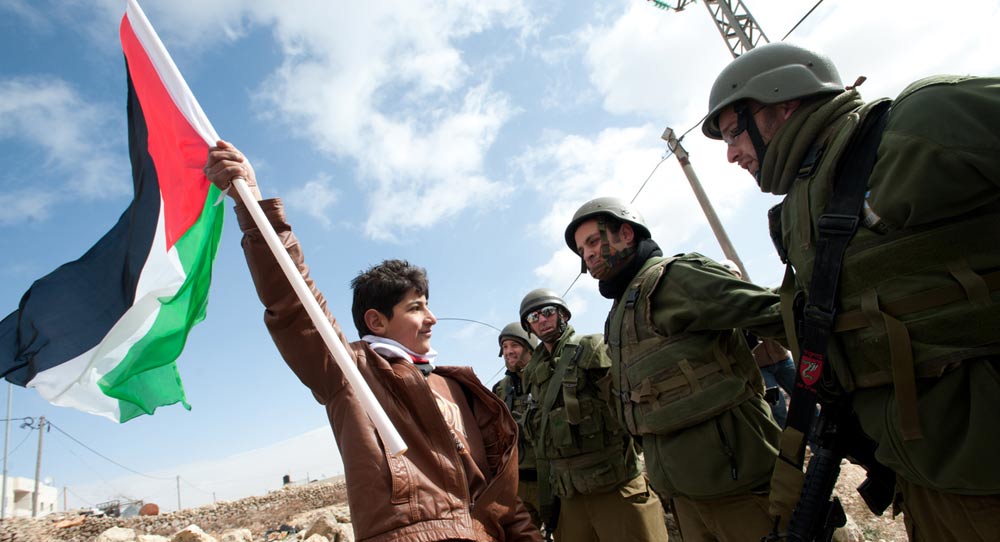
Source: Getty
Amid indecision and confusion from U.S. President Donald Trump, the EU should recommit to a two-state solution to the Israeli-Palestinian conflict.
True to his campaign promise to be a disrupter of the status quo, U.S. President Donald Trump stood next to Israeli Prime Minister Benjamin Netanyahu at a press conference on February 15 and said, “So I’m looking at two-state and one-state, and I like the one both parties like. . . . I can live with either one.”
The statement seemed to mark a departure from the long-standing U.S. policy of supporting the objective of a two-state solution to the Israeli-Palestinian conflict. But when added to other assertions made by the same infant U.S. administration, the president’s remarks reflect indecision, confusion, sheer ignorance, and an attempt to satisfy the political needs of Netanyahu rather than a conscious choice of policy.
The comments leave the Israelis and the Palestinians in a state of high uncertainty as to the assumptions on which they can base their future steps. The same is true for the international community in general and the EU in particular, which do not know what moves to make next, given the potentially new U.S. position. Should other global players recommit to the two-state solution to distance themselves from the United States? Or should they use the confusion of the Trump administration to try to influence Washington’s policies in this area?
Talk of a two-state versus a one-state solution is misleading, because the one-state option is not a solution but a recipe for a never-ending war between the two peoples. The two-state proposal is the only way to preserve Israel’s democratic and Jewish character while granting the Palestinians their right to self-determination.
As far as the U.S. position is concerned, the president’s announcement was not the outcome of a thorough policy review that concluded that backing the two-state solution no longer served U.S. interests. Most probably, it was the result of a request by Netanyahu for Trump not to overemphasize the two-state solution as the prime minister sought to avoid clashing with the extreme right-wing party in his coalition government or with his own party. For the same reason, the president referred to the need to limit building in Israeli settlements, giving Netanyahu an instrument with which to deal with right-wing pressures on this issue back home.
Trump also said at the press conference that pursuing peace was an important objective to him. On previous occasions, he had spoken about his will to achieve the “ultimate deal”—whatever that may be. The fact that the president embraced the important role of Arab states, which have since emphasized their unshaking support for the two-state solution, should be seen positively against the backdrop of a regional realignment in the wake of a rift between Sunni and Shia Muslims. If Israel makes progress on the Palestinian issue, Sunni states led by Saudi Arabia, Egypt, Jordan, and the United Arab Emirates could take steps in parallel to normalize relations with Israel. For that to happen, the United States should reassure these Arab states of the overall U.S. policy in the Middle East.
If the Trump administration does depart from Washington’s decades-old preference for a two-state solution, it will lead to a rift with the EU, which has so far been committed to this path as the only realistic solution. That would present a new situation for the EU, which for years has complemented U.S. diplomatic efforts but from now on might have to pursue a policy independent of that of the United States. The lack of consensus regarding the desired outcome in the Middle East Quartet, a negotiating format that brings together the EU, Russia, the UN, and the United States, will complicate matters and allow the Israelis and the Palestinians to play the members of the quartet off against each other.
An encouraging sign that this scenario is still some way off was provided by a senior U.S. official who said off the record that the new administration should be given a chance to consult with all the parties with respect to future steps. He added that they were only at the beginning of that process. Against that backdrop, the EU has a chance to help shape the administration’s position regarding the steps needed to keep the two-state solution alive.
An opportunity to underscore the importance of the subject for the EU could be the March 17 visit by German Chancellor Angela Merkel to Washington. Even if the Israeli-Palestinian issue is not at the top of the agenda of international crises, Merkel, as a staunch supporter of Israel, should impress on Trump the need to uphold the two-state option as the only viable solution that takes the national interests of the two sides into account.
At the same time, the EU can take independent steps such as continuing to pressure Israel to curb building in settlements, avoid the crawling annexation of parts of the West Bank, and expand Palestinian control of areas of the West Bank currently under full Israeli control. In parallel, the EU should continue to support Palestinian state building while encouraging the Palestinian Authority (PA) to acquire renewed legitimacy through democratic elections, fight corruption, and increase transparency. To do so, the EU should use the PA’s dependence on EU financial aid.
In the absence of an alternative, the EU should do its utmost to keep the two-state idea alive, not only in words but also in deeds. The EU should present this position firmly to the United States and cooperate with Arab states and other international actors in convincing Washington not to abandon the two-state approach. At the same time, the EU should continue its efforts to assist the Palestinians in their nation building and engage Israel’s body politic and civil society in an intensive dialogue on the merits of the two-state solution.
Shimon Stein and Shlomo Brom are senior fellows at the Institute for National Security Studies at Tel Aviv University.

Shimon Stein
Shlomo Brom
Institute for National Security Studies
Carnegie does not take institutional positions on public policy issues; the views represented herein are those of the author(s) and do not necessarily reflect the views of Carnegie, its staff, or its trustees.
Five countries staged the biggest political boycott in Eurovision history over Israel’s participation. With the FIFA World Cup and other sporting or cultural touchstones on the horizon, are boycotts effective?

Rym Momtaz, ed.
Following Ursula von der Leyen’s gaffe equating Turkey to Russia and China, relations with Ankara risk deteriorating even further. Without better, more consistent diplomatic messaging, how can the EU pretend to be a geopolitical power?

Sinan Ülgen
Europe has been standing by while its Southern neighborhood is being redrawn by force. To establish a path to peace between Israel and Lebanon, it’s time for Europeans to get involved with hard power.
Rym Momtaz

In Ukraine, Gaza, and Iran, AI warfare has come to dominate, with barely any oversight or accountability. Europe must lead the charge on the responsible use of new military technologies.

Raluca Csernatoni
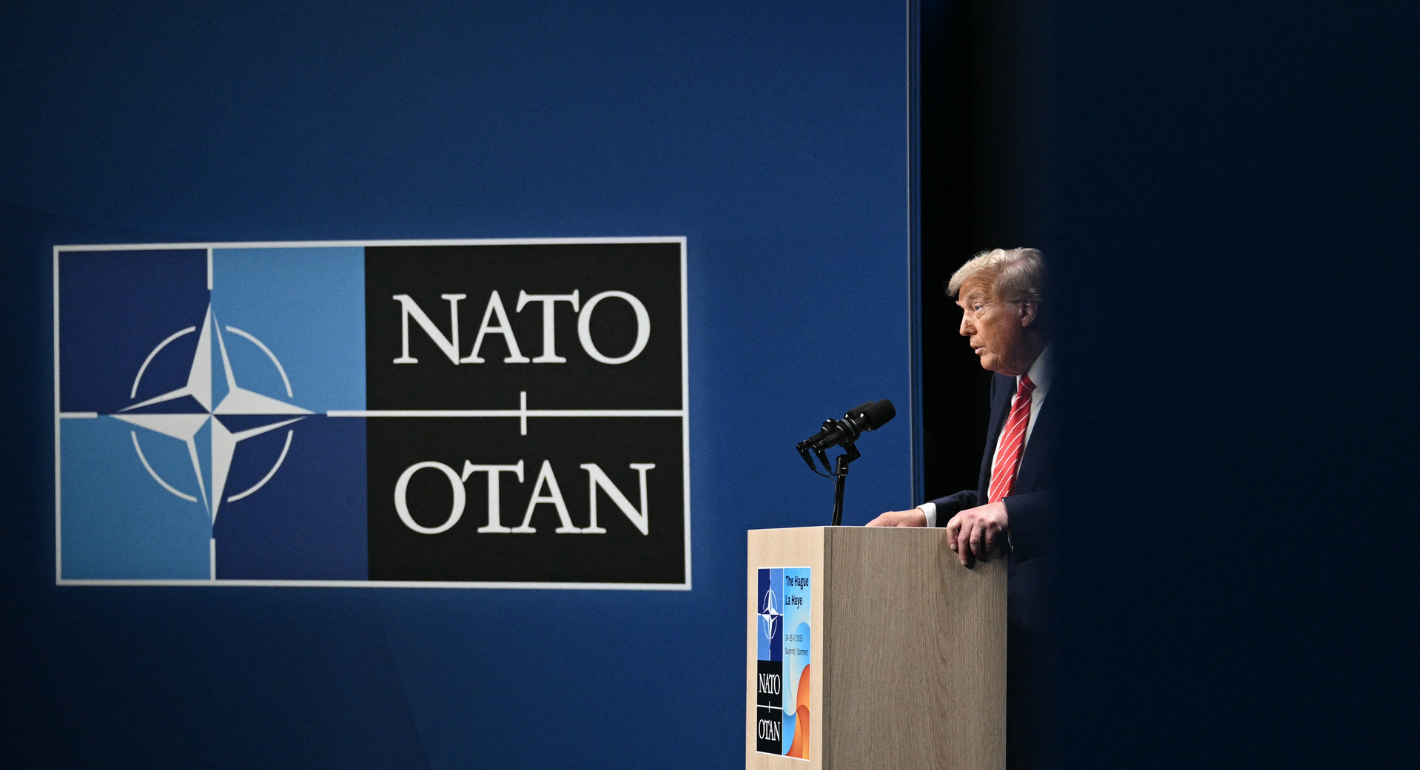
Donald Trump has repeatedly bashed NATO and European allies, threatening to annex Canada and Greenland and deploring their lack of enthusiasm for his war of choice in Iran. Is this latest round of abuse the final straw?
Rym Momtaz, ed.