

Commentary
Before the next wave of EU enlargement takes place, the union needs to grapple with thorny questions of how power is distributed among its members.
Emil Sondaj Hansen, Ditte Brasso Sørensen
{
  "authors": [
    "Ana Luisa Garcés"
  ],
  "type": "commentary",
  "blog": "Strategic Europe",
  "centerAffiliationAll": "",
  "centers": [
    "Carnegie Endowment for International Peace",
    "Carnegie Europe"
  ],
  "collections": [],
  "englishNewsletterAll": "",
  "nonEnglishNewsletterAll": "",
  "primaryCenter": "Carnegie Europe",
  "programAffiliation": "",
  "programs": [],
  "projects": [],
  "regions": [
    "North America",
    "South America"
  ],
  "topics": [
    "Foreign Policy",
    "EU"
  ]
}
Source: Getty
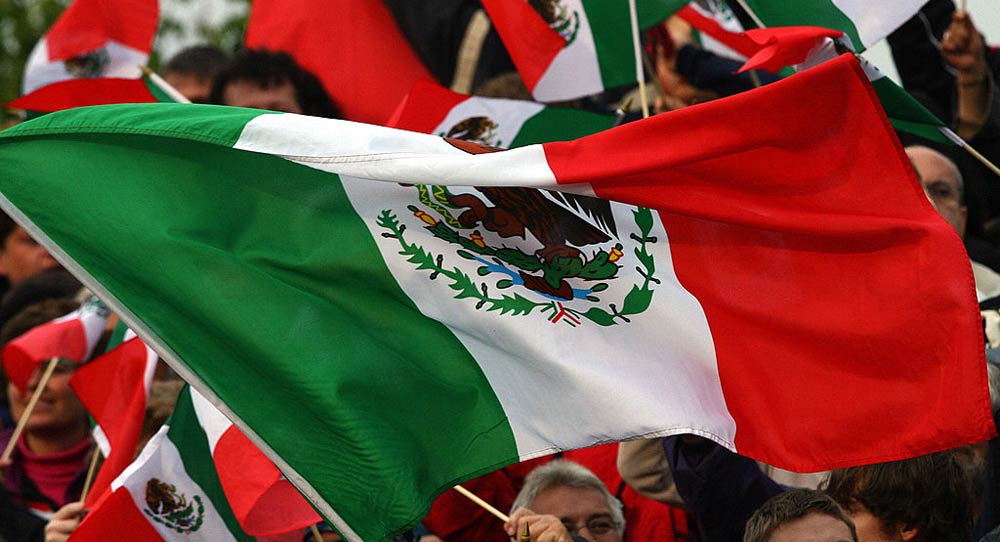
Given the United States’ intimidating policies toward its southern neighbor, it is time for Mexico to reassess its commercial and political priorities with the rest of the world.
Strategic Europe continues its Capitals Series exploring how EU foreign policy is viewed by major non-European countries. We have asked each of our contributors to give a frank assessment of their country’s relations with the EU and rank five key issues in order of their importance in those relations. This week, the spotlight is on Mexico.
*
The world seems to be witnessing a change of era. Principles like freedom, tolerance, and even democracy are being called into question by the rise of ultranationalist movements that promote extreme trade protectionism. For like-minded partners like the EU and Mexico, the response should be to strengthen ties and defend common values.

A second global alarm bell came from the United States. The arrival in the White House of multimillionaire Donald Trump has put at risk the values of the so-called land of freedom. What has happened in the United States since January 2017 is worth studying from various angles, from the economic to the psychological.
For Mexico, the change of government in Washington signaled a need to reconsider the country’s foreign policy toward its most important partner. According to figures from the Pew Research Center based on the U.S. National Census Bureau’s American Community Survey, in 2013 there were 34.6 million Hispanics of Mexican origin living in the United States. That figure demonstrates the importance and complexity of bilateral relations.

Traditionally, Mexico has pursued foreign and trade policies that for geographic, historical, and social reasons have revolved around the United States. However, the new U.S. administration’s threat to build a wall on the Mexican border (and its claim that Mexico will pay for it) does not suggest a good relationship in the immediate future.
It is therefore time for Mexico to redraw its commercial and political relations with the rest of the world. Although the country has free-trade agreements with Europe, Asia, and South America, these have mostly been afterthoughts of secondary importance to accords aimed at improving ties with Mexico’s northern neighbor.
When the question arises of where Mexico should focus its investments, the natural reply seems to be Asia and, in second place, South America. Little is ever said about closer ties with the EU, as there seems to be a lack of awareness of what that relationship offers. This is the moment to promote those benefits on both sides of the Atlantic and work to make them real.
With Europe, Mexico shares not only history and culture but also a vision of the future. Mexico is committed to democracy support, the rule of law, and respect for human rights and individual freedoms. However, it is on precisely these issues that the weak points of the relationship are found.
In its report “Human Rights and Democracy in the World,” published in September 2016, the European Council highlighted Mexico’s cooperation with the EU on issues like human rights, the fight against terrorism, and sustainable development. “However,” the report went on, “Mexico continues to face major public security concerns and challenges in the fight against organised crime and corruption.” Mexico’s task is to understand that relations will flourish only if the country’s authorities take matters into their own hands.
What is happening in Mexico is not alien to the EU. It is worth highlighting the support that the EU has offered Mexico amid the offensive declarations and the politics of intimidation from the U.S. president. Members of the European Parliament, when they condemned Trump’s intention to build a wall on the border with Mexico, also recognized the need to strengthen Europe’s relations with Mexico, which, they acknowledged, had been somewhat neglected.
Without doubt, the basis of the EU-Mexican relationship is trade—and specifically, how trade is used to further social development. Both sides are currently working to modernize the EU-Mexico Free Trade Agreement, which represents a huge opportunity given the U.S. government’s intention to close the country’s markets.
Although Mexico’s relations with the EU tend to be defined in political and trade terms, it is also important to highlight cooperation on culture and education, which are among the most leveraged areas of the bilateral relationship. Student exchange programs and postgraduate courses in Europe, which benefit thousands of students every year, make a special contribution to closer relations.
Mexico and the EU watch one another closely from a distance. It is a relationship characterized by many points in common but also by huge challenges, in particular with regard to security and human rights in Mexico. Now is the time for Brussels and Mexico City to strengthen ties for the benefit of collective and individual freedoms.
Ana Luisa Garcés is the editor of the international section of El Universal, a Mexican daily.
Ana Luisa Garcés
Carnegie does not take institutional positions on public policy issues; the views represented herein are those of the author(s) and do not necessarily reflect the views of Carnegie, its staff, or its trustees.

Before the next wave of EU enlargement takes place, the union needs to grapple with thorny questions of how power is distributed among its members.


Emil Sondaj Hansen, Ditte Brasso Sørensen

A summer of escalation in the Black Sea has hurt Ukraine economically and is exacerbating world food security. A truce is needed—as is a broader reframing of Europe’s Ukraine strategy.

Thomas de Waal

Are Germany’s economic, industrial, and political struggles becoming a liability for the EU’s ability to rise to the geopolitical moment?

Rym Momtaz, ed.

European Commission President Ursula von der Leyen is about to give her annual address on the state of the EU. Here’s what she won’t—but should—say.
Rym Momtaz

The aftermath of the Ceuta crisis shows Europe has drawn the wrong lessons. Rather than doubling down on failed migration policies, the EU needs to address the underlying roots of such episodes.

Richard Youngs