

Commentary
The EU can impose sanctions but struggles to enforce them without the United States. With Washington increasingly disinterested in backing European interests, the bloc must now fend for itself.
Nicu Popescu, Tiago Antunes
{
  "authors": [
    "Kamil Całus",
    "Wojciech Konończuk"
  ],
  "type": "commentary",
  "blog": "Strategic Europe",
  "centerAffiliationAll": "",
  "centers": [
    "Carnegie Endowment for International Peace",
    "Carnegie Europe",
    "Carnegie Russia Eurasia Center"
  ],
  "collections": [
    "Europe’s Eastern Neighborhood"
  ],
  "englishNewsletterAll": "",
  "nonEnglishNewsletterAll": "",
  "primaryCenter": "Carnegie Endowment for International Peace",
  "programAffiliation": "",
  "programs": [],
  "projects": [],
  "regions": [
    "Europe",
    "Eastern Europe",
    "Moldova"
  ],
  "topics": [
    "Democracy",
    "EU"
  ]
}
Source: Getty
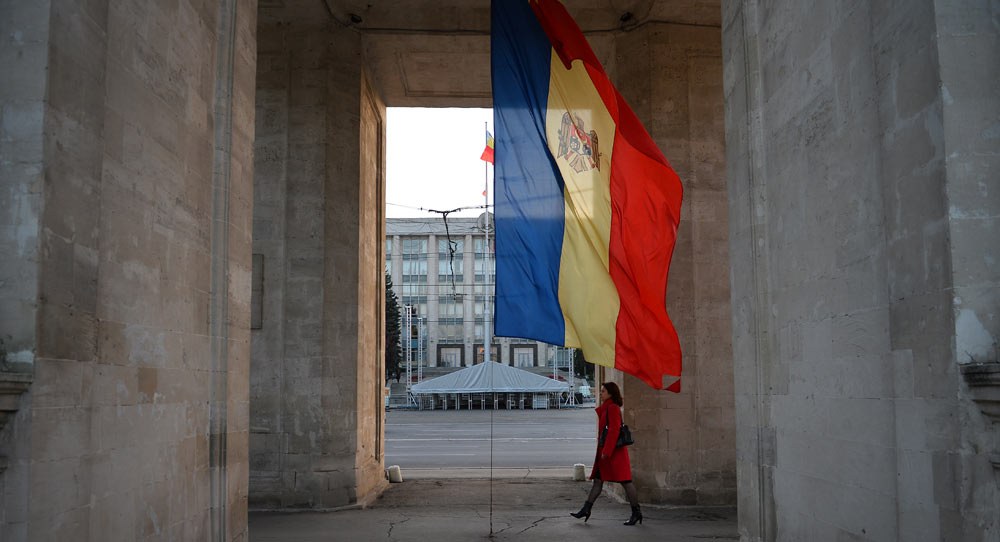
Moldova, which used to be perceived as one of the most democratic post-Soviet countries, has come to be dominated by one politician.
Power in Moldova has been captured by Vlad Plahotniuc, who is neither a democrat nor a reformer and who, under the cover of false pro-European rhetoric, is petrifying the weaknesses of the state.
Moldova is a small country on the periphery of Europe, but its politics are difficult for outsiders to understand. Neither the Western expert community nor the EU’s institutions can usually afford to devote enough time to following events in this country. The EU’s domestic challenges make Moldova less noticeable than ever on the foreign radar screens of Brussels and the EU’s member states. It is important, however, to understand the seriousness of situation in this EU neighbor. A wrong diagnosis could lead to bad policy.
By the end of 2015, the oligarch Plahotniuc, the richest man in Moldova and the leader of the Democratic Party, the biggest party in the ruling coalition, had become the number one political player in the country. He achieved this position through the skillful removal of his key rivals, including former prime minister Vlad Filat and the businessman Veaceslav Platon, who were sentenced to nine and eighteen years in prison respectively. Then, Plahotniuc succeeded in subordinating Moldova’s parliamentary majority to himself and creating a new government headed by his longtime aide, Pavel Filip.
Plahotniuc’s power is also based on a full takeover of the state apparatus, including control of the judiciary, the Prosecutor General’s Office, and the National Anticorruption Center. No independent institutions remain in Moldova. Plahotniuc’s private business assets, estimated at $2 billion, play a role. Either directly or via proxies, the oligarch owns four of the five nationwide television stations.
Contrary to popular belief, Plahotniuc’s influences are not balanced out by Igor Dodon, the leader of the pro-Russian Socialist Party, who was elected president in November 2016. His prerogatives are merely ceremonial. Furthermore, it seems that—despite their official hostility—Plahotniuc is informally closely cooperating with Dodon. Moldova, which was traditionally perceived as one of the most democratic countries in the post-Soviet area, with genuine political pluralism, has come to be dominated by one politician.
Plahotniuc’s political influence is entirely informal, as he does not hold any public position and serves as merely the chairman of the Democratic Party. But he has quickly managed to destroy the fragile checks and balances and consolidate power in his hands. As a result, the space for politics in Moldova has shrunk to an unprecedentedly small area.
This does not mean that Plahotniuc is not facing any problems. The most serious is the lack of legitimacy of his power. In the eyes of the public, he is associated with large-scale corruption and financial fraud, including the theft of $1 billion from the Moldovan banking sector in 2014. Just 1 percent of voters trust him, while 5 percent support his Democratic Party. Plahotniuc’s crucial task is to improve his image both within the country and abroad.
On the domestic agenda, his actions have focused on preserving his near-monopoly power, which has diminished freedom and undermined political pluralism. The authorities’ fight against corruption is not a goal in itself, but a means to eliminate Plahotniuc’s enemies. The 2016 Corruption Perception Index ranked Moldova 123 out of 176 countries, down from 103 a year before. Plahotniuc has also pushed for the introduction of a new media code that forces Moldovan TV stations to radically increase the proportion of domestic production they transmit. Officially, this change was intended to reduce the scale of Russian propaganda in the media, but in practice, the new regulations could lead to the liquidation of smaller TV stations. This would further worsen the situation in the Moldovan media, which is already deteriorating rapidly.
However, Plahotniuc would not be able to increase public support for his party by using PR tools alone. Therefore, he is trying to change the electoral system from the current proportional model to a majoritarian system or, in the worst case, to a mixed-member system. This is part of his strategy to win the parliamentary election in 2018.
On his foreign agenda, Plahotniuc seeks to secure support from the EU and the United States by convincing them that the ineffectiveness of the pro-European opposition and the growing popularity of pro-Russian parties make him the sole guarantor of Moldova’s pro-European course. In his regular op-eds for the mainstream media, Plahotniuc presents himself as a charismatic pro-European leader who—with Western support—can successfully oppose rising Russian pressure and implement the reforms that Brussels expects, including those resulting from the landmark EU-Moldova Association Agreement. He is assisted by recognized lobbyists, including the U.S.-based Podesta Group.
What should the EU’s response to Plahotniuc’s challenge be? It is important to read him correctly and demystify his intentions. Despite his pro-European and pro-reform rhetoric, Plahotniuc is not interested in any genuine modernization of Moldova, which would undermine the informal basis of his power. He has no stable program or ideology, and he could easily take a pro-Russian turn if he decides this is in his political interests.
To implement an effective policy, the EU should see the whole picture realistically and without harmful illusions. At stake is the future of not only this, the poorest country in Europe, but also the EU’s credibility. If the Association Agreement, the EU’s flagship modernization project vis-à-vis its Eastern partners, fails to bear fruit in such a small country as Moldova, how can it succeed elsewhere?
Kamil Całus and Wojciech Konończuk are Eastern Europe analysts at the Center for Eastern Studies (OSW) in Warsaw.

Kamil Całus

Wojciech Konończuk
Carnegie does not take institutional positions on public policy issues; the views represented herein are those of the author(s) and do not necessarily reflect the views of Carnegie, its staff, or its trustees.

The EU can impose sanctions but struggles to enforce them without the United States. With Washington increasingly disinterested in backing European interests, the bloc must now fend for itself.


Nicu Popescu, Tiago Antunes

Russia is testing the waters of NATO’s mutual defense clause. What do strikes in Romanian territorial waters mean for the alliance’s posture toward Moscow?

Dimitar Bechev

With its public finances in shambles, the far right polling at 35 percent ahead of the 2027 presidential election, and a growing protest movement, is France’s crisis a threat to the EU’s geopolitical awakening?

Rym Momtaz, ed.

Ahead of a tough winter for Ukraine, Donald Trump’s swing back toward Russia bodes ill. But instead of panicking, Kyiv’s European allies are focusing on action.
Rym Momtaz

While the EU and European governments are embracing the much-lauded middle-power moment, this entails three difficult conundrums.

Richard Youngs