

Report
- +9
Richard Youngs, Erik Jones, Dan Baer, …
{
  "authors": [
    "Rosa Balfour"
  ],
  "type": "commentary",
  "blog": "Strategic Europe",
  "centerAffiliationAll": "",
  "centers": [
    "Carnegie Endowment for International Peace",
    "Carnegie Europe"
  ],
  "collections": [
    "Transatlantic Cooperation",
    "Brexit and UK Politics",
    "Coronavirus"
  ],
  "englishNewsletterAll": "",
  "nonEnglishNewsletterAll": "",
  "primaryCenter": "Carnegie Europe",
  "programAffiliation": "",
  "programs": [],
  "projects": [],
  "regions": [
    "Asia",
    "Europe",
    "North America",
    "United States",
    "East Asia",
    "China",
    "Western Europe",
    "United Kingdom"
  ],
  "topics": [
    "Foreign Policy",
    "EU"
  ]
}
Source: Getty
International politics saw a surge in new words and a return of old expressions. Going through some of them gives us a flavor of the year of 2020, which few of us will look back to with nostalgia.*
At the end of every year, dictionaries and newspapers review the year through the language used.
Unsurprisingly, as this strange 2020 comes to its end, one of the most voted words of the year is pandemic.
Against the flow, the Oxford English Dictionary announced that there were too many new words—and old words making a comeback—to select just one.Indeed, we have all learned new definitions of viruses and medical conditions, and adopted expressions reflecting our forced virtual lifestyles. I have been heard saying I felt “zoomed out” on a Friday afternoon. One wonders whether the original meanings of zoom will remain.
International politics also saw a surge in new words and a return of old expressions—going through some of them can give us a flavor of the year few will look back to with nostalgia.
COVID-19, the disease caused by the coronavirus, was officially coined in February 2020 by the World Health Organization to avoid the type of stigmatization that Spain had suffered because of the 1918–20 influenza pandemic, known as the Spanish flu.
Indeed, U.S. President Donald Trump has repeatedly resorted to wars of words by accusing China of spreading the “Chinese flu” or “kung flu.” Beijing was not unprepared. Trump’s accusations were a perfect justification for China to upgrade its “wolf warrior” diplomacy—an aggressive style of international engagement—with Twitter wars.
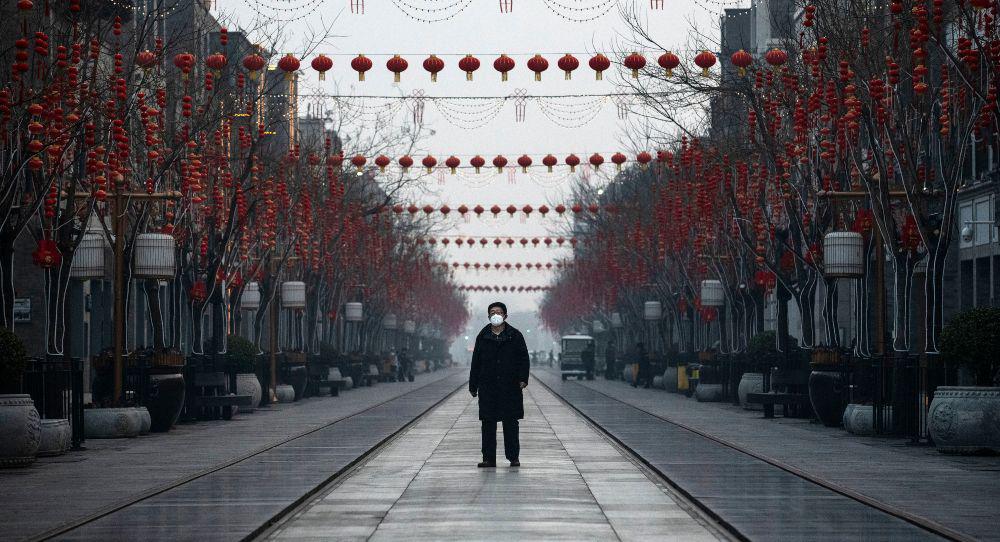
Beijing also embarked on another novelty of 2020: mask diplomacy. In spring, the shortage of medical equipment—including masks—caused utter international panic, with countries or authorities within countries fiercely competing with each other to get hold of some.
China multiplied the production of medical equipment—sales of masks and disinfectant rose by over 1000 percent—to fill supply gaps, but also used donations and this expanded commercial activity as a form of propaganda and as an instrument of foreign policy.
2020 has also been a year of protest, regardless of the lockdown measures due to the coronavirus pandemic. In small numbers, but widely reported, odd mixes of libertarians, far-right activists, and anti-vaxxers have taken to the streets to protest against governments’ restrictive measures on physical distancing (another 2020 expression).
Thousands across the globe, from Belarus to Thailand, have defied their fears of the virus and marched to uphold democratic values in the face of repression.
But the real novelty of the year has been the waves of protest that surged across the globe in the wake of the brutal murder of George Floyd in the United States in May. Black Lives Matter has inspired new demands and movements that call for a radical review of how we understand our societies and histories.
New subjects have entered politics. The pandemic put the magnifying glass on how inequality is ethnically determined, with minorities being greater victims of COVID-19, police brutality, and systemic racism. Protest has raised awareness of the hidden side of our society, paving the way for new narratives. The uncovering of stories untold are enriching our understanding of the world around us, for instance through Steve McQueen’s magnificent Small Axe films shown on BBC One.
The protest movements did more than uncover the systemic racism of contemporary society; they challenged historical narratives, educational curricula, and policies of national memory.
The toppling of statues of colonialists and slave traders put the spotlight on the need for diverse understandings of slavery, empire, and decolonization. Revising these histories will have implications for relations between states, as it affects diaspora, migration and citizenship policies, and the repatriation of art taken during colonialism—among many other issues.
Science and expertise got their vindication during 2020, having been belittled by populism, though politics continues to struggle to follow science—given the complexity of the coronavirus challenge—and deniers still abound.
Trying to understand the impact of the coronavirus, the cases, the rises, the transmission rates, and the mortality rates also underscored the value of statistics and the need for statistical literacy.
Comparing cases—successes and failures—will take us well into 2021 and beyond. Understanding data also requires the transparency and accuracy of its sources. This pandemic year saw plenty of cases of manipulation of numbers for political purposes. If the world is to prepare for the next pandemic, it will need to take a deep look at its governance.
The Brexit saga, another process that saw the invention of plenty of new words, continues until the very end of 2020.
One of its many lowest points happened in December, when plans revealed that the Royal Navy was ready to patrol British waters to prevent vessels from continental Europe from fishing there in case a deal was not reached with the EU. The plans evoked the return of so-called cod wars such as those that involved the UK and Iceland in several spats in the 1950s and 1970s.
On a lighter note, there may be some words used less in recent times that can soon make a comeback. Donald Trump’s vocabulary has always been extremely limited, especially in his range of adjectives. In 2021, I look forward to using “great,” “huge,” and “amazing” again without his image coming to my mind.
* Dear friends, colleagues, and readers,
This is the last Strategic Europe blog of 2020. What an extraordinarily complex and confusing year it has been. The pandemic rattled many assumptions about geopolitics, strategy, and interests, and the challenges ahead are huge. We wish you all a safe and healthy Christmas and New Year, or however you will be celebrating the holidays. The blog will be back on January 5, 2021. ~ Judy Dempsey

Director, Carnegie Europe
Rosa Balfour is the director of Carnegie Europe. Her fields of expertise include European politics, institutions, and foreign and security policy.
Recent Work



Richard Youngs, Erik Jones, Dan Baer, …
Rosa Balfour
Carnegie does not take institutional positions on public policy issues; the views represented herein are those of the author(s) and do not necessarily reflect the views of Carnegie, its staff, or its trustees.

The EU can impose sanctions but struggles to enforce them without the United States. With Washington increasingly disinterested in backing European interests, the bloc must now fend for itself.


Nicu Popescu, Tiago Antunes

Russia is testing the waters of NATO’s mutual defense clause. What do strikes in Romanian territorial waters mean for the alliance’s posture toward Moscow?

Dimitar Bechev

With its public finances in shambles, the far right polling at 35 percent ahead of the 2027 presidential election, and a growing protest movement, is France’s crisis a threat to the EU’s geopolitical awakening?

Rym Momtaz, ed.

Ahead of a tough winter for Ukraine, Donald Trump’s swing back toward Russia bodes ill. But instead of panicking, Kyiv’s European allies are focusing on action.
Rym Momtaz

While the EU and European governments are embracing the much-lauded middle-power moment, this entails three difficult conundrums.
Richard Youngs