

Research
- +8
William J. Burns, Michael Chertoff, Catherine Ashton, …
{
  "authors": [
    "William J. Burns"
  ],
  "type": "other",
  "centerAffiliationAll": "",
  "centers": [
    "Carnegie Endowment for International Peace",
    "Carnegie China"
  ],
  "collections": [],
  "englishNewsletterAll": "",
  "nonEnglishNewsletterAll": "",
  "primaryCenter": "Carnegie China",
  "programAffiliation": "",
  "programs": [],
  "projects": [],
  "regions": [
    "North America",
    "United States"
  ],
  "topics": [
    "Political Reform",
    "Democracy"
  ]
}
Source: Getty
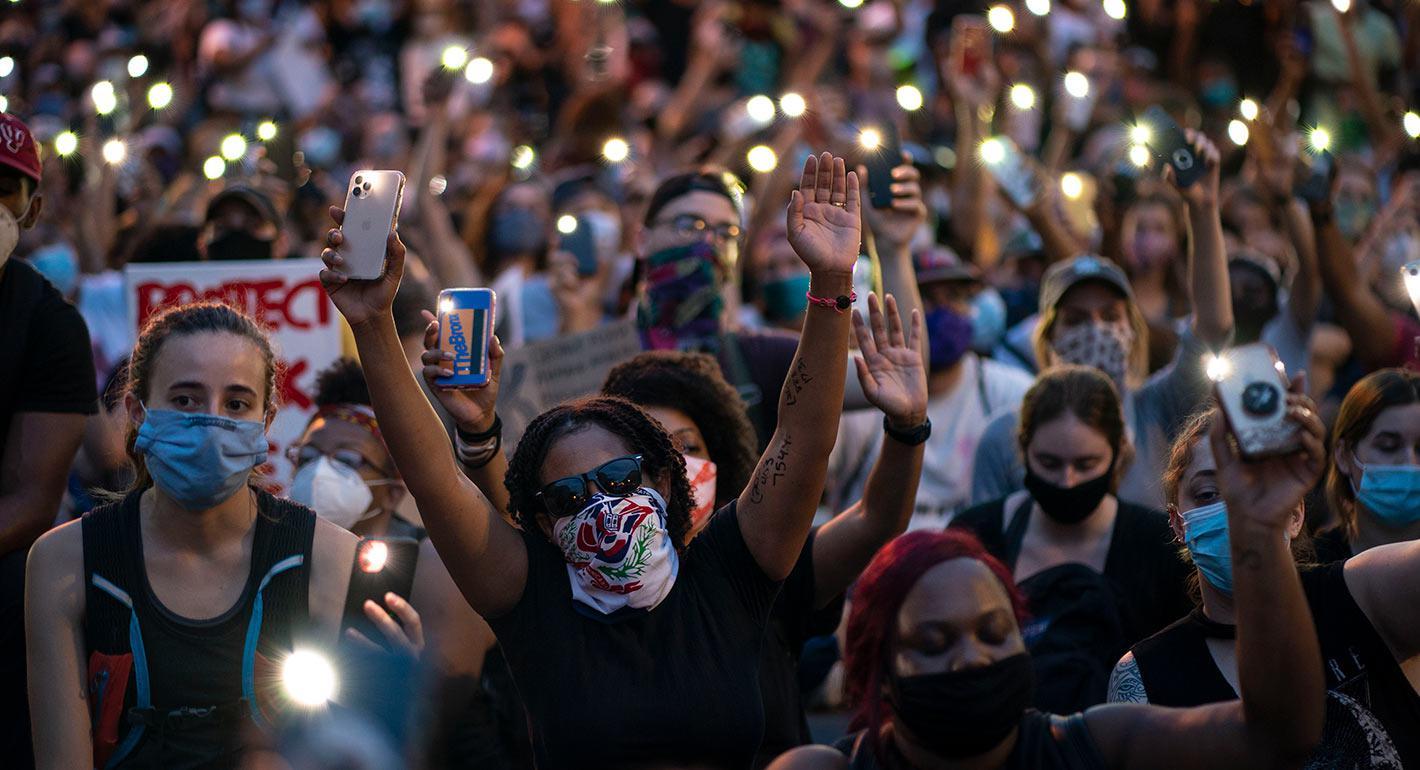
The murder of George Floyd has underscored the deep inequities that have long plagued American society. In a note to the Carnegie community, Bill Burns reflects on Carnegie’s commitment to build a more just future here at home and around the world, without which peace will remain beyond our grasp.
Dear Carnegie Endowment Community,
The murder of George Floyd, and the pain and anger Americans rightly have expressed in response, has once again underscored the deep inequities, systemic racism, and polarization that have long plagued American society. Sadly, this is not an isolated incident or an aberration. It is yet another profoundly important reminder of how far we have to go in this country, of how much hard work we have to do to end the injustice and inequality that eats away at human dignity.
Like all of you, I remain committed to doing all we can as an institution, and as individual citizens, to build a better and fairer society. I spent many years as an American diplomat, and I know that the power of our example always matters more than the power of our preaching. Today, that example is badly damaged, and the failures of our system have been laid bare.
Across our global platform, with six centers and more than 140 scholars in twenty countries, we will continue to offer honest analysis and practical prescriptions on issues of democracy, governance, civic activism, and political violence. We can do even more to help societies better understand and overcome patterns of civil conflict and exclusion—and we can certainly do more to address the inexcusable under-representation of women and minority voices in our profession and lift up the next generation.
International peace, toward which Andrew Carnegie dedicated this proud institution, is an elusive goal. Its pursuit requires not only the classic work of diplomats and mediators, but a sharp focus on the underlying pathologies of violence and intolerance. Even at this terrible moment, we hear the voices of decent people, here and around the world, raised in shared commitment to a more just future, without which peace will remain beyond our grasp. The Carnegie Endowment will remain dedicated to that crucial cause.
Sincerely,
Bill Burns
Former Carnegie President (2015-2021)
A former career diplomat, William J. Burns served as director of the CIA, deputy secretary of State, and ambassador to Russia and Jordan. Burns was also president of the Carnegie Endowment for International Peace from 2015 to 2021.
Recent Work
William J. Burns, Michael Chertoff, Catherine Ashton, …
William J. Burns
Carnegie does not take institutional positions on public policy issues; the views represented herein are those of the author(s) and do not necessarily reflect the views of Carnegie, its staff, or its trustees.

China’s political future will be shaped between now and next October. As the Communist Party enters its intense “campaign season” to prepare for a major political transition in 2027, reading Beijing's actions and responses may become more difficult as domestic politics weigh on its behavior more than usual.

Damien Ma

The EU can impose sanctions but struggles to enforce them without the United States. With Washington increasingly disinterested in backing European interests, the bloc must now fend for itself.


Nicu Popescu, Tiago Antunes

Rubio’s recent visit brought welcome attention, but more capital requires governance changes that may be a hard sell for regional governments.

Jennifer B. Murtazashvili

America’s foreign-policy objectives have grown more demanding while Americans have demanded greater focus on their own affairs.

Stephen Wertheim

Despite public disputes over trade and immigration, the strategic partnership’s foundations remain sturdy.

Sameer Lalwani