

Commentary
While the EU and European governments are embracing the much-lauded middle-power moment, this entails three difficult conundrums.
Richard Youngs
{
  "authors": [
    "François Heisbourg"
  ],
  "type": "commentary",
  "blog": "Strategic Europe",
  "centerAffiliationAll": "",
  "centers": [
    "Carnegie Endowment for International Peace",
    "Carnegie Europe"
  ],
  "englishNewsletterAll": "",
  "nonEnglishNewsletterAll": "",
  "primaryCenter": "Carnegie Europe",
  "programAffiliation": "",
  "programs": [],
  "projects": [],
  "regions": [
    "France"
  ],
  "topics": [
    "Domestic Politics",
    "EU",
    "EU Foreign Policy"
  ]
}
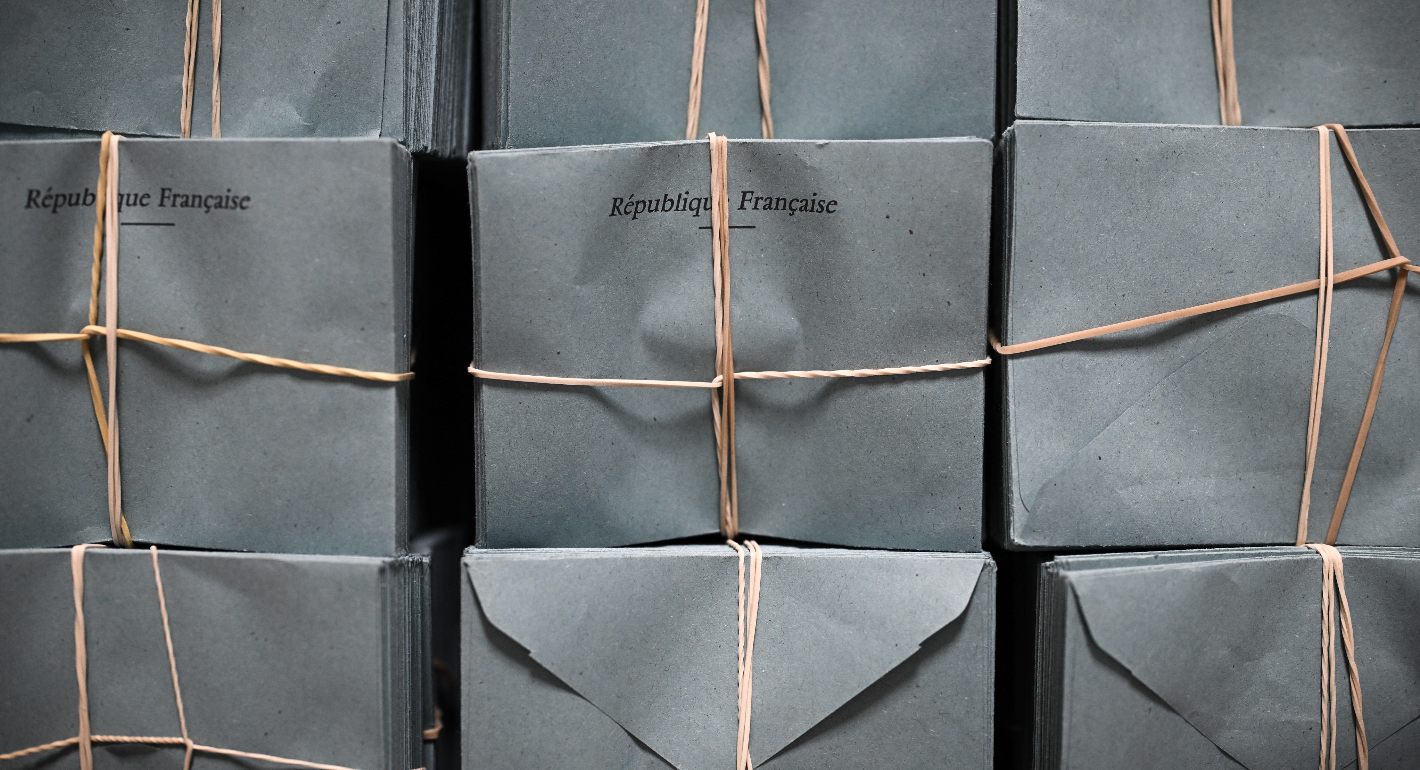
Source: Getty
With a snap legislative election approaching, French politics is in turmoil. The vote’s outcome will impact the nation’s role in Europe, NATO, and transatlantic relations.
On Sunday, France will hold a snap parliamentary election announced by President Emmanuel Macron after his party’s stunning defeat in the European Parliament elections. At the time of writing this blog on June 23, with the single exception of the cohesive National Rally, no political party looks set to maintain its current form.
The Gaullist and conservative right have been blown to smithereens, the Socialists have entered a Faustian pact with the chavista Left and its brand of “contextual anti-Semitism,” its choice of words to describe Gaza-inspired acts of savagery against French Jews. What is left of the president’s own movement tries to keep Macron out of sight and out of mind: he has lost the respect and loyalty of his shell-shocked followers.
Macron himself has been hoist on his own petard or, in more modern language, fragmented by his own grenade—a phrase Le Monde says he coined in a moment of supposed schoolboyish glee. This Zeitgeist has a practical consequence: France’s policies as a member of the EU and NATO will no longer rest entirely in his hands. Henceforth, French policies in Europe will not be a reprise of the visions set out at the Sorbonne or in the columns of the Economist.
The spectrum of postelection outcomes, ranging from bad to worse, remains wide with just one week to go until the first round of voting on June 30. Three electoral coalitions of unequal strength are in contention. The National Rally and a clutch of allies are credited with upward of one third of the votes. The Nouveau Front Populaire (New Popular Front) of the broad Left are forecast gain more than a fourth, and the pro-government Ensemble! (Together) grouping is expected to clock in at about a fifth. This lineup is reflected by most opinion polls.
High voter mobilization is expected, meaning that more three- or even four-way contests may be on the cards after the first round: a bar of 12.5 percent of registered voters has to be cleared for a candidate to move from the first, basically open, round to the runoff in each single-seat constituency on July 7. Up to a third or more of the seats may figure in this unpredictable category.
Hence, there are three very different postelection scenarios, each with its own impact on European and transatlantic issues.
At this stage, the most likely outcome is a hung parliament reflecting the current lineup, with the National Rally coming first—up to 260 seats out of 577 in the highest assessments, the Left second, and Ensemble! a distant third.
In this constellation, there would be no quick agreement on a new prime minister and government, or possibly none at all. The National Rally’s prospective prime minister, Jordan Bardella, has also indicated that he would refuse to seek office under such conditions when the new parliament convenes on July 18.
If the deadlock persists, parliament cannot be revoked for another year. National Rally member Marine Le Pen has hinted that Macron’s resignation may be the only way out of such a conundrum. Under this intrinsically unstable scenario, one should expect a protracted period of political paralysis. The result would be a complete absence of any European or broader diplomatic decisionmaking, even if Macron stays and is not challenged in the president’s traditional prerogatives—which do not include the power of the purse.
In business circles with their win-win bias, there is hope that a government of experts à la Mario Monti in Italy could be the altogether less painful alternative. However, given French political traditions, this seems hardly probable.
An alternative scenario sees the National Rally and its allies secure a working majority of 289 or more in parliament. This isn’t currently foreseen by any of the polling organizations, but the target is within reach if the National Rally continues to avoid making big mistakes and benefits from those of others.
In this case, stability of sorts will exist but with a yet unknown degree of conflict with Macron in defense and diplomacy. Bardella is currently suggesting that he wouldn’t directly counter Macron’s policy on Ukraine, albeit with no French instructors in Ukraine and no hitting of targets in Russia with long-range missiles. At the very least, France would become a deadweight after having become a driver in organizing Europe against Putin’s imperialism.
A Bardella government would naturally also be responsible for the state budget—including aid for Ukraine, allowing an Orbán-type policy by stealth, over-riding Macron’s opposition. The hard right has a long and undistinguished history of proximity with Russian funding and influence. A key indicator here will be whether the French security services will be able or not to pursue as aggressively as today Russian interference and grey zone operations. The Kremlin itself may also find it astute to ratchet down the tempo of such operations, notably with the advent of the Olympic games at the end of July.
On EU affairs, Marine Le Pen is no Giorgia Meloni. Frexit may no longer be the order of the day but nothing will be smooth, including the form of France’s representation in the European Council.
In a third scenario, an attempt would be made by Ensemble! to build a new moderate governing bloc. Today, the opinion polls credit that grouping with the paltry number of around 120 seats. It would need to gain massive support from the mainstream Socialists, which in turn would require splitting the New Front Populaire. The latter contingency is actually quite probable if only because of the incubus of “contextual anti-Semitism.”
But because Jean-Luc Mélenchon’s ultra-Left has had a first pick in terms of winnable constituencies, the number of parliamentarians available for a moderate new majority is highly unlikely to be adequate. Even if the remains of the conservative right do better than expected and accept to join the coalition, it would take a set of miracles to reach the magic number of 289.
In any case, such a coalition wouldn’t be dominated by the outgoing president’s followers. This best-case outcome would hardly be material for the sort of vaulting initiatives Macron tends to favor. Yet inspired and solid leadership will be sorely needed as U.S. uncertainties loom ever larger and the German governing coalition is stuck in a rut until the next general election.
François Heisbourg is senior advisor for Europe at the International Institute for Strategic Studies.

François Heisbourg
Senior advisor for Europe, International Institute for Strategic Studies
Carnegie does not take institutional positions on public policy issues; the views represented herein are those of the author(s) and do not necessarily reflect the views of Carnegie, its staff, or its trustees.

While the EU and European governments are embracing the much-lauded middle-power moment, this entails three difficult conundrums.

Richard Youngs

Much has been said of the changes Brussels is trying to make to the EU enlargement process. Here’s why gradual integration might—or might not—be the answer.

Dimitar Bechev

The European Commissioner for Trade is headed to China. But after President Xi’s bridge-building visit to Washington, can a more isolated EU overcome Beijing’s stranglehold on critical raw materials? Who will blink first?

Rym Momtaz, ed.

The domestic impacts of how long it is taking to end the war in Ukraine have pushed the French electorate to the political extremes and compromised the country’s diplomatic capacity.
Rym Momtaz

Before the next wave of EU enlargement takes place, the union needs to grapple with thorny questions of how power is distributed among its members.


Emil Sondaj Hansen, Ditte Brasso Sørensen