

Commentary
Amr Hamzawy
{
  "authors": [
    "Amr Hamzawy"
  ],
  "type": "legacyinthemedia",
  "centerAffiliationAll": "dc",
  "centers": [
    "Carnegie Endowment for International Peace"
  ],
  "collections": [],
  "englishNewsletterAll": "democracy",
  "nonEnglishNewsletterAll": "",
  "primaryCenter": "Carnegie Endowment for International Peace",
  "programAffiliation": "DCG",
  "programs": [
    "Democracy, Conflict, and Governance",
    "Middle East"
  ],
  "projects": [],
  "regions": [
    "Middle East",
    "Egypt"
  ],
  "topics": [
    "Political Reform",
    "Security"
  ]
}
REQUIRED IMAGE
Source: The Daily Star
The attacks in Sharm al-Sheikh last Friday, Egypt's National Day, added security challenges to an unprecedented moment of ambivalence on the Nile. The location and timing of the bombings were chosen with precision. In recent years the Red Sea town had become the capital of Egyptian peace and anti-terror diplomacy in the Middle East, something both Americans and Europeans strongly supported. Sharm al-Sheikh, at least until July 23, was also one of the few places in the region which defied violence and the dearth of peaceful coexistence between Arabs and Israelis.
But it was not only Sharm al-Sheikh's legacy which came under attack. Two days before the blasts, Egyptian President Hosni Mubarak addressed the nation from the Cairo Military Academy. He argued that stability, security, economic development and democracy had been his major achievements since 1981. A clear majority of Egyptians would probably have doubted the legitimacy of Mubarak's claims about development and democracy; but they would have acknowledged his success in bringing stability and security. Yet with up to 88 dead and almost 200 injured in Sharm al-Sheikh, questions are bound to arise as to whether Mubarak's boast still holds. And the attacks come at a moment of political uncertainty.
Mubarak, after amending the Constitution to permit direct and pluralistic elections for the presidency, has yet to announce whether he will seek a fifth term in office. The ruling National Democratic Party (NDP), while awaiting the decision of its leader, is primarily preoccupied with internal power struggles between the "old guard" and the young stars gathered around the president's younger son, Gamal. Meanwhile the opposition, disenchanted by the undemocratic spirit of the constitutional amendment, is either calling on Egyptians to boycott the presidential election scheduled for September 7, or stepping up its public activities to demand election monitoring and transparent voting procedures.
The current situation opens up a range of possibilities, which have as their starting point a presidential decision on the upcoming elections. The most likely scenario is the following: Mubarak announces his candidacy for a fifth and last term. The ruling NDP endorses him. The government initiates a media campaign polishing the president's image as a guarantor of stability and security in a turbulent region and discrediting opposition figures as incapable of protecting Egypt. Mubarak is elected in September.
For the regime this would be the best-case scenario, since it would preserve its power and postpone, at least for a while, emerging conflicts on political succession. And although Mubarak repeated several times in recent months that he does not need an election program, he might be inclined to address the heated domestic debates on Egypt's future by publicizing a reform plan for his coming years in office, promising substantial economic and political improvements.
For Egypt's democratic opposition, however, this is the worst possible scenario. Political parties and new protest movements alike will deem the presidential election fraudulent even before it takes place and call on Egyptians to boycott it. Under these circumstances, today's polarization is bound to continue. It could even get worse, with the government using the terrorist attacks to step up repressive measures against opposition movements, and the latter denouncing Mubarak as illegitimately elected.
Clearly this is not a formula for stability and reform. For Mubarak to win without any genuine opposition and amid calls for a boycott would create a crisis of legitimacy for the Egyptian regime, no matter how high is voter turnout and the level of election transparency.
A second, more gloomy scenario is for Mubarak to announce that he is not running, leaving it open for the ruling NDP to nominate a candidate instead of him. Although this option is less likely than the first, it could be used to advance the long-rumored plan to allow Gamal Mubarak to succeed his father: Gamal meets the new constitutional requirements for party presidential candidates and no one might come up with a different NDP candidate should the president decide to withdraw.
However, the risks of an "inherited presidency" are immense. Regardless of the reform mantra of Gamal's NDP High Commission on Policies, the president's son is unpopular among Egyptians. Whereas a broad segment of society remains loyal to the president based on the principle of "we know him, therefore we trust him," Gamal is perceived as the man of upper-class businessmen and corporate interests. Nominating him as candidate would be seen as an anti-democratic step aiming at preserving the Mubarak family's dominance and wealth. To try legitimating Gamal's takeover by placing it in the context of a supposedly democratic presidential election, or even a seemingly transparent candidate selection process within the NDP, would convince neither the Egyptian opposition nor the international community.
Gamal's succession would lead to a deeper legitimacy deficit than if Mubarak were to remain in office; in such a situation, the potential for popular unrest should not be underestimated. Furthermore, should expectations be confirmed that Gamal's standing within the Egyptian ruling elite is being contested, a new risk might threaten stability: overt power struggles between elite factions. The Gamal scenario is a recipe for more repression or even chaos, at least in the short term.
However, should Mubarak announce his candidacy and nominate a vice president - something he has never done - a new window of opportunity might open. Egyptians would react positively to the choice of a number-two person in the state hierarchy, as this would be seen as the best way to secure a stable transfer of power when Mubarak's fifth term ends, or should anything happen between now and then. But who are the favored nominees for this third scenario?
Depending on Mubarak's priorities, Arab League Secretary General Amr Moussa, Intelligence Chief Omar Suleiman or Prime Minister Ahmad Nazif might be the anointed one. Should the president be in a legacy-making mood and feel the urge to create secure domestic conditions based on popular consensus, Moussa would be the strongest candidate. Although less preferable to the U.S., he is popular domestically and regionally. He would be just the right figure to lead a transitional phase from Mubarak's limited pluralism to substantial democratic reforms.
However, should Mubarak's priorities be driven by a desire to preserve power, he might choose either Suleiman or Nazif. The crucial point in favoring one over the other would be the relative weight of security versus Gamal Mubarak's political future. Suleiman - a representative of the military establishment - would be entrusted with security and maintaining current elite privileges; Nazif's nomination would be a further omen of inherited succession, since the prime minister is a close ally of Gamal.
What will the outcome of the Mubarak story be? Unfortunately, happy endings are sometimes the least likely.
Amr Hamzawy is a senior associate in the Democracy and Rule of Law project at the Carnegie Endowment for International Peace. He wrote this commentary for THE DAILY STAR.

Director, Middle East Program
Amr Hamzawy is a senior fellow and the director of the Carnegie Middle East Program. His research and writings focus on Egypt’s and other middle powers’ involvement in regional security in the Middle East, particularly through collective diplomacy and multilateral conflict resolution
Recent Work
Amr Hamzawy
Amr Hamzawy
Carnegie India does not take institutional positions on public policy issues; the views represented herein are those of the author(s) and do not necessarily reflect the views of Carnegie, its staff, or its trustees.

In any defense establishment, change is an ongoing process. However, despite the best of intentions, existing bureaucracies, bound by habit and years of socialization, have their limits in implementing transformative change.

Anit Mukherjee

After the chill in ties between 2020 and 2024 that brought India–China relations to their lowest point in several decades, the two countries have engaged each other afresh. This paper argues that there are predominantly four imperatives guiding India’s approach to China, and they exist in an order of priority.

Saheb Singh Chadha

This piece argues that the present Indian strategy, based on opportunistic diversification and utilization of limited strategic reserves, remains inadequate when confronting supply disruptions. It evaluates India’s options in the short, medium, and long terms.

Vrinda Sahai

This piece examines India’s response to U.S. sanctions and tariffs, specifically assessing the immediate market consequences, such as alterations in import costs, and the broader strategic implications for India’s energy security and foreign policy orientation.
Vrinda Sahai
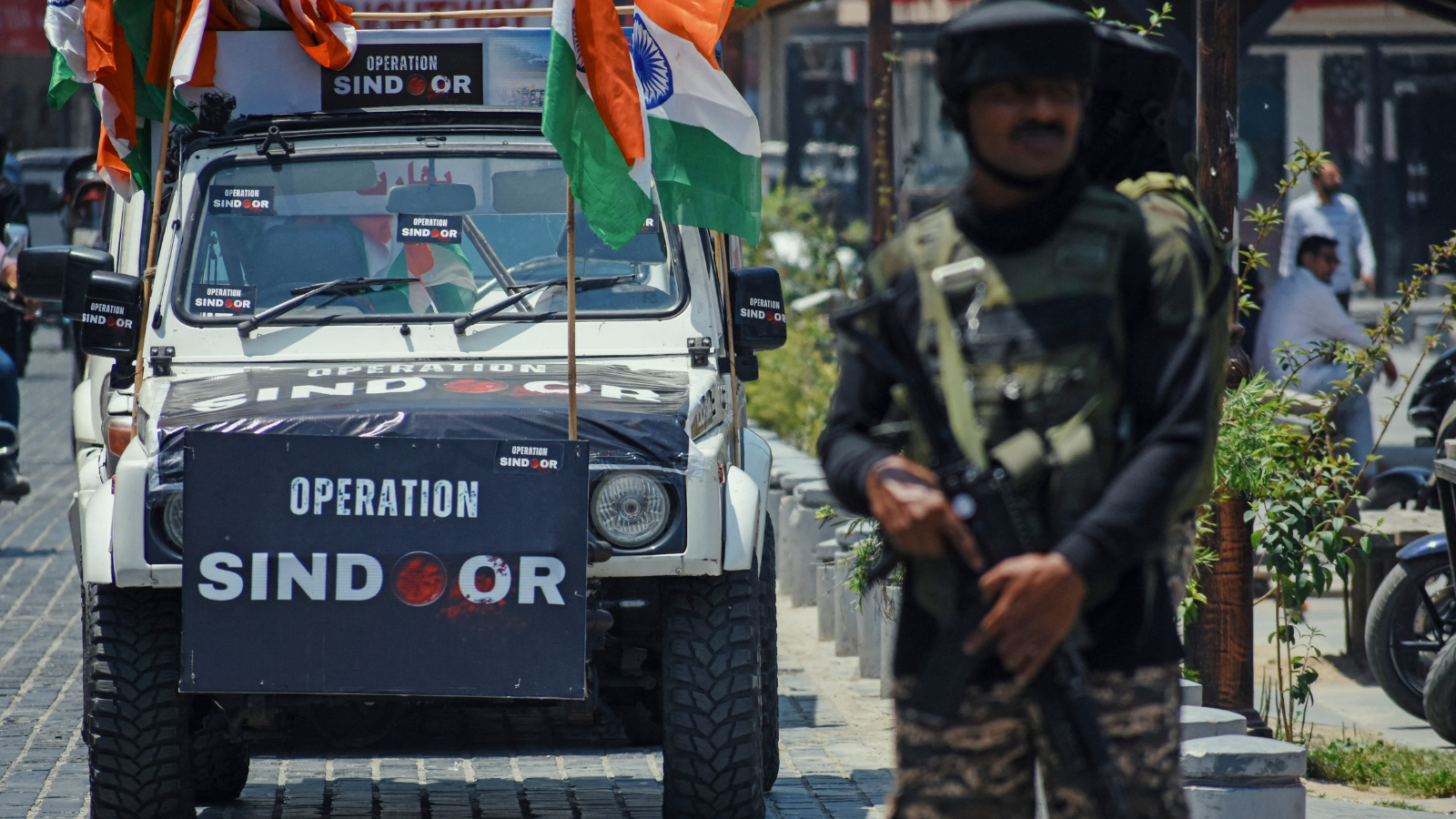
The India-Pakistan conflict that played out between May 6 and May 10, 2025, offers several military lessons. This article presents key takeaways from Operation Sindoor and breaks down how India’s preparations shaped the outcome and what more is needed to strengthen future readiness.

Dinakar Peri