

Research
- +10
Rosa Balfour, Frances Z. Brown, Yasmine Farouk, …
{
  "authors": [
    "Moisés Naím"
  ],
  "type": "legacyinthemedia",
  "centerAffiliationAll": "",
  "centers": [
    "Carnegie Endowment for International Peace"
  ],
  "collections": [],
  "englishNewsletterAll": "",
  "nonEnglishNewsletterAll": "",
  "primaryCenter": "Carnegie Endowment for International Peace",
  "programAffiliation": "",
  "programs": [],
  "projects": [],
  "regions": [
    "North America",
    "South America",
    "Middle East",
    "North Africa",
    "Egypt",
    "Saudi Arabia",
    "East Asia",
    "Southeast Asia",
    "North Korea"
  ],
  "topics": [
    "Political Reform"
  ]
}
Source: Getty
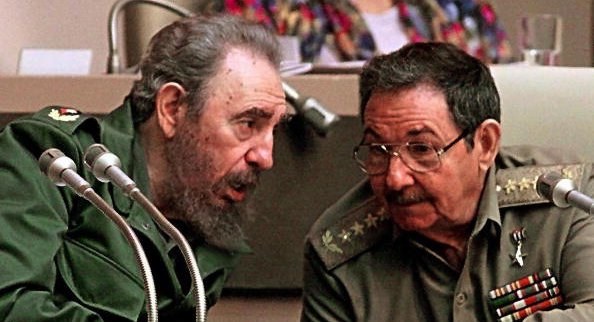
As a result of the illness or age of the leaders of Egypt, Cuba, Thailand, Saudi Arabia, and North Korea, these five important countries are about to go through some complicated and unpredictable power shifts.
Source: The National Interest

These five are very sick. Some may die in 2011. But even if this does not happen, their physical weakness creates political weakness that will force their countries to go through complicated and unpredictable power shifts.
The ripple effects of these transitions will reach beyond the borders of their nations.
Egypt is a fundamental player in the Arab world and the Cuban influence in Latin America is well known. Thailand's precarious political balance could easily collapse after the King’s death and the turmoil can spill over onto neighboring countries. What happens in Saudi Arabia greatly influences your gas and heating bills and more broadly politics in the Middle East and as far as Pakistan. An armed conflict in the Korean peninsula would have large and immediate effects on the global economy. In fact, North Korea’s recent bellicosity is intimately linked to its succession process.
These five countries are very different in their politics, economics, geography, demography and culture. Yet they are uncannily similar in terms of the succession processes of their current leaders.
Hosni Mubarak is doing his best to leave his job to his son Gamal. Fidel left power to his brother Raúl. Kim Jong Il has anointed his twenty-six-year-old son Kim Jong-un as his successor. Thanks to unknown military merits young Kim was just promoted to four-star general. His father has also decided that, at least for now, his successor should be referred to in the official propaganda as “Bright Comrade.” If George H. W. Bush and George W. Bush were presidents, ask the Kims and the Mubaraks, why not us?
In the case of kings, family succession is more obvious. And also more complicated. King Abdullah appointed his stepbrother Prince Sultan bin Abdulaziz as heir. The problem is that the younger successor is also an octogenarian. And he too is quite sick, having battled—or perhaps he is still battling—cancer. Succession decisions are made through complicated and secret negotiations involving the different factions of the Saudi royal family.
The same is true in Thailand. The king’s son, Prince Maha Vajiralongkorn (fifty-seven years old) is the natural heir. But while his father is revered, the prince is feared and unpopular. His controversial love life, his adoration of Fu-Fu, his poodle that has a military rank and sometimes sits in banquets, and the constant rumors about some of his more unsavory friends stand in sharp contrast with the admiration for his sister, Princess Sirindhorn. One possible, and highly speculative, scenario is that on his deathbed, the king could skip his son and appoint the princess or one of his grandchildren. In any case, the last thing troubled Thailand needs is to add to the violent political confrontations taking place in the street a power struggle inside the royal palace.
Another common denominator in these five countries is the fundamental role that the armed forces play in the succession process. All of these governments depend on the military to retain their grip on power. In Egypt, the president’s son’s lack of military experience and his promises of economic and political reforms have not gone down well with the generals. Raúl Castro is not only Fidel's brother but for decades he was the head of the armed forces. In Saudi Arabia, the princes who control the military or intelligence services are best situated for succession, or at least have a disproportionate influence in the selection process.
Once the “Dear Leader” disappears, North Korea will most likely not be run by the “Bright Comrade,” but by a military junta. In Thailand, generals have a long tradition of coups and heavy-handed intervention in matters of state. They will not be passive observers of the succession process that will unfold after the king’s death.
“There is no evil that lasts a hundred years, or a body that can resist it,” goes the old saying. Autocrats that look to extend their mandate beyond their death by leaving in power their son or brother run afoul of this adage. They are keen to ensure that their evil legacy lasts longer than one hundred years. In some cases, and to the detriment of their long-suffering societies, they will succeed. In others, the body—that is, society—will not resist the extension of the evil, that is, more of the same bit with a different leader.
Some or all of these five old and frail men will pass away next year. Their deaths will change more than their countries.

Distinguished Fellow
Moisés Naím is a distinguished fellow at the Carnegie Endowment for International Peace, a best-selling author, and an internationally syndicated columnist.
Recent Work



Rosa Balfour, Frances Z. Brown, Yasmine Farouk, …
Moisés Naím
Carnegie India does not take institutional positions on public policy issues; the views represented herein are those of the author(s) and do not necessarily reflect the views of Carnegie, its staff, or its trustees.

A partnership between India, a country of subcontinental size, and Africa, a continent of fifty-four countries, may seem asymmetric until one notes that both are home to nearly the same number of people—1.4 billion. This essay spells out the existing challenges to the partnership, its optimal potential, and the possible pathways to realize it over the next quarter-century.

Rajiv Bhatia

This commentary explores the likely actions of the Trump administration and driving forces on issues of deregulation, the United States’ leadership in AI, national security, and global engagements on AI safety.

Shatakratu Sahu, Amlan Mohanty
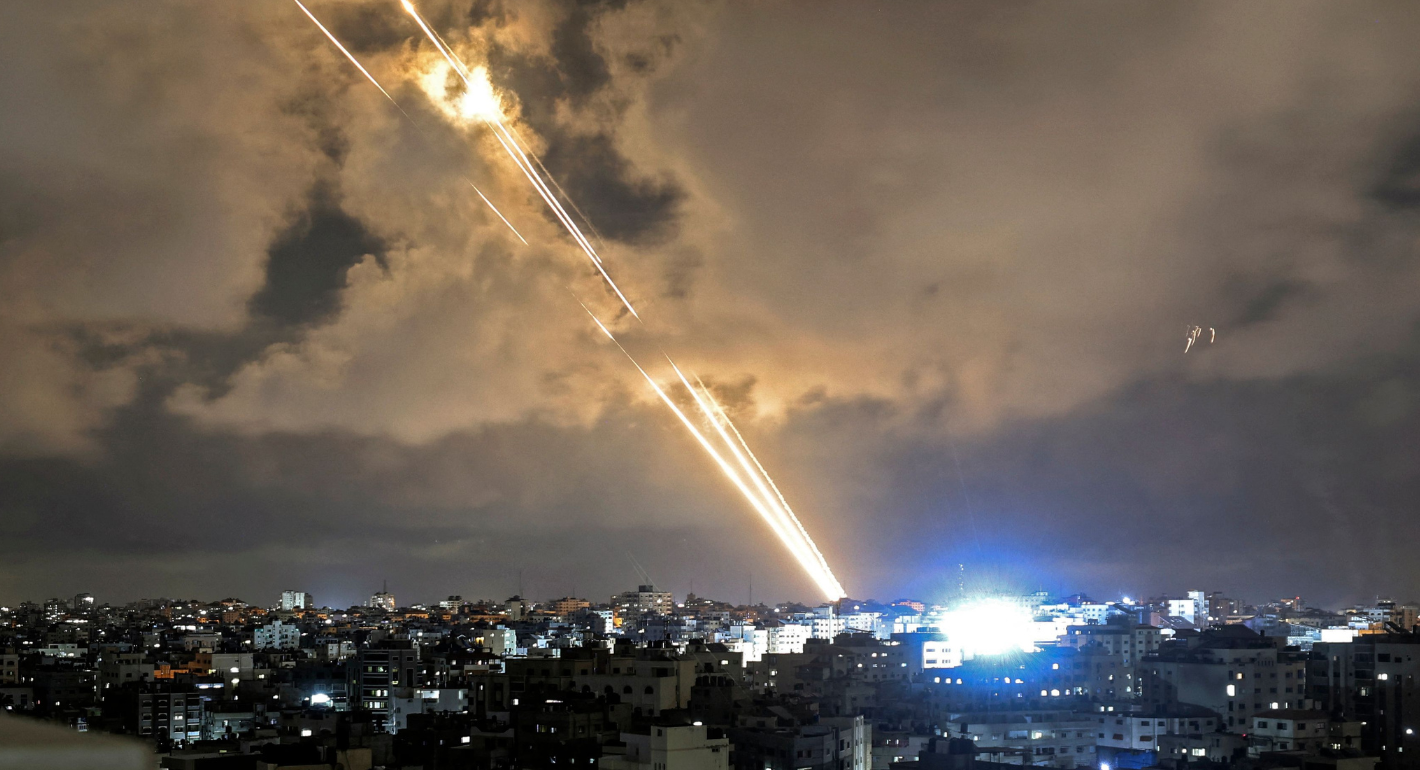
An Israeli response to Iran’s October 1 attack is imminent. The key question is of its intensity and potential fallout, both within Iran, in terms of nuclear security policy changes, and across the broader region. The coming days are likely to reshape West Asia irreversibly.
Gaddam Dharmendra

Since its launch nearly a year ago, the INDUS-X has marked many milestones in the India-U.S. relationship. Much has been achieved, but there is room to further enhance defense cooperation between the two countries in the coming years.

Ajay Kumar, Tejas Bharadwaj

This piece examines the strategic implications of Bhutan’s diplomatic efforts amid its border dispute with China, highlighting the thin ice it walks on to achieve a resolution without compromising its vital relationships.

Shibani Mehta