

Research
- +10
Rosa Balfour, Frances Z. Brown, Yasmine Farouk, …
{
  "authors": [
    "Moisés Naím"
  ],
  "type": "legacyinthemedia",
  "centerAffiliationAll": "",
  "centers": [
    "Carnegie Endowment for International Peace",
    "Carnegie China"
  ],
  "collections": [],
  "englishNewsletterAll": "",
  "nonEnglishNewsletterAll": "",
  "primaryCenter": "Carnegie Endowment for International Peace",
  "programAffiliation": "",
  "programs": [],
  "projects": [],
  "regions": [
    "South Asia",
    "East Asia",
    "Central Asia",
    "Southeast Asia",
    "North America"
  ],
  "topics": [
    "Economy",
    "Climate Change",
    "Security",
    "Nuclear Policy",
    "Arms Control"
  ]
}
Source: Getty
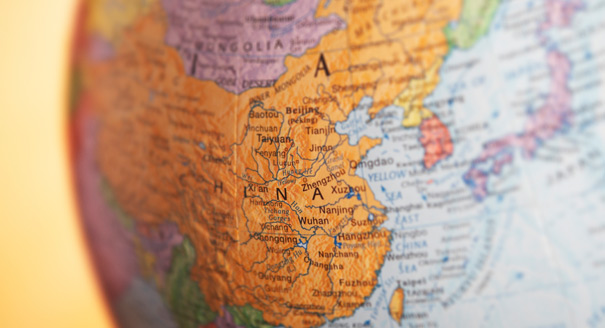
The problems of some regions affect the entire world, no matter how far away they are.
Source: Atlantic
Some problems travel well. Sometimes too well. Financial crashes have taught us that in some cases what starts as a very local economic problem quickly escalates and becomes a global crisis. Think Greece—or more recently Cyprus. And we know that terrorism also has a way of going global in unpredictable and dangerous ways.
But what about regions? Which continents are more prone to infect the rest of the world with their problems? Africa and Latin America's woes, for example, remain mostly insulated. Of course, the mass emigration of Africans to Europe and Latin Americans to the United States is an example of how one continent’s problems spill over into another, but this contagion has had much less of an impact than the economic crisis in the U.S. or Europe, for example. Millions of people all over the world, and especially in Europe, are still paying the consequences for that financial earthquake.
The point is that the problems of some continents are more ‘systemic’ than others. This is to say that the agonies of some regions affect the entire world, no matter how far away they are. The question, then, is: Which of the five continents is bound to spread more unhappiness in the future?One way to answer is to think about which threats travel the easiest and with no trouble skirt borders, fortifications, or the public policies that we naïvely believe protect us. An economic crash in China, for example, is bound to be felt everywhere and by everyone.
Nor may we be able to dodge the consequences of the nuclear experiments of a young, inexperienced North Korean tyrant. So, which continent is the most dangerous? Asia. This may surprise those who see the ‘Asian economic miracle’ as a model for the rest of the world. Or those who think that conditions in the Middle East are ripe for a lengthy and rising wave of armed conflicts, religious radicalization and international terrorism. All this is true.
But the problems that originate in Asia will prove more and more complicated, as their already gigantic economies continue to grow, albeit at a slower pace than in the last several decades.
The main threats to humanity today are: 1) climate change; 2) nuclear proliferation; 3) the outbreak of a disease with no known cure that spreads across the globe claiming a large number of victims; 4) global economic crises and, of course, 5) an armed conflict between two or more military powers, such as China and India, for example. Of course, there are other threats: terrorism, the increased scarcity of water, criminalized governments, structural unemployment, and the proliferation of failed states. But none of these would generate the colossal consequences of the five I list.
Asia is the region with the most countries that have the potential to create and spread these five problems. The much celebrated economic success of the ‘Asian tigers’ obscures the fact that this continent is also home to the principal threats to global stability.
According to the Asian Development Bank, Asia is on the path to double its consumption of oil, triple its use of natural gas, and see an 81 percent increase in its use of high polluting coal, speeding up and doubling its carbon dioxide (CO2) emissions by 2035. Asia alone, then, would be emitting the total amount of CO2 that experts have calculated to be the maximum sustainable level for the entire planet.
Asia is also the continent with the greatest proliferation of nuclear weapons. These capabilities are present in high-risk countries like North Korea and Pakistan, which also happen to be those that have shown no qualms in selling their nuclear technology to the highest bidder.
Many of the world’s longest-lasting armed conflicts are found in Asia. From Afghanistan to Sri Lanka and from Kashmir to the unending armed insurgencies in Indonesia and the Philippines, wars are routine. Asia is also marked by the most explosive borders in the world: China and India, Pakistan and India, and between the two Koreas.
From Asia came the avian bird flu pandemic. While the mortalities proved lower than feared, the world was alerted to Asia’s potential to rapidly spread disease across the globe.
Are these accidents and Asia-originated problems inevitable? Of course not. But they are unfortunately more important and urgent than issues that more frequently absorb the world’s attention.

Distinguished Fellow
Moisés Naím is a distinguished fellow at the Carnegie Endowment for International Peace, a best-selling author, and an internationally syndicated columnist.
Recent Work



Rosa Balfour, Frances Z. Brown, Yasmine Farouk, …
Moisés Naím
Carnegie India does not take institutional positions on public policy issues; the views represented herein are those of the author(s) and do not necessarily reflect the views of Carnegie, its staff, or its trustees.

In any defense establishment, change is an ongoing process. However, despite the best of intentions, existing bureaucracies, bound by habit and years of socialization, have their limits in implementing transformative change.

Anit Mukherjee

After the chill in ties between 2020 and 2024 that brought India–China relations to their lowest point in several decades, the two countries have engaged each other afresh. This paper argues that there are predominantly four imperatives guiding India’s approach to China, and they exist in an order of priority.

Saheb Singh Chadha

On March 10, 2026, India’s Union Cabinet approved amendments to Press Note 3, a regulation that mandated government approval on all foreign direct investment (FDI) from countries sharing a land border with India. This amendment raises questions primarily about whether its stated benefits will materialize and if the risks have been adequately weighed. This piece will address the same.

Konark Bhandari

This piece argues that the present Indian strategy, based on opportunistic diversification and utilization of limited strategic reserves, remains inadequate when confronting supply disruptions. It evaluates India’s options in the short, medium, and long terms.

Vrinda Sahai

Trump 2.0 has unsettled India’s external environment—but has not overturned its foreign policy strategy, which continues to rely on diversification, hedging, and calibrated partnerships across a fractured order.



Milan Vaishnav, ed., Sameer Lalwani, Tanvi Madan, …