

Commentary
Alexey Malashenko

Source: Getty
The launch of U.S. and European military operations against Libya’s Muammar Gaddafi could have unexpected consequences and encourage some regimes to step up their efforts to develop a weapons arsenal in order to prevent the possibility of outside attack.
France—and then other countries in Europe and the United States—made good on their threats to launch military operations against Libya’s Muammar Gaddafi on March 19. Many commentators predicted from the start of the uprising in Libya that Gaddafi’s days were numbered, but few guessed that the Libyan revolutionaries would need outside help in their battle.
With the operations now underway, what are the preliminary conclusions one can draw so far?
First, it seems that Europe and the United States will continue to be involved in the political developments underway in the Arab and Muslim world. Unlike the Taliban in Afghanistan, or Iraq’s Saddam Hussein, it has been a long time since Gaddafi was seen as a threat by international community, in spite of the rather provocative foreign policy he pursued. He was not manufacturing chemical weapons and, at least in recent years, was not helping international terrorists. If he had succeeded in putting down the uprising swiftly, it is unlikely his relations with Europe and the United States would have undergone any substantial change.
Second, potential revolutionaries—in Yemen, for example—have hopes of receiving outside support if the regimes they are protesting take too hard-fisted an approach to ending their protests and ignore humanitarian norms—although it is practically inevitable that humanitarian norms are violated when bitter revolutionary struggles get underway.
Third, the West’s decision to intervene in Libya may send a signal to some dictatorial regimes to tread more carefully or face the threat of serious outside pressure.
Fourth, and perhaps most important, the West’s actions set a precedent that could have unexpected consequences. Leaders of some countries might be scared to take actions that would provoke outside intervention. Others, however, might hasten to prevent the possibility of outside attack by, for example, stepping up efforts to develop devastating weapons. This isn’t without precedent; Gaddafi himself dreamed of building up his weapons cache.
Fifth, it will be interesting to see how the airstrikes against Libya will affect the unrest in the Middle East. The resolute line the U.S.-European coalition is taking on Libya might intimidate some forces in the Middle East, as in other regions, but might provoke others into even more radical action.
Sixth, Islamist parties and movements remain an unknown factor in all of this upheaval. Will the Islamists, who have been more or less on the sidelines during this year’s political turmoil, continue to remain passive? Or will they take a more active role?
Seventh, there is the indirectly related issue of how Muslim immigrants in Europe will react to the West’s actions. For example, will French President Nicolas Sarkozy’s passionate determination be seen by Muslim immigration populations as an indication of his firm intention to cut the Gordian knot of tensions between Muslims and the French natives in France?
Finally, it seems that Russia has taken the right line in this situation. Russia could not influence the situation in Libya and did not want to actively intervene. Such restraint demonstrates that Moscow is aware of the place Russia holds in today’s international politics.

Former Scholar in Residence, Religion, Society, and Security Program
Malashenko is a former chair of the Carnegie Moscow Center’s Religion, Society, and Security Program.
Recent Work
Alexey Malashenko
Alexey Malashenko
Carnegie India does not take institutional positions on public policy issues; the views represented herein are those of the author(s) and do not necessarily reflect the views of Carnegie, its staff, or its trustees.

After the chill in ties between 2020 and 2024 that brought India–China relations to their lowest point in several decades, the two countries have engaged each other afresh. This paper argues that there are predominantly four imperatives guiding India’s approach to China, and they exist in an order of priority.

Saheb Singh Chadha

A partnership between India, a country of subcontinental size, and Africa, a continent of fifty-four countries, may seem asymmetric until one notes that both are home to nearly the same number of people—1.4 billion. This essay spells out the existing challenges to the partnership, its optimal potential, and the possible pathways to realize it over the next quarter-century.

Rajiv Bhatia

This piece argues that the present Indian strategy, based on opportunistic diversification and utilization of limited strategic reserves, remains inadequate when confronting supply disruptions. It evaluates India’s options in the short, medium, and long terms.

Vrinda Sahai

This piece examines India’s response to U.S. sanctions and tariffs, specifically assessing the immediate market consequences, such as alterations in import costs, and the broader strategic implications for India’s energy security and foreign policy orientation.
Vrinda Sahai
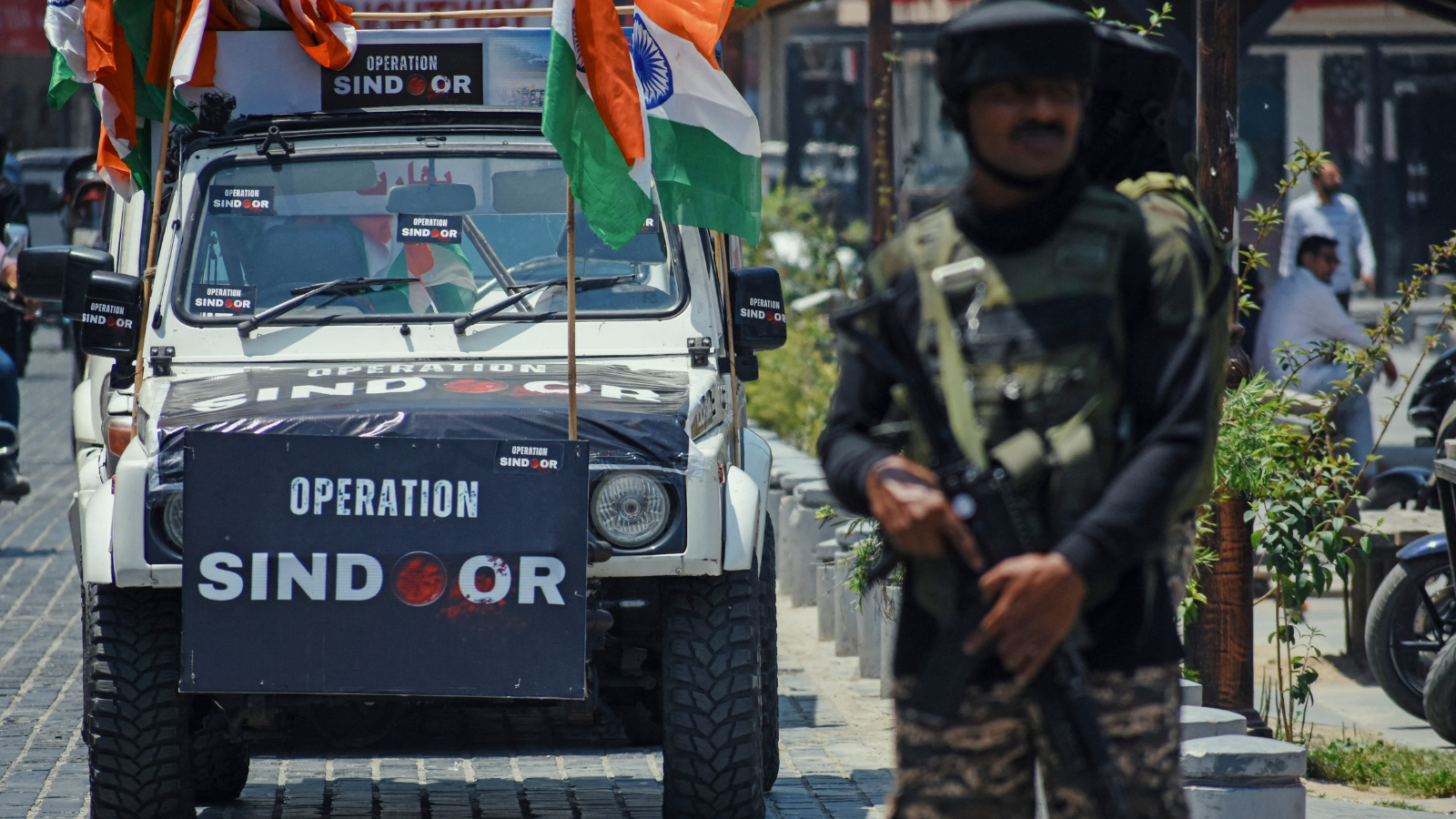
The India-Pakistan conflict that played out between May 6 and May 10, 2025, offers several military lessons. This article presents key takeaways from Operation Sindoor and breaks down how India’s preparations shaped the outcome and what more is needed to strengthen future readiness.

Dinakar Peri