

Commentary
Marc Pierini
{
  "authors": [
    "Marc Pierini"
  ],
  "type": "commentary",
  "blog": "Diwan",
  "centerAffiliationAll": "dc",
  "centers": [
    "Carnegie Endowment for International Peace",
    "Carnegie Europe",
    "Malcolm H. Kerr Carnegie Middle East Center"
  ],
  "collections": [],
  "englishNewsletterAll": "menaTransitions",
  "nonEnglishNewsletterAll": "",
  "primaryCenter": "Malcolm H. Kerr Carnegie Middle East Center",
  "programAffiliation": "MEP",
  "programs": [
    "Middle East"
  ],
  "projects": [],
  "regions": [
    "Levant",
    "Caucasus",
    "Azerbaijan",
    "Armenia",
    "Central Asia"
  ],
  "topics": [
    "Political Reform"
  ]
}
Source: Getty
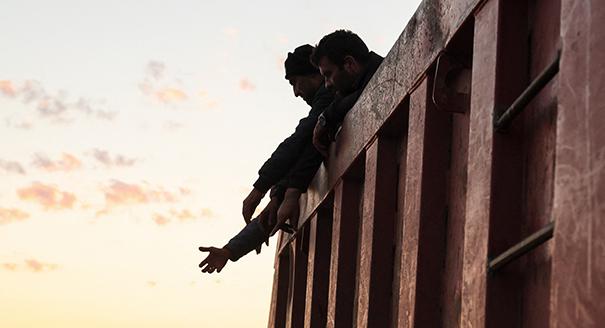
Beyond the tragedy of the Armenians, many countries in the region and internationally have a stake in what happens in the territory.
News channels have shown the desperate exodus of many of the 120,000 Nagorno-Karabakh Armenians to Armenia. Azerbaijan, with Turkey’s vocal support and the indirect backing of Russia, seems determined to erase any Armenian presence in these highlands, despite its assurances to the contrary. American and European diplomats have issued statements, called leaders, and coordinated their positions, but the bottom line is that the residents of Nagorno-Karabakh feel abandoned by the international community and do not see that they have a future in their ancestral land. Beyond the humanitarian crisis and the decades-long historical background, today’s crisis also has multiple international ramifications.
Not too far from the surface is Russia’s rivalry with the West. Moscow dislikes intensely so-called “color revolutions,” and Prime Minister Nikol Pashinyan’s rise to power in 2018 was a consequence of one that occurred that year in Armenia. Pashinyan took office peacefully through elections, and even won a snap election after a crushing military defeat against Azerbaijan in late 2020. For Moscow, he represents a successful version of Alex Navalny, the Russian opposition figure, and any domestic political trouble for Pashinyan is music to the Kremlin’s ears.
In addition, neither Russia nor Turkey would welcome mediation by the United States or the European Union in the current Nagorno-Karabakh crisis. This makes Armenia’s standing weaker, despite the fact that it enjoys strong Western political support. U.S. governmental visits to Armenia and Azerbaijan, or the EU initiatives to convene top advisers from Armenia and Azerbaijan in Brussels have not resulted in specific advances so far.
Turkey’s President Recep Tayyip Erdoğan, Baku’s unconditional ally, is surfing the wave of a successful reelection last May, and sees two opportunities of historical importance in the current crisis. First, he wants to erase the thorny issue of the Armenian presence in Nagorno-Karabakh from the international agenda. Erdoğan is already calling Azerbaijan’s “historic victory” a “source of pride” for Turkey. Second, he hopes to create a land corridor between Azerbaijan, its Nakhichevan exclave, and Turkey itself, thus simultaneously reunifying Azerbaijan and creating territorial continuity between Turkey and the Turkish-speaking republics of Central Asia, an achievement that would be emblematic of the Turkish president’s revamped foreign policy. The so-called Zangezur corridor is, unsurprisingly, opposed by Armenia and Iran. Should it be constructed, the issue of its control would become one of the thorniest dimensions of the regional crisis.
Israel, too, is keeping a watchful eye on the region, given its strong political and military alliance with Azerbaijan. This translated into the supply of attack drones and satellite data during the 2020 war against Armenia, two decisive assets in Baku’s victory at the time. Israel’s diplomatic and military relationship with Azerbaijan is the closest so far with a Muslim country, and constitutes a vehicle to reinforce the Israeli position against Iran in case of a possible confrontation.
Finally, the European Union finds itself in an awkward position with Azerbaijan after the signature in July 2022 of a memorandum of understanding on gas sales. This agreement was designed to lessen Europe’s dependency on Russian gas and rely on Baku as a “more reliable, trustworthy partner.” The deal, which had been criticized because it runs against the EU objective of eliminating gas from its energy mix (admittedly, not easy to achieve in the short term), now appears to be a powerful Azerbaijani lever with which to pressure Brussels.
While humanitarian assistance is already on its way, post-humanitarian assistance to Armenians from Nagorno-Karabakh is the next priority. Armenia will have a hard time finding help for, and funding, the arrival of 60,000 to 120,000 people. This will include housing for the winter, schooling for children, healthcare for all, not to mention income-generating jobs. Such a situation could feed domestic political infighting in Armenia. The problem is colossal for a country the size of Armenia, but expertise and money are available in Western countries, the only potential providers of such help. This should be the subject of an urgent, detailed, and scalable agreement between the EU and the United States on the one side and the Armenian authorities on the other. Whatever happens diplomatically, Western powers have a duty to protect Armenian refugees from a harsh winter.
On the diplomatic front, it is far from certain that U.S. and European efforts will produce positive results in the weeks to come. The main reason is that the military assault and political initiative launched on September 19 by Azerbaijan, with Turkey’s help and Russia’s consent, illustrates the common goal of the leaders of the three countries: preventing Western powers from playing a role to reinforce lasting peace and coexistence in the South Caucasus.
It seems clear that Baku views this as “payback time” with regard to the Armenians, that Ankara wants to seize the occasion to pursue its pan-Turkic foreign policy and assert its regional leadership, and that Moscow aims to weaken Pashinyan and maintain Russia’s strong presence in Armenia—a military base, border guards, and infrastructure. Moscow also would like to push back against any significant Western presence in the country. Analysts fear that lasting peace is a distant prospect, as implementing a peace agreement requires solid international backing and monitoring, short of which further violence might occur.
The European Council’s debate on October 6 in Granada will be influenced by three things. First, the overwhelming priority of maintaining support for Ukraine against Russia’s aggression. Second, finding common ground among its own members over Armenia (Hungary being the odd country out, as underlined by Azerbaijan’s state news agency ). And third, producing a balanced and effective policy mix between humanitarian actions and more general measures on gas supplies, a peace agreement between Armenia and Azerbaijan, and associated security guarantees. The July 2022 memorandum may be a major impediment to future EU action.
Ultimately, the Nagorno-Karabakh crisis will turn out to be another test of the Russian-Western rivalry and the European Union’s credibility in global affairs.

Senior Fellow, Carnegie Europe
Marc Pierini is a senior fellow at Carnegie Europe, where his research focuses on developments in the Middle East and Turkey from a European perspective.
Recent Work
Marc Pierini
Marc Pierini
Carnegie does not take institutional positions on public policy issues; the views represented herein are those of the author(s) and do not necessarily reflect the views of Carnegie, its staff, or its trustees.
Reconciliation councils are emerging throughout the country to mediate in intracommunal disputes, many from the war years.
Natacha Danon
As the U.S.-led Coalition withdraws, the Kurds’ reliance on Baghdad, and on themselves, will only increase.
Wladimir van Wilgenburg
The Zaidi government’s objective to collect weapons is constrained by regional conflict, but it can take certain measures at home.
Ali Al-Mawlawi
Any move by the United States to make good on Trump’s suggestion that Washington persuade Damascus to confront Hezbollah militarily would have catastrophic consequences.

Kheder Khaddour
As talks begin between Washington and Tehran, Beirut has an opening to advance a regional plan for the party’s disarmament.

Michael Young