

Commentary
In an interview, Ian Lustick and Eli Clifton discuss their new book on why a prominent ally has so much influence in America.
Michael Young
{
  "authors": [
    "Thomas Graham, Jr."
  ],
  "type": "legacyinthemedia",
  "centerAffiliationAll": "dc",
  "centers": [
    "Carnegie Endowment for International Peace"
  ],
  "collections": [],
  "englishNewsletterAll": "ctw",
  "nonEnglishNewsletterAll": "",
  "primaryCenter": "Carnegie Endowment for International Peace",
  "programAffiliation": "russia",
  "programs": [
    "Russia and Eurasia"
  ],
  "projects": [],
  "regions": [
    "Caucasus",
    "Russia"
  ],
  "topics": [
    "Foreign Policy"
  ]
}
REQUIRED IMAGE
Source: Carnegie
Getting U.S.-Russian Relations Back on Track
Courier-Journal (Louisville, KY), February 27, 2000
Dr. Graham was the chief political analyst at the U.S. Embassy in Moscow 1994-1997. This article is adapted from the report of a U.S. working group on U.S.-Russian relations organized by the Carnegie Endowment.
U.S.-Russian relations have now reached their lowest point since the breakup of the Soviet Union nearly a decade ago, even though the Clinton Administration made Russia its top foreign policy priority when it came to office and called for a "strategic partnership" with Russia. Russia's financial meltdown of August 1998, its vehement criticism of our policy toward Iraq, its denunciations of NATO's air campaign against Serbia, the Bank of New York scandal and revelations of widespread high-level corruption in Russia, and now Chechnya have all eroded the great hopes for our relations born in the euphoria at the end of the Cold War. The Administration has abandoned talk of partnership for less lofty rhetoric, while slowly disengaging and quietly downgrading Russia's standing within its foreign policy concerns.
What went wrong? To a certain extent, the puncturing of the early post-Soviet euphoria was inevitable, as both countries discovered - quite unremarkably - that an independent Russia's interests did not fully overlap with those of the United States.
More important, the two countries have followed radically different paths over the past decade. The United States has enjoyed the longest period of economic expansion in its history, while Russia has experienced a socio-economic collapse unprecedented for a Great Power not defeated in a major war. Our economy grew by over 30 percent in the 1990s, while Russia's was halved so that our economy is now roughly fifteen times Russia's. The United States has emerged as the world's preeminent power with no plausible rival on the horizon, while Russia has watched its international influence steadily erode. We feel eminently secure, while Russians see mounting threats everywhere, at home and abroad. We view globalization as an historic opportunity to spread our values abroad and increase our prosperity, while Russians see it as a threat to their own identity. The United States wants to move quickly in building an international order in its image, while Russia wants to delay the process until it has regained sufficient power to help shape that new order. In short, the two countries live in radically different worlds, and we seem intent on building different ones.
Nevertheless, despite these growing asymmetries in outlook and capacity, there was nothing inevitable about the journey from talk of friendship and common values to acrimony, descending at times to Cold-War rhetoric, that has marked U.S.-Russian relations for the past two years. That emerged as a failure on both sides of policy, imagination, and vision, albeit in dealing with a difficult and delicate relationship.
But why should we care? In fact, many of us don't. Russia's plight has lead many Americans to believe that Russia no longer matters in world affairs, or that America should focus on quarantining itself and the rest of the world from the multiple contagions emanating from Russia, or, at best, that America can and should engage Russia only on a limited range of top priority security issues.
These views are misguided, however, for Russia must remain a key concern for the United States, even if it can no longer occupy center stage as the Soviet Union did during the Cold War, and good relations are critical to protecting and advancing our interests. Russia matters because it possesses a vast nuclear arsenal, large quantities of fissile material, and the technology and know-how to build weapons of mass destruction. Russia matters because of its geographical location, astride regions of vital interest to the United States: Europe, the Persian Gulf, and East Asia. And Russia matters because its vast natural resources and large well-educated population give it considerable potential to become a major world economic power over the long run, despite the current hardships.
To be sure, the way Russia matters has changed dramatically. A generation ago, we feared Soviet strength wedded to hostile intent. Today, we are concerned about Russia's weakness, wedded to growing alienation and resentment of U.S. prosperity and power. We are less concerned about efforts to counter our influence based on rational assessments of Russian national interests than about irrational measures to undercut us that are grounded in frustration and pique. Similarly, a generation ago we feared what the Soviet Union could do; today, we are more concerned by what Russia cannot do. We are, for example, concerned not so much by Russia's aggressive designs as by it inability to control the weapons of mass destruction on its territory. We worry not so much about Russia's projecting power into neighboring regions as about the profound weakness that could destabilize Russia and the surrounding regions.
Nevertheless, we cannot limit our engagement with Russia to security concerns. For progress on them requires an atmosphere of mutual trust and respect that can only be built and sustained on the basis of beneficial arrangements outside, as well as inside, the security realm. Moreover, the United States and Russia often accord different priorities to concrete issues. Non-proliferation of weapons of mass destruction is a top concern for us, but the Russians accord it a less priority in large part because they see domestic deterioration as graver and more immediate threat to their security. To achieve our goals, we will have to create incentives for Russians to give non-proliferation a high priority. And that will likely require us to deal with them on matters of less importance to us, but of high interest to them, such as debt relief.
In short, we need to pursue a policy of broad engagement with Russia. Given the extent of the disengagement that has occurred over the past three years and the current acrimony, rebuilding the relationship will require political will, strategic vision, and humility on both sides. We need to find a way of dealing with the asymmetries that acknowledges their existence without patronizing the Russians. The Russians need to make a concerted, equitable effort to deal with high-level corruption and put an end to the brutal military campaign in Chechnya. Without such steps, it will be impossible to create and sustain the support in both countries needed for broad engagement.
An opportunity for renewed engagement will come with the inauguration of new leaders in both countries over the next year - Russia elects a new president this spring, while a new American administration takes office early next year. We need to seize that opportunity, with a clear understanding of each side's core interests and of the realities shaping and constraining each country's capacity to cooperate, and with a focus on the still great mutual benefits of getting the relationship right.
Former Senior Associate
Carnegie does not take institutional positions on public policy issues; the views represented herein are those of the author(s) and do not necessarily reflect the views of Carnegie, its staff, or its trustees.

In an interview, Ian Lustick and Eli Clifton discuss their new book on why a prominent ally has so much influence in America.

Michael Young

By failing to address Palestinian representation, the current process is bound to lead to just another temporary arrangement.

Nathan J. Brown
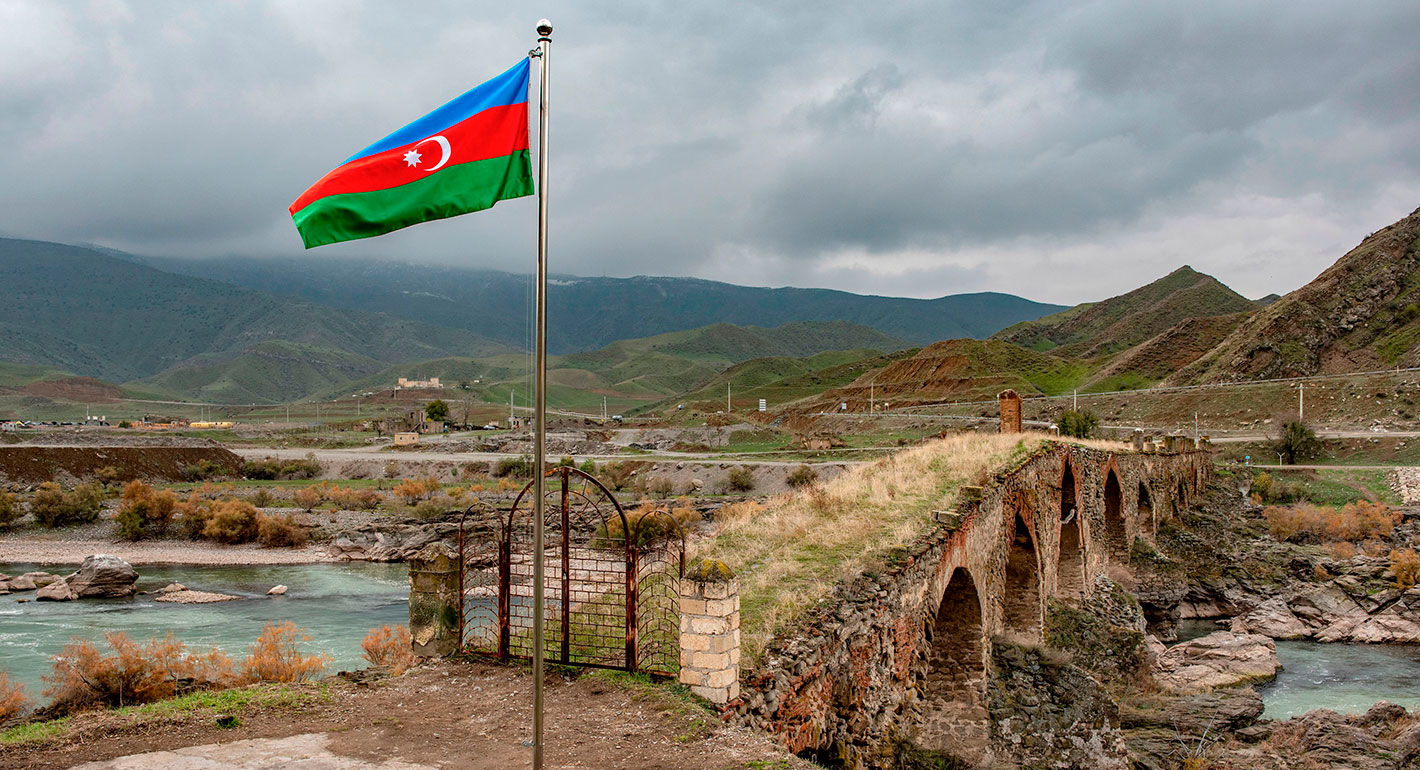
In an interview, Sergei Melkonian discusses Armenia’s and Azerbaijan’s careful balancing act among the United States, Israel, and Iran.

Armenak Tokmajyan

Just look at Iraq in 1991.

Marwan Muasher

A coalition of states is seeking to avert a U.S. attack, and Israel is in the forefront of their mind.
Michael Young