

Report
Mr. Husain Haqqani, Ashley J. Tellis
{
  "authors": [
    "Husain Haqqani"
  ],
  "type": "legacyinthemedia",
  "centerAffiliationAll": "dc",
  "centers": [
    "Carnegie Endowment for International Peace"
  ],
  "collections": [],
  "englishNewsletterAll": "ctw",
  "nonEnglishNewsletterAll": "",
  "primaryCenter": "Carnegie Endowment for International Peace",
  "programAffiliation": "SAP",
  "programs": [
    "South Asia",
    "Middle East"
  ],
  "projects": [],
  "regions": [
    "Middle East",
    "South Asia"
  ],
  "topics": [
    "Political Reform",
    "Security",
    "Foreign Policy"
  ]
}
Source: Getty
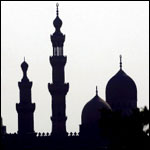
The riots ignited by the Danish newspaper Jyllands Posten's derogatory images of the Prophet Mohammad (PBUH) have escalated into violent protests that are no longer aimed at the offending newspaper or even against its homeland, Denmark. Protesters in several Muslim countries, including Pakistan and Indonesia, have targeted American and other Western interests as well as Christian churches.
Source: Gulf News

Protesters in several Muslim countries, including Pakistan and Indonesia, have targeted American and other Western interests as well as Christian churches.
It seems that politics has overtaken religious sentiment and, once again, Muslim rulers as well as Islamist political parties are attempting to gain advantage by pitting Muslim peoples against the Western world.
Jyllands-Posten's editors justified their cartoons on grounds of freedom of expression, a position supported by many Europeans and some Americans.
But others, such as Edward Miller writing in New York's Jewish Week, argued that the controversy was "a question of respect, not freedom".
According to Miller, "Freedom of expression theoretically protects the right of a non-Jew to desecrate a Torah scroll. Yet we would all view freedom of expression as a hollow defence to such a vile act."
Muslim hurt over a sacrilege, however, does not justify the widespread violence perpetrated in response to the cartoons' publication.
The vocal Muslim minority involved in the violence has generated discussion over whether and why the world's Muslims are more prone to violence. The sources of Muslim rage are the subject of deliberation once again.
Clearly, violent responses to perceived injury are not integral to Islam. Every chapter of the Quran begins with the words, "In the name of Allah [God], the most compassionate, the most merciful." The Prophet Mohammad (PBUH) is referred to as Rehmatul-lil-Alameen or "the one bringing compassion for all worlds".
After announcing his prophethood, the Prophet Mohammad (PBUH) prayed for those who insulted or opposed him. In one famous episode, he went to inquire about the health of an old woman in Makkah who threw garbage on him every day after she failed to show up for her daily insult. Such compassion won converts to Islam and contributed to the faith's expansion.
Through most of the period of Muslim ascendancy, Muslims did not riot to protest non-Muslim insults against Islam or its Prophet.
The current wave of violence is part of a trend that has emerged as Muslims have become poorer and globally less influential.
Islamists and authoritarian Muslim rulers both have a vested interest in continuously fanning the flames of Muslim victimhood, based on real or perceived grievances. For Islamists, anger and rage against the West is the basis for their claim to the support of Muslim masses.
For authoritarian rulers, religious protest is the means of diverting attention away from economic and political failure. The image of an ascendant West belittling Islam with the view to eliminating it serves as a useful distraction from the Ummah's own weaknesses.
US Secretary of State Condoleezza Rice has pointed at the role of Syria and Iran in exacerbating the violence over an obscure Danish newspaper's insult to Muslims.
Several authoritarian Muslim regimes allied with the US have also used the opportunity to create the impression that their masses are unruly fanatics who cannot be controlled except with an iron hand.
That is the only explanation for the ease with which violent demonstrators in the Pakistani city of Lahore controlled the streets for a day.
Egypt, too, allowed angry demonstrations although it normally does not allow its citizens to publicly express their sentiments.
After putting down the orchestrated violence, the Mubarak and Musharraf regimes will most likely tell the US to tone down its rhetoric about democratising the Muslim world.
Democracy, they will argue, would only bring Islamists chosen by angry anti-Western mobs into power.
But the wave of anger in the Muslim world of the last few days provides justification for greater democracy, not less. Only when the Muslim world embraces freedom of expression will it be able to recognise the value of that freedom even for those who offend one's sensibilities.
Sacrilege will be dealt with by petition and peaceful argument, not by fire-breathing violent demonstrations.
Moreover, only in a free democratic environment will the world's Muslims be able to debate the causes of their powerlessness, which causes them greater anger than any specific action on the part of Islam's Western detractors.
Former Visiting Scholar
Recent Work
Mr. Husain Haqqani, Ashley J. Tellis
Mr. Husain Haqqani
Carnegie does not take institutional positions on public policy issues; the views represented herein are those of the author(s) and do not necessarily reflect the views of Carnegie, its staff, or its trustees.

The accord represents a pivotal moment in the region to avert a security vacuum in the Gulf.


Azeema Cheema, Mohanad Hage Ali

In an interview, Jason Burke discusses his sweeping account of the “revolutionists” who so shaped the 1970s and early 1980s.

Michael Young

By failing to address Palestinian representation, the current process is bound to lead to just another temporary arrangement.

Nathan J. Brown
There is a disturbing structural parallel between the old global energy economy and the new green transition.

Angie Omar

Just look at Iraq in 1991.

Marwan Muasher