

In The Media
Jessica Tuchman Mathews
{
  "authors": [
    "Jessica Tuchman Mathews"
  ],
  "type": "legacyinthemedia",
  "centerAffiliationAll": "dc",
  "centers": [
    "Carnegie Endowment for International Peace",
    "Carnegie China"
  ],
  "collections": [],
  "englishNewsletterAll": "menaTransitions",
  "nonEnglishNewsletterAll": "",
  "primaryCenter": "Carnegie China",
  "programAffiliation": "MEP",
  "programs": [
    "Middle East"
  ],
  "projects": [],
  "regions": [
    "North America",
    "United States",
    "Iraq"
  ],
  "topics": [
    "Security",
    "Military",
    "Foreign Policy"
  ]
}
Source: Getty
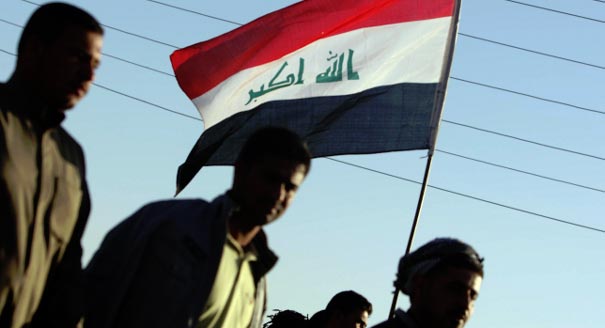
No matter how long U.S. troops stay in Iraq, a stable power-sharing agreement will emerge only after all factions have tested each other’s strength and exhausted their desire to fight. Leaving Iraq is the right thing to do, for the U.S. and for Iraq.
Source: Washington Post

The U.S. presence interrupted a struggle for political power that always follows removal of a government and eventually forced it into nonviolent channels. But the struggle is far from over. Recent political accommodations are extremely fragile, and it is likely that many angry groups have chosen to lie low until the Americans are gone.
Stable agreements to share power emerge only after the parties have tested each other's strength and will and their desire to fight has burned out. History shows that this takes many years, especially when all sides are heavily armed.
So the United States may face a departure in 2011 in the face of great instability. President Obama understands that could happen even if our troops were to stay five more years. There is no substitute for Iraqis sorting out their own political future. But after so much sacrifice and bloodshed, it may not feel much like a victory.
This article first appeared in the Washington Post.

Distinguished Fellow
Mathews is a distinguished fellow at the Carnegie Endowment for International Peace. She served as Carnegie’s president for 18 years.
Recent Work
Jessica Tuchman Mathews
Jessica Tuchman Mathews
Carnegie does not take institutional positions on public policy issues; the views represented herein are those of the author(s) and do not necessarily reflect the views of Carnegie, its staff, or its trustees.

In an interview, Rozina Ali discusses her new book on the rise and manifestations of Islamophobia in the United States.

Michael Young
As the U.S.-led Coalition withdraws, the Kurds’ reliance on Baghdad, and on themselves, will only increase.
Wladimir van Wilgenburg

In an interview, Ian Lustick and Eli Clifton discuss their new book on why a prominent ally has so much influence in America.
Michael Young

As the U.S. stumbles in its war with Iran, we are likely to see an acceleration of its disengagement from the region.
Michael Young
The Zaidi government’s objective to collect weapons is constrained by regional conflict, but it can take certain measures at home.
Ali Al-Mawlawi