

Paper
Ashley J. Tellis
{
  "authors": [
    "Ashley J. Tellis"
  ],
  "type": "legacyinthemedia",
  "centerAffiliationAll": "dc",
  "centers": [
    "Carnegie Endowment for International Peace"
  ],
  "collections": [],
  "englishNewsletterAll": "ctw",
  "nonEnglishNewsletterAll": "",
  "primaryCenter": "Carnegie Endowment for International Peace",
  "programAffiliation": "SAP",
  "programs": [
    "South Asia"
  ],
  "projects": [],
  "regions": [
    "South Asia",
    "Afghanistan",
    "Pakistan"
  ],
  "topics": [
    "Security",
    "Military",
    "Foreign Policy"
  ]
}
Source: Getty
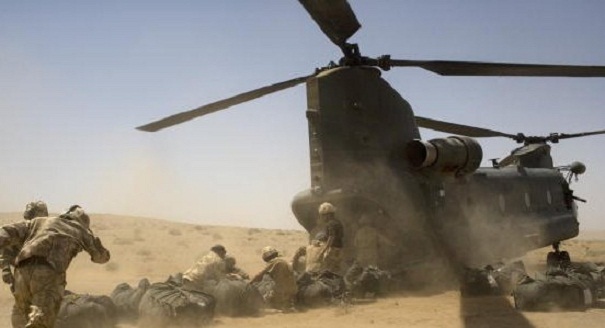
President Obama's failure to explicitly mention that the U.S. intends to stay in Afghanistan could could strengthen the Taliban, which seeks to outlast the international coalition.
Source: Yale Global

Comprehensive engagement in Afghanistan, of course, was opposed by a variety of constituencies. Senator John Kerry (D-Mass.), for example, warned against any reconstruction intended “to make [Afghanistan] our 51st state,” suggesting instead that allied objectives in that country be limited to ensuring that “it does not become an al-Qaeda narco-state and terrorist beachhead capable of destabilizing neighboring Pakistan.” Others, such as the former president of the Council on Foreign Relations, Leslie Gelb, urged Obama “to explore a strategy of power extrication” by which the United States would “leave Afghanistan” because “trying to eliminate the Taliban and Qaeda threat [therein] is unattainable.” Some other alternatives were proposed as well. David Boaz of the libertarian Cato Institute wondered whether the US would “be able to extricate [itself] sooner if we accept a decentralized Afghanistan with some regions ruled by groups that are currently fighting against our troops?” And, one senior NATO official, reflecting the view of many European governments eager to end their involvement in Afghanistan, has been quoted by the Guardian as arguing that Kabul “doesn’t need to be a democracy, just secure.”
Former Senior Fellow
Ashley J. Tellis was a senior fellow at the Carnegie Endowment for International Peace.
Recent Work
Ashley J. Tellis
Ashley J. Tellis
Carnegie does not take institutional positions on public policy issues; the views represented herein are those of the author(s) and do not necessarily reflect the views of Carnegie, its staff, or its trustees.

In an interview, Ian Lustick and Eli Clifton discuss their new book on why a prominent ally has so much influence in America.

Michael Young

By failing to address Palestinian representation, the current process is bound to lead to just another temporary arrangement.

Nathan J. Brown

The armed forces champion a form of capitalism that is generating revenue, but its reliance on rent faces diminishing returns, leaving the country with massive sunk costs and deferred returns, deepening dependency on external borrowing.

Yezid Sayigh

Just look at Iraq in 1991.

Marwan Muasher

A coalition of states is seeking to avert a U.S. attack, and Israel is in the forefront of their mind.
Michael Young