• Research
  • Diwan
  • About
  • Experts
Carnegie Middle East logoCarnegie lettermark logo
LebanonIran
{
  "authors": [
    "Thomas de Waal"
  ],
  "type": "legacyinthemedia",
  "centerAffiliationAll": "dc",
  "centers": [
    "Carnegie Endowment for International Peace",
    "Carnegie Europe",
    "Carnegie Russia Eurasia Center"
  ],
  "collections": [
    "Turkey’s Transformation"
  ],
  "englishNewsletterAll": "ctw",
  "nonEnglishNewsletterAll": "",
  "primaryCenter": "Carnegie Europe",
  "programAffiliation": "russia",
  "programs": [
    "Russia and Eurasia"
  ],
  "projects": [],
  "regions": [
    "Middle East",
    "Russia",
    "Europe",
    "Türkiye",
    "Eastern Europe",
    "Caucasus",
    "Azerbaijan",
    "Armenia"
  ],
  "topics": [
    "Security"
  ]
}
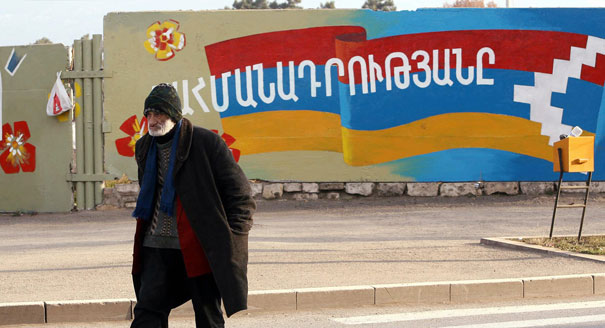
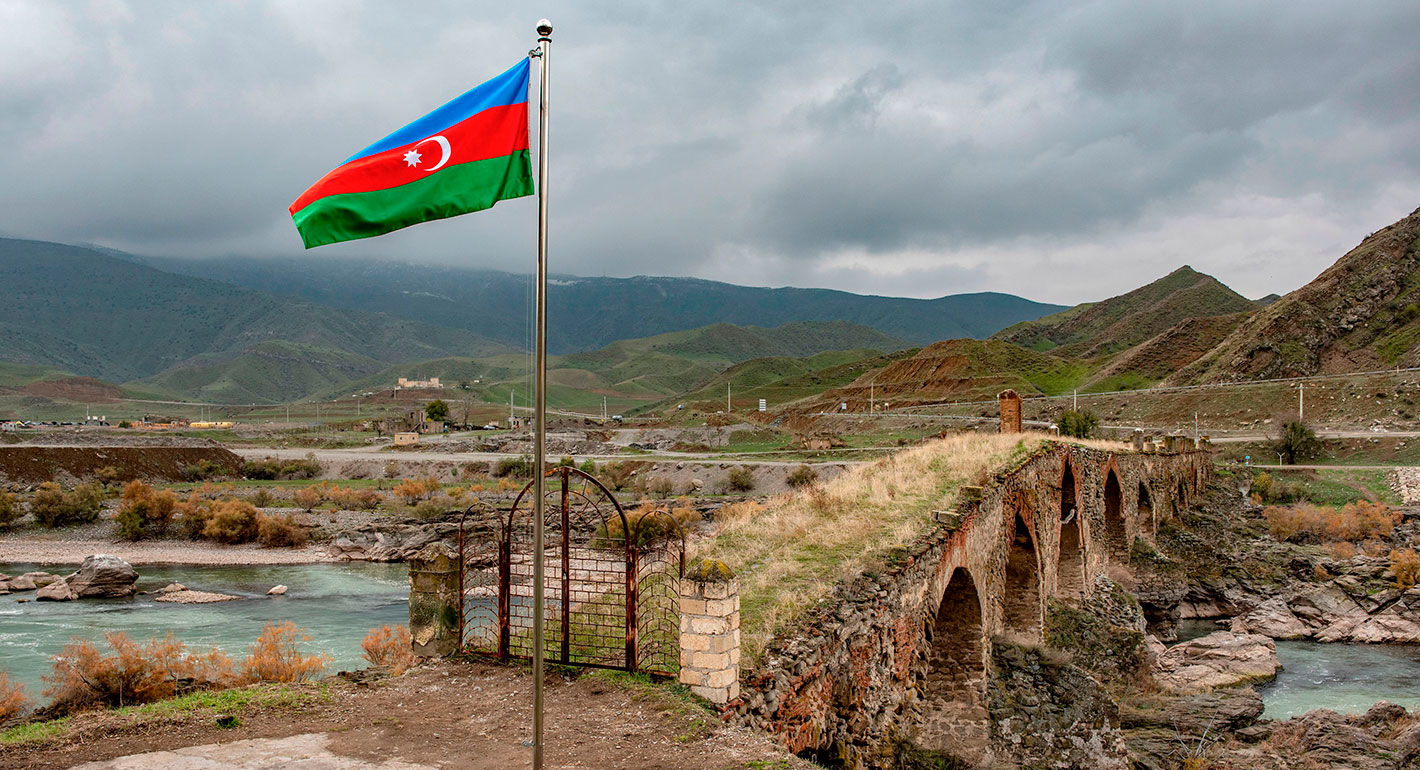
Source: Getty

In The Media
Carnegie Europe

Nagorno-Karabakh and the Minsk Group Negotiations

Negotiations between Armenia and Azerbaijan on the Nagorno-Karabakh conflict are deadlocked, with serious consequences not only for the nations involved in the conflict, but also for the Armenia-Turkey reconciliation process.

Link Copied
By Thomas de Waal
Published on May 6, 2010

Source: World Politics Review

Nagorno-Karabakh and the Minsk Group NegotiationsThe co-chairs of the OSCE Minsk Group met today in a closed meeting to discuss the current state of negotiations between Armenia and Azerbaijan on the Nagorno-Karabakh conflict. In an e-mail interview, Thomas de Waal, senior associate of the Carnegie Endowment for International Peace, explains where negotiations stand today.

WPR: What are the principle issues that still need to be resolved in the Nagorno-Karabakh conflict?
 
De Waal: The fundamental unresolved issue in the Nagorno-Karabakh conflict is the same one that triggered the conflict back in Soviet times in the Gorbachev era in February 1988: the status of the disputed territory of Nagorno-Karabakh itself. The Karabakh Armenians -- who have been in full control of the territory and surrounding regions since fighting ended between the two sides in 1994 -- insist that Karabakh be recognized either as independent or unified with Armenia, while the Azerbaijani authorities demand that it is a de jure part of Azerbaijan and must be reaffirmed as such. The document on the table attempts to resolve this issue with creative ambiguity about postponing the issue of status, but the two sides still have polarized positions and will not move until they get greater clarity supporting their own stance.
 
WPR: How is that conflict impacting Turkey-Armenia normalization?
 
De Waal: The non-resolution of the Karabakh conflict is the principle reason why the Armenia-Turkey normalization process came to a halt in April when Armenian President Serzh Sarkisian suspended Armenian official participation in the process. Turkey was insisting on making a linkage between Armenia-Turkey normalization and the Karabakh conflict that was not in the protocols the two sides signed in October 2009. That is not because Turkey cares deeply about the Karabakh issue as such, but it does care about its relations with its Turkic ally, Azerbaijan. Azerbaijan did enough to lobby in the Turkish parliament and to threaten Turkey with higher gas prices to dissuade the Turkish government from pursuing the normalization policy. Now, unless there is progress on the Karabakh conflict, it is highly unlikely that the Armenia-Turkey process will move forward again.
 
WPR: Recent reports suggested progress has been made in the Minsk Group negotiations. What's the likelihood for a breakthrough?
 
De Waal: Unfortunately the Minsk Group negotiations are deadlocked at the moment. This time it is the Armenian side that does not want to engage properly with the latest version of the so-called "Madrid Principles" under discussion. On previous occasions, Azerbaijan has pulled back. But there are deeper problems with the negotiations: It is far too narrow a process to get the kind of traction needed to resolve a major conflict. There is almost no Track Two process involving the two societies and few international resources are being expended to support the U.S., French and Russian mediators. Observers of the peace talks have the perception that the Armenian and Azerbaijani presidents actually prefer the narrowly based desultory peace process, which preserves the status quo and produces no results, to a more dynamic process that would force them to take hard decisions and make public compromises to the enemy.

About the Author

Thomas de Waal

Senior Fellow, Carnegie Europe

De Waal is a senior fellow at Carnegie Europe, specializing in Eastern Europe and the Caucasus.

    Recent Work

  • Commentary
    Europolis, Where Europe Ends

      Thomas de Waal

  • Commentary
    Taking the Pulse: Is It Time for Europe to Reengage With Belarus?

      Thomas de Waal, ed.

Thomas de Waal
Senior Fellow, Carnegie Europe
Thomas de Waal
SecurityMiddle EastRussiaEuropeTürkiyeEastern EuropeCaucasusAzerbaijanArmenia

Carnegie does not take institutional positions on public policy issues; the views represented herein are those of the author(s) and do not necessarily reflect the views of Carnegie, its staff, or its trustees.
More Work from Malcolm H. Kerr Carnegie Middle East Center

  • people watching smoke rising at sunrise from rooftops
    Commentary
    Emissary
    Bombing Campaigns Do Not Bring About Democracy. Nor Does Regime Change Without a Plan.

    Just look at Iraq in 1991.

      Marwan Muasher
  • Commentary
    Diwan
    Axis of Resistance or Suicide?

    As Iran defends its interests in the region and its regime’s survival, it may push Hezbollah into the abyss.

      Michael Young

  • GCC foreign minister meeting in Kuwait City on June 2, 2025
    Article
    Can the Gulf Cooperation Council Transcend Its Divisions?

    Without structural reform, the organization, which is racked by internal rivalries, risks sliding into irrelevance.

      Hesham Alghannam

  • Commentary
    The Middle East’s Promising Gen Z

    Fifteen years after the Arab uprisings, a new generation is mobilizing behind an inclusive growth model, and has the technical savvy to lead an economic transformation that works for all.

      Jihad Azour

  • Commentary
    Carnegie Politika
    Baku Proceeds With Caution as Ethnic Azeris Join Protests in Neighboring Iran

    Baku may allow radical nationalists to publicly discuss “reunification” with Azeri Iranians, but the president and key officials prefer not to comment publicly on the protests in Iran.

      Bashir Kitachaev

Get more news and analysis from
Malcolm H. Kerr Carnegie Middle East Center
Carnegie Middle East logo, white
  • Research
  • Diwan
  • About
  • Experts
  • Projects
  • Events
  • Contact
  • Careers
  • Privacy
  • For Media
Get more news and analysis from
Malcolm H. Kerr Carnegie Middle East Center
© 2026 Carnegie Endowment for International Peace. All rights reserved.