

Commentary
Dmitri Trenin
{
  "authors": [
    "Dmitri Trenin"
  ],
  "type": "legacyinthemedia",
  "centerAffiliationAll": "",
  "centers": [
    "Carnegie Endowment for International Peace",
    "Carnegie China",
    "Carnegie Russia Eurasia Center"
  ],
  "collections": [
    "China’s Foreign Relations"
  ],
  "englishNewsletterAll": "",
  "nonEnglishNewsletterAll": "",
  "primaryCenter": "Carnegie Russia Eurasia Center",
  "programAffiliation": "",
  "programs": [],
  "projects": [],
  "regions": [
    "East Asia",
    "China",
    "Russia"
  ],
  "topics": [
    "Foreign Policy"
  ]
}
Source: Getty
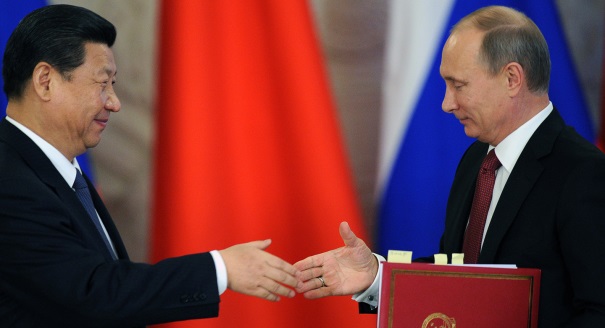
The emerging Sino-Russian relationship in the Xi-Putin era is likely to take the form of a tandem in which China will be the driving force, though not at the cost of Russia surrendering its independence.
Source: Global Times
Chinese President Xi Jinping's visit to Russia is about two things: managing global relations between great powers and expanding economic opportunities. Russian President Vladimir Putin's priorities are roughly the same.
Even though specific Chinese and Russian interests may differ, there is enough common ground between them to ensure even closer cooperation between Beijing and Moscow in the next few years. While falling considerably short of an alliance, the Sino-Russian tandem is becoming a feature of world politics.
Both China and Russia, which see themselves as independent, though unequal, power centers, intend to limit US global influence.The fifth BRICS Summit in Durban that both Xi and Putin will be attending after their meeting in Moscow, is a top platform to push the non-Western agenda. Russia is too weak, and China is still too reticent to effectively campaign for a post-US world alone; together, they look more credible.
Each country has its own special problems with the US. Putin has given official Russian nationalism a distinct anti-US flavor, and is now busy eliminating the surviving elements of US influence inside Russia, such as foreign-funded NGOs.
This problem does not exist in China. The Chinese leadership's worry is that the US "pivot" to Asia is a move to constrain China's rise.
The Obama administration's recent announcement, after North Korea's recent missile launches and nuclear tests, that it would increase its number of interceptor missiles in Alaska makes Chinese nuclear forces more vulnerable.
On missile defense, Beijing clearly wants more solidarity from Russia, and Putin cannot simply ignore this.
Even though Moscow should have been pleased by the US cancellation of the fourth stage of the European ballistic missile defense system, it expressed no joy over Obama's decision.
The time when Moscow and Washington might have agreed on missile defense cooperation in Europe without bringing China into the equation may be over. Russia's stated concern is now about global US missile defense, not just the regional NATO system.
China also wants Russia to show solidarity over its dispute with Japan over the Diaoyu Islands, all in the name of defending the results of World War II, a sacred theme for Russian politicians and the public.
Moscow itself has had to deal with Tokyo's claim of the four islands north of Hokkaido, which Russia has controlled since 1945.
Siding with China on the territorial issue with Japan, however, would lead to a dramatic deterioration of Russo-Japanese relations, which Moscow has been seeking to improve.
Putin, who is open to some kind of a border arrangement with Japan, is unlikely to yield much to his Chinese guest.
Where more cooperation can be expected is in the field of arms and technology transfers. China no longer wants to buy Russian systems off the shelf, and is after Russia's newest military technologies.
With the Russian defense industry a major priority for Putin, Moscow can agree to increase its level of technological and industrial cooperation with China.
This would also bring in additional money for Russia's military modernization.
On the economic side of the relationship, China's interest lies in securing better access to Russia's natural resources, including oil and gas.
While an agreement on a gas pipeline will probably take several more months to hammer out, the Kremlin is said to have made a decision to diversify Gazprom's gas flows away from their current near-exclusive focus on Europe.
The emerging Sino-Russian relationship in the Xi-Putin era is likely to take the form of a tandem in which China will be the driving force, though not at the cost of Russia surrendering its independence.
Russia will be China's strategic rear, and a resource base; Beijing, for its part, will enhance Moscow's international standing and will also supply it with cash.
As China grows more powerful over time, the relationship will become increasingly tilted toward the stronger partner. Yet, it can be sustained if China is wise enough not to prick Russia's pride and not to challenge its sovereignty within its borders.
Beijing would also be wise not to step on Russia's toes in Central Asia, where Russia's influence is steadily declining.
Former Director, Carnegie Moscow Center
Trenin was director of the Carnegie Moscow Center from 2008 to early 2022.
Recent Work
Dmitri Trenin
Dmitri Trenin
Carnegie does not take institutional positions on public policy issues; the views represented herein are those of the author(s) and do not necessarily reflect the views of Carnegie, its staff, or its trustees.

By failing to address Palestinian representation, the current process is bound to lead to just another temporary arrangement.

Nathan J. Brown

Just look at Iraq in 1991.

Marwan Muasher

A coalition of states is seeking to avert a U.S. attack, and Israel is in the forefront of their mind.

Michael Young

Baku may allow radical nationalists to publicly discuss “reunification” with Azeri Iranians, but the president and key officials prefer not to comment publicly on the protests in Iran.

Bashir Kitachaev
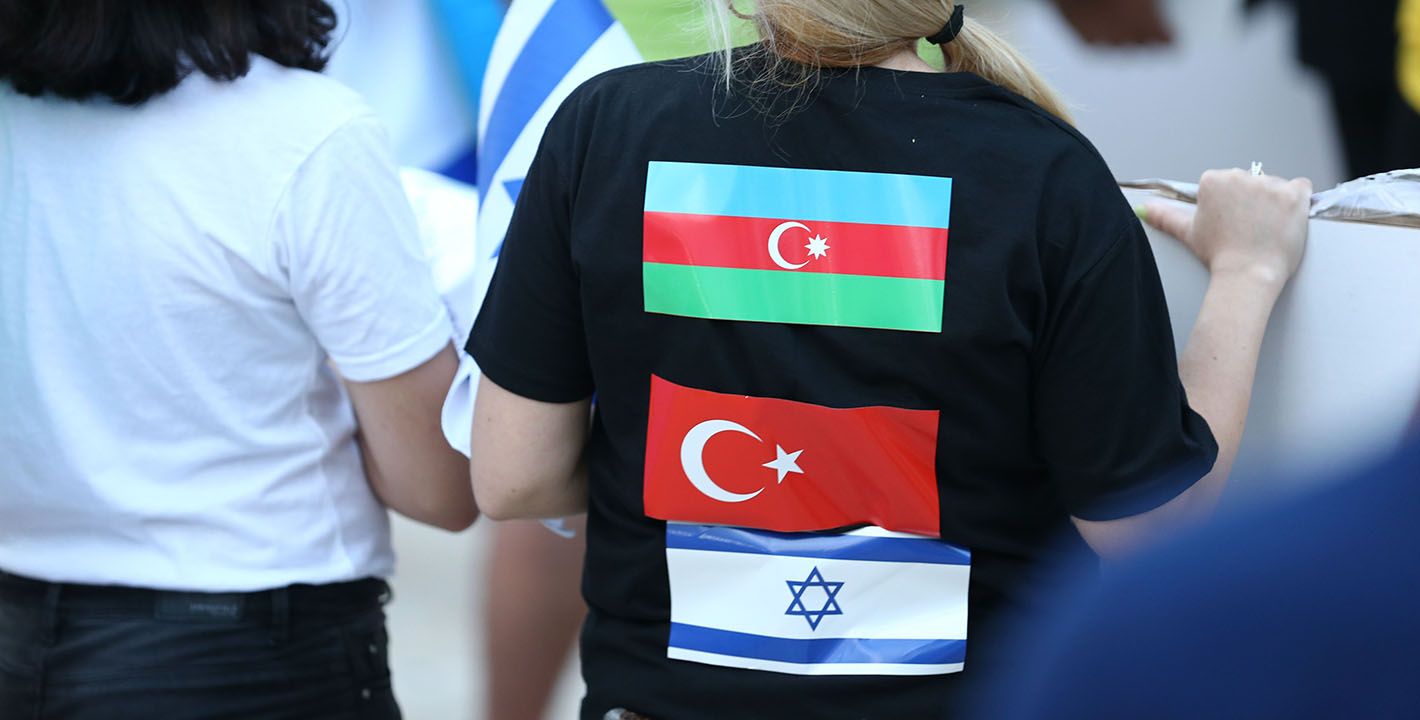
The country’s leadership is increasingly uneasy about multiple challenges from the Levant to the South Caucasus.

Armenak Tokmajyan