

In The Media
John Judis
{
  "authors": [
    "John Judis"
  ],
  "type": "legacyinthemedia",
  "centerAffiliationAll": "",
  "centers": [
    "Carnegie Endowment for International Peace",
    "Malcolm H. Kerr Carnegie Middle East Center"
  ],
  "collections": [],
  "englishNewsletterAll": "",
  "nonEnglishNewsletterAll": "",
  "primaryCenter": "Carnegie Endowment for International Peace",
  "programAffiliation": "",
  "programs": [],
  "projects": [],
  "regions": [
    "United States",
    "Middle East",
    "Israel",
    "Palestine",
    "Levant"
  ],
  "topics": [
    "Political Reform",
    "Foreign Policy"
  ]
}
Source: Getty
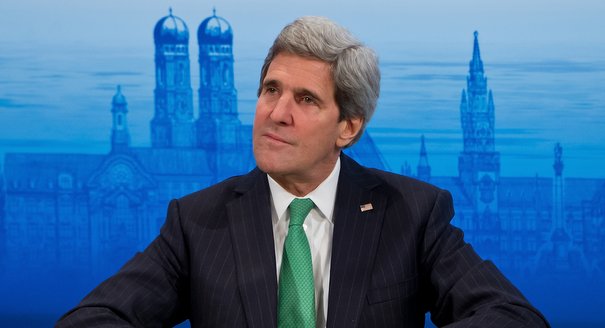
A big decision from the Israeli prime minister is in the offing, one that could determine whether there will be a two-state solution.
Source: New Republic
Secretary of State Kerry held talks earlier this week with interfaith leaders, and yesterday his chief Israel-Palestine negotiator Martin Indyk talked on the phone with Jewish leaders. What emerged from those discussions was an outline of what the United States is going to propose to Israeli and Palestinian negotiators as a framework for a two-state solution. Some details of the Indyk’s talk appeared in the Jewish Telegraphic Agency. I can add a few more.
When Kerry first announced the negotiations last summer, he proposed that by April the two sides come to a “final status agreement” for the two states. He rejected another “framework” or “transitional” agreement. But by last December, he had backed away from this timetable and was beginning to talk of another “framework” agreement that would leave the final details open. That’s indeed what has happened.In several weeks. Kerry hopes to win the backing of Israel Prime Minister Benjamin Netanyahu and Palestinian Authority President Mahmoud Abbas to another “framework” agreement. The Israeli and Palestinian leaders will also be able to accept the agreement with specific reservations, but the United States will at the same say what it thinks the outcome of negotiations on these reservations should be. And the framework agreement will specify that the negotiators have to reach a “final status” agreement by the year’s end.
Here is how it will deal with some of the most contentious issues. The agreement would permit between 75 and 80 percent of Israeli settlers in the West Bank through land swaps. What settlements would remain, and what Israel would cede was not discussed in the briefings, but it’s likely that large settlements like Maale Adumim, where the controversial Soda Stream is produced, will become part of Israel under the agreement.
A security zone would be established along the Jordan River. That’s different from a security zone inside the Jordan Valley. A security zone along the river could be a mile or two wide, and would consist of electrified fences and unmanned aerial vehicles of some kind. The Israel Defense Force would be part of the armed forces policing this zone, but only for a specified time. Abbas has mentioned three years. The Israelis have talked about ten years.
Palestinian refugees would receive some kind of compensation, but so would Jewish refugees who fled, and in many cases were forced to flee, places like Iraq Syria, and Egypt after 1947. (Estimates are that about 500,000 of these refugees settled in Israel between 1947 and 1972.) That provision, one of the Jewish leaders commented, was meant as a “sweetener” to the Israelis. The Palestinians would recognize Israel as the nation of the Jewish people, and the Israelis would recognize Palestine as the nation of the Palestinian people. But one critical issue was left vague and unresolved. The framework will not propose a way of dealing with the future of Jerusalem as the capital of Israel and Palestine. “That’s the biggie,” one person involved in the calls commented.
Indyk warned that for the United States the deal would be extremely expensive. The United States would have to help pay for refugee resettlement, the redeployment of the Israeli Defense Forces, the security zone itself, the new Palestinian state. “You name it,” Indyk said. Kerry and his staff have reportedly briefed some members of Congress on these details.
People who have followed these negotiations believe that Abbas would accept with reservations this kind of framework agreement, but that Netanyahu will have difficulty doing so. Naftali Bennett’s Jewish Home party and part of Netanyahu’s own Likud party would likely leave the government. Netanyahu would have to reconstitute his majority by bringing in the Labor Party and probably the ultra-orthodox Shas party. If he does that, Netanyahu will have hitched his future to the framework proposals and to the provision that the Israelis and Palestinians reach a final status agreement. It would not appear to make sense for Netanyahu to blow up his stable majority in order spend the rest of the year equivocating over details and throwing up new obstacles. So a big decision from the Israeli prime minister is in the offing, one that could determine whether there will be a two-state solution.
Former Visiting Scholar
As a visiting scholar at Carnegie, Judis wrote The Folly of Empire: What George W. Bush Could Learn from Theodore Roosevelt and Woodrow Wilson.
Recent Work
John Judis
John Judis
Carnegie does not take institutional positions on public policy issues; the views represented herein are those of the author(s) and do not necessarily reflect the views of Carnegie, its staff, or its trustees.

Reconciliation councils are emerging throughout the country to mediate in intracommunal disputes, many from the war years.
Natacha Danon

In an interview, Rozina Ali discusses her new book on the rise and manifestations of Islamophobia in the United States.

Michael Young
The civil war in Syria may have ended, but the country continues to serve as a source for the trafficking of illegal substances into and via Jordanian territory.


Armenak Tokmajyan, Laith Qerbaa
As the U.S.-led Coalition withdraws, the Kurds’ reliance on Baghdad, and on themselves, will only increase.
Wladimir van Wilgenburg

In an interview, Ian Lustick and Eli Clifton discuss their new book on why a prominent ally has so much influence in America.
Michael Young